

Schedule Appointment

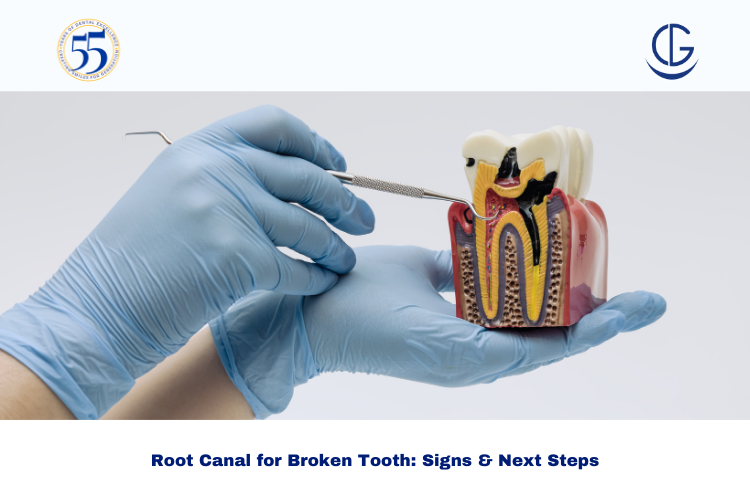
Root canal for broken tooth cases are more common than most people think—especially when a crack or fracture reaches the inner nerve layer and pain starts to interfere with eating, sleep, and daily routine. A broken tooth might look minor on the outside, but if the damage exposes the sensitive inner tissues, delaying treatment can quickly turn a manageable issue into an infection risk.
At Dr Gowds Dental Hospitals, we regularly see patients across Hyderabad who come in with sudden tooth fractures from biting hard foods, old fillings that weaken tooth structure, sports injuries, or long-standing decay. Our team focuses on accurate diagnosis, pain relief, and preserving the natural tooth whenever possible—because saving your tooth is usually better than removing it.
If you have a broken tooth, sensitivity, or sharp pain while chewing, book a consultation at Dr Gowds Dental Hospitals today.
A tooth has multiple layers:
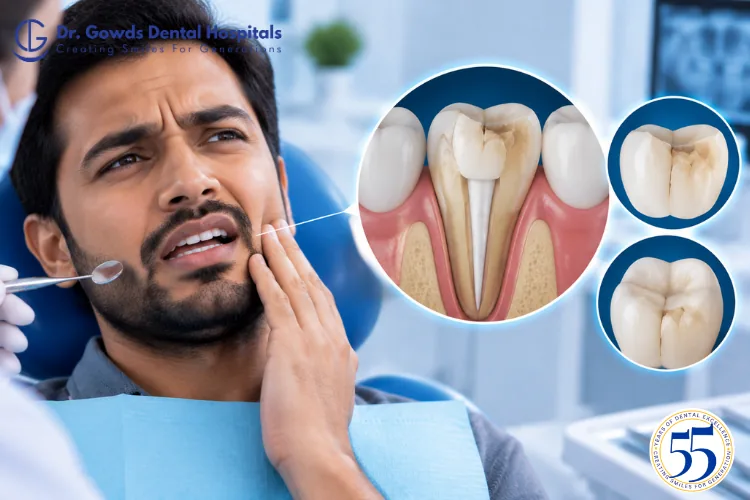
When a tooth breaks, the depth of the fracture decides the treatment. A small chip may need smoothing or bonding. But deeper breaks can expose dentin or even the nerve, leading to intense sensitivity and pain.
A fracture may:
If the break causes an exposed nerve tooth, the discomfort can feel sudden, shooting, or throbbing—especially at night.
A root canal becomes necessary when the nerve tissue (pulp) is inflamed, infected, or at high risk of infection.
You may require a root canal for a broken tooth if you notice:
Here’s the truth: a root canal isn’t always required. If the crack is superficial and the nerve is not affected, treatments can include:
A proper exam and X-ray are what decide the best path.
Every broken tooth case is different. At Dr Gowds Dental Hospitals, we assess crack depth, nerve status, bite forces, and infection signs before recommending treatment.
Typical solution:
Typical solutions:
Typical solution:
Typical solution:
Sometimes, a tooth breaks because the remaining tooth structure becomes weak. In these cases:
An exposed nerve tooth means the protective layers have been breached and the pulp is directly irritated. Even if you’re trying to “manage” the pain using home remedies, bacteria can enter rapidly and cause infection.
If you suspect nerve exposure:
At Dr Gowds Dental Hospitals, diagnosis typically includes:
The goal is always to preserve as much healthy tooth structure as possible.
Many people in Hyderabad worry that root canal treatment is painful. In reality, modern root canal procedures are designed to relieve pain—not cause it.
For most broken tooth cases—yes. A root canal treats the nerve issue, but the tooth can still be structurally weak. A crown helps:
This depends on:
A crown may take additional visits.
After a root canal for a broken tooth, mild discomfort is possible for a few days—especially while chewing.
Contact your dentist if you have:
Sometimes, yes—if you act early.
When you treat a crack early with:
…it reduces the risk of infection reaching the nerve.
But once the nerve is inflamed or infected, a root canal becomes the tooth-saving option.
A broken tooth is not just a cosmetic issue. If the crack is deep, delaying treatment can turn it into an infected tooth that may require more complex procedures.
If you’re experiencing chewing pain, sensitivity, or suspect an exposed nerve tooth, don’t self-diagnose. Visit your nearest branch in Gachibowli, Madhapur, Koti, Nanakramguda to get clarity on whether you need a root canal, a crown, or another conservative option.
Most patients feel relief because the procedure removes the inflamed or infected nerve tissue. Local anesthesia keeps the process comfortable.
An exposed nerve tooth often causes sharp, intense sensitivity, lingering pain after cold/hot, or throbbing pain that can worsen at night.
Yes, if the crack hasn’t reached the nerve. Bonding, fillings, and crowns can work depending on depth. A dental exam is necessary to confirm.
Most patients feel better within a few days. Mild soreness is normal, but worsening pain or swelling should be evaluated.
Patients choose Dr Gowds for specialist-led diagnosis, careful treatment planning, and restorative support (like crowns) that protects the tooth long-term.
 Gachibowli Branch