

Schedule Appointment

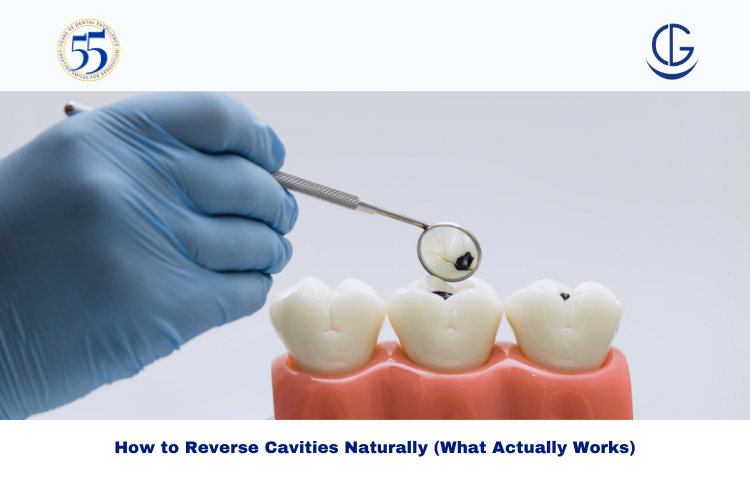
How to reverse cavities naturally is one of the most searched questions in dental health — and the answer is more nuanced than either the ‘yes, absolutely!’ you see on wellness blogs or the categorical ‘impossible’ that used to be the standard clinical response. The truth is this: whether you can reverse cavities naturally depends almost entirely on how early you catch them. In the very earliest stage of tooth decay — before a physical hole has formed in the enamel — the body’s own remineralisation process, supported by the right dietary and hygiene habits, can genuinely reverse the damage. Once a cavity has progressed beyond that point, however, natural reversal is no longer possible, and delaying professional treatment causes significantly more harm than seeking it promptly. At Dr Gowds Dental Hospitals, we want our patients to be empowered with accurate information — not false hope that costs them a tooth later, and not unnecessary alarm that sends them running to the clinic for a problem they could manage at home. This guide gives you both.
| Medically Reviewed by: Prof. Dr. Snigdha Gowd, MDS (Orthodontics & Dentofacial Orthopaedics) |
| 📞 Call: 08065295050 | 📅 Book an Appointment Today |
To understand whether you can reverse cavities naturally, you first need to understand what a cavity actually is — because the popular image of a small hole simply appearing in your tooth skips several important earlier stages where natural reversal is genuinely possible.
Your tooth enamel is the hardest substance in the human body, but it is not impervious to acid. Every time you eat or drink — particularly sugary or acidic foods — the bacteria in your mouth metabolise the sugars and produce acid as a byproduct. This acid attacks the mineral content of your enamel in a process called demineralisation. At the same time, your saliva is continuously working to repair this damage, depositing calcium, phosphate, and fluoride back into the enamel in a process called remineralisation.
A cavity forms when the balance tips too far toward demineralisation — when acid attacks are too frequent, too prolonged, or your saliva’s remineralisation capacity is overwhelmed. The progression from healthy enamel to a full cavity passes through several distinct stages — and which stage you are at determines completely whether to reverse cavities naturally is a realistic goal or a dangerous delay.
| Cavity Stage | Can It Be Reversed Naturally? | What Is Required |
| Stage 1 White spot lesion | Yes — fully reversible with remineralisation | Fluoride toothpaste, diet changes, better oral hygiene, possible fluoride varnish from dentist |
| Stage 2 Enamel decay (no hole yet) | Partially — early cases may arrest with treatment | Professional fluoride varnish, fissure sealants, dietary modification — clinical supervision needed |
| Stage 3 Enamel cavity (hole formed) | No — physical structure lost | Composite or silver filling required — no natural remedy restores lost enamel structure |
| Stage 4 Dentine involvement | No — dental treatment essential | Larger filling or inlay required; pulp may be at risk if untreated |
| Stage 5 Pulp involvement (toothache) | No — urgent dental treatment required | Root canal treatment (RCT) or extraction — delay causes abscess and bone loss |
| Stage 6 Abscess / severe decay | No — dental emergency | Emergency treatment; risk of spreading infection |
The critical clinical message: the window in which you can genuinely reverse cavities naturally is narrow — Stage 1 only, and the very earliest edge of Stage 2. This is why regular dental check-ups matter so much. White spot lesions are invisible to the untrained eye and rarely cause pain. By the time a cavity is causing discomfort, natural reversal is no longer on the table.
Remineralisation is your tooth’s natural repair mechanism — and understanding how it works is the foundation of every evidence-based strategy to reverse cavities naturally at the earliest stage.
Saliva is the primary delivery vehicle for remineralisation. It carries calcium and phosphate ions that deposit into demineralised enamel, essentially patching microscopic areas of mineral loss. Fluoride — whether from toothpaste, water, or professional application — supercharges this process by forming a harder, more acid-resistant mineral (fluorapatite) that is even more resistant to future acid attack than the original enamel mineral (hydroxyapatite).
The key to supporting remineralisation — and giving the body the best possible chance to reverse cavities naturally at early stages — is to shift the demineralisation-remineralisation balance. This means reducing the frequency and duration of acid attacks, providing the minerals and fluoride your saliva needs to do its repair work, and maintaining adequate saliva flow.
The following strategies are supported by clinical evidence for early-stage cavity remineralisation. They are not magic cures, they are not guaranteed to work at every stage, and they are not a substitute for professional dental assessment — but at Stage 1, they are genuinely effective components of a remineralisation protocol.
| 1 | Fluoride toothpaste — the most evidence-backed intervention Brushing twice daily with a fluoride toothpaste (minimum 1,000ppm, ideally 1,450ppm for adults) is the single most effective evidence-based strategy to support remineralisation and reverse early-stage cavities naturally. Fluoride from toothpaste deposits directly into demineralised enamel, forming fluorapatite crystals. After brushing, spit but do not rinse — leaving residual fluoride on the teeth maximises contact time and remineralisation benefit. |
| 2 | Dietary sugar reduction — removing the fuel source for acid-producing bacteria The frequency of sugar intake matters more than the total amount. Every time sugar reaches your mouth, bacteria produce acid for approximately 20–30 minutes. Three sugary snacks produce three acid attacks; one sugary meal produces one. Reducing snacking frequency — particularly between meals — dramatically reduces the number of daily acid events your enamel faces, giving remineralisation the time it needs between attacks. Rinsing with water after sugary foods or drinks reduces acid dwell time. Sticky and slow-dissolving sugars (toffee, dried fruit, biscuits) are particularly damaging because they maintain prolonged sugar contact. |
| 3 | Calcium and phosphate-rich diet — fuelling the remineralisation process Remineralisation requires calcium and phosphate — the raw materials your saliva uses to rebuild enamel. Dairy products (milk, yoghurt, hard cheese) are the most efficient dietary sources of both. Cheese in particular is beneficial because it stimulates saliva flow and has a high pH that neutralises acid. For patients who are dairy-free, calcium-fortified plant milks, leafy green vegetables, and tofu are meaningful dietary sources. Casein phosphopeptide-amorphous calcium phosphate (CPP-ACP) — found in products like GC Tooth Mousse — is a clinically validated topical calcium and phosphate supplement applied directly to teeth that has demonstrated remineralisation benefit in clinical trials. |
| 4 | Vitamin D — the overlooked facilitator of calcium absorption Vitamin D deficiency is widespread in India — estimated at over 70% of the urban population — and it directly impairs calcium absorption from the gut. Without adequate Vitamin D, dietary calcium cannot be efficiently mobilised, and remineralisation is compromised regardless of how much calcium the diet contains. Safe sun exposure (15–20 minutes of morning sunlight on the arms and face, three to four times per week) combined with dietary sources (fatty fish, eggs, fortified foods) or supplementation where deficiency is confirmed supports systemic calcium metabolism and, by extension, tooth remineralisation. |
| 5 | Xylitol — a sugar alcohol that actively reduces cavity-causing bacteria Xylitol is a naturally occurring sugar alcohol found in birch trees and some fruits. Unlike regular sugar, xylitol cannot be fermented by Streptococcus mutans — the primary cavity-causing bacterium — into acid. More significantly, xylitol actively inhibits S. mutans adhesion to tooth surfaces and reduces its population in the mouth with regular use. Chewing xylitol gum (at least 5g per day, in three to five exposures) after meals stimulates saliva flow and provides sustained xylitol contact. Clinical trials support xylitol’s role as an adjunct to fluoride in early cavity management — but it is a support strategy, not a standalone treatment. |
| 6 | Oil pulling — limited evidence, but safe as an adjunct Oil pulling — swishing a tablespoon of coconut or sesame oil in the mouth for 10–20 minutes — is a traditional Ayurvedic practice that has gained significant popularity as a natural cavity remedy. The honest clinical assessment: oil pulling has some evidence for reducing oral bacteria counts and plaque, but there is no clinical evidence that it remineralises enamel or reverses cavities. It does not replace brushing, fluoride use, or professional care. If patients enjoy it and wish to include it in their routine alongside evidence-based strategies, it is safe — but its cavity-reversing claims are significantly overstated in wellness media. |
| ⚠️ These Popular ‘Natural Cavity Cures’ Are Not Evidence-Based — Some Are Actively Harmful:• Apple cider vinegar rinsing: Highly acidic (pH 2.5–3). Regular oral exposure causes significant enamel erosion — the opposite of what you want. Not supported by any clinical evidence for cavity reversal. • Lemon juice on teeth: pH approximately 2.0. One of the most erosive substances that regularly contacts teeth. Never apply lemon directly to tooth surfaces. • Hydrogen peroxide rinsing (undiluted): Causes mucosal irritation and, at high concentrations, can damage enamel surface. Diluted (1.5%) professional formulations have a role — undiluted home use does not. • Activated charcoal toothpaste: Abrasive — shown in studies to scratch enamel surface. No clinical evidence for cavity reversal or whitening. Several dental associations advise against regular use. • Clove oil alone as a cavity treatment: Clove oil (eugenol) is an effective temporary pain reliever — it does not arrest decay, kill cavity-causing bacteria at therapeutic levels, or remineralise enamel. Using it as a cavity treatment delays professional care. • Ignoring a cavity and ‘watching it’: A cavity that has progressed to Stage 3 (physical hole in enamel) will not resolve on its own. Every week of delay allows further bacterial penetration toward the pulp. |
Understanding the limits of natural cavity reversal is not pessimism — it is clinical pragmatism that protects your teeth. See a dentist at Dr Gowds Dental Hospitals without further delay if you experience any of the following:
• A visible dark spot, hole, or roughness on a tooth surface — enamel breakdown has occurred
• Sensitivity to cold, sweet, or acidic foods that was not present before
• A toothache — even mild — that persists for more than a few seconds
• Spontaneous pain, throbbing, or pain on biting
• Any swelling of the gum near a tooth, or a pimple-like bump on the gum
• Bad taste in the mouth that cannot be explained by diet or hygiene
None of these signs represent a cavity that natural strategies can address. Each represents a cavity that is actively progressing — and every week of delay narrows your treatment options and expands the cost and complexity of the intervention required.
The Bottom Line: Natural Strategies Help — But Only Within a Window
How to reverse cavities naturally is a question with a genuinely useful answer for patients who catch decay at its earliest stage — and a dangerous answer for those who use it to justify delaying treatment for decay that has already progressed. Fluoride toothpaste, dietary sugar reduction, calcium and Vitamin D intake, and xylitol are all evidence-supported strategies that genuinely help your teeth resist decay and repair early mineral loss. They are worth adopting for life, not just when a problem appears. But they are not a substitute for the professional assessment that tells you which stage your cavity is at — and therefore whether natural reversal is even on the table. At Dr Gowd’s Dental Hospitals, our preventive dentistry team will give you that honest assessment, set up a remineralisation plan where appropriate, and treat with the minimum necessary intervention where professional care is required. The best cavity is the one that never progresses — and we can help you keep it that way.
| Book a Preventive Dental Check-Up at Dr Gowds Dental Hospitals — Early Detection Means More Options and Less Treatment. Our Hyderabad branches: Gachibowli, Madhapur, Koti, Nanakramguda |
You can genuinely arrest and reverse tooth decay at the very earliest stage — the white spot lesion stage — through remineralisation strategies including fluoride, dietary modification, and calcium/phosphate supplementation. So the answer is: yes, but only at Stage 1, and only with the right evidence-based approach.
Some show visible improvement within 6–8 weeks; others take longer depending on their size, depth, and the consistency of the remineralisation protocol. Regular monitoring by a dentist confirms whether the lesion is progressing, stable, or reversing.
No — there is no clinical evidence that oil pulling remineralises enamel or reverses established cavities. Oil pulling reduces some bacteria and plaque in the short term, which is beneficial for general oral health, but it does not provide the fluoride or mineral ions required for enamel remineralisation. It is safe as an addition to a proper oral hygiene routine but should never replace brushing, fluoride toothpaste, or professional dental care.
Fluoride is the most clinically validated remineralisation agent available for routine home use. The evidence base for its effectiveness in preventing and arresting early decay is extensive and consistent across decades of research. Natural toothpastes without fluoride — regardless of the other ingredients they contain — do not offer the same remineralisation benefit.
 Gachibowli Branch