

Schedule Appointment

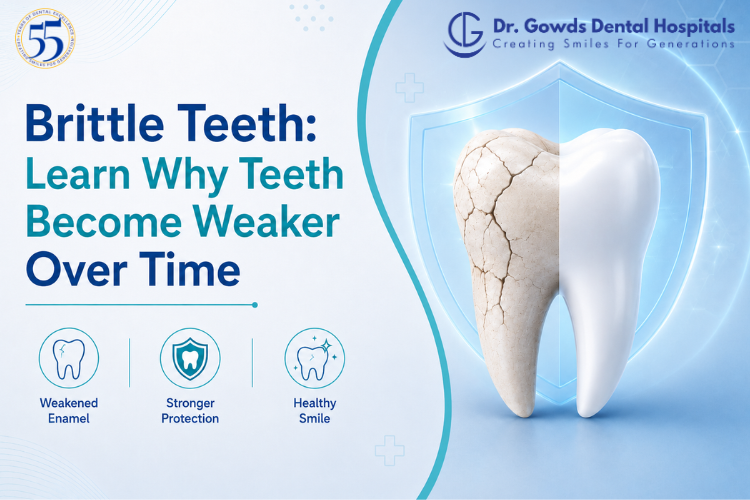
Brittle teeth are more common as people age because tooth enamel gradually wears down, the inner tooth structure becomes less flexible, saliva production often decreases, and decades of chewing place repeated stress on the teeth. Although aging increases the risk of cracked or broken teeth, good oral hygiene, preventive dental care, and timely treatment can help keep your teeth strong for life.
At Dr. Gowds Dental Hospitals, dentists frequently help patients preserve aging teeth through preventive care, restorative dentistry, and personalized treatment plans designed to reduce the risk of fractures and maintain long-term oral health.
Brittle teeth are teeth that have become weaker and are more likely to:
Unlike healthy teeth, brittle teeth cannot withstand normal biting forces as effectively.
Although brittle teeth are more common in older adults, they can also affect younger individuals due to certain medical conditions, lifestyle habits, or dental problems.
Growing older does not automatically mean your teeth will become weak. However, several natural changes occur over time that can reduce their strength.
Enamel is the hardest substance in the human body, but it cannot regenerate once it is lost.
Throughout life, enamel experiences constant wear from:
As enamel becomes thinner, the underlying dentin becomes more exposed, making teeth more vulnerable to cracks and fractures.
Beneath the enamel lies dentin, which supports the tooth.
With age, dentin undergoes natural changes:
As flexibility decreases, teeth become more susceptible to breaking under pressure.
The average person chews thousands of times every day.
After decades of daily function, tiny stress lines called craze lines may develop.
Most craze lines are harmless, but repeated stress can eventually weaken the tooth structure and increase the likelihood of fractures.
Many people grind or clench their teeth without realizing it, especially during sleep.
Over time, bruxism can cause:
Years of untreated grinding significantly increase the risk of brittle teeth.
Saliva is essential for protecting teeth.
It helps:
As people age, saliva production may decrease due to medications, certain medical conditions, or natural changes in the salivary glands.
Dry mouth leaves teeth more vulnerable to decay, erosion, and fractures.
Acids gradually dissolve minerals from enamel.
Common sources include:
Long-term acid exposure accelerates enamel erosion and contributes to brittle teeth.
Older adults often have teeth that contain:
While these restorations protect damaged teeth, extensive loss of natural tooth structure may reduce the tooth’s overall strength over time.
Age is not the only reason teeth become brittle.
Other contributing factors include:
Low intake of calcium, vitamin D, and phosphorus may affect overall tooth health.
Large cavities weaken tooth structure and increase fracture risk.
Certain conditions may contribute to weakened teeth, including:
Smoking affects blood flow, oral tissues, and overall dental health, indirectly increasing the risk of tooth damage.
Brittle teeth often develop gradually.
Common warning signs include:
Pain while eating hot, cold, or sweet foods may indicate enamel loss.
Minor chips often appear before larger fractures occur.
Fine lines may become visible on the tooth surface.
Healthy teeth should not fracture while eating everyday foods.
Repeated fillings or broken restorations may suggest weakened tooth structure.
The likelihood of developing brittle teeth increases in people who:
Although lost enamel cannot grow back naturally, dentists can strengthen weakened teeth and reduce the risk of future fractures.
Treatment depends on the severity of damage.
Brittle teeth are a common concern as people grow older, but aging alone is not the only cause. Years of enamel wear, reduced saliva, teeth grinding, acid exposure, and previous dental treatments all contribute to weakening the natural tooth structure.
The good news is that brittle teeth can often be protected through preventive dental care, healthy lifestyle habits, and timely restorative treatment. Recognizing early warning signs and seeking professional care before a tooth fractures can help preserve your natural smile for many years.
If you have noticed chipped teeth, cracks, increased sensitivity, or teeth that seem to break more easily, the experienced team at Dr. Gowds Dental Hospitals can evaluate your oral health and recommend personalized solutions to strengthen and protect your teeth.
Visit us at-
Dr gowds dental hospital Nanakramguda
Dr gowds dental hospital Gachibowli
Dr gowds dental hospital madhapur
Brittle teeth can result from enamel wear, aging, teeth grinding, dry mouth, acid erosion, nutritional deficiencies, or extensive dental restorations.
Yes. Over time, enamel wears down and the inner tooth structure becomes less flexible, increasing the risk of cracks and fractures.
Yes. Depending on the severity, treatments such as dental bonding, crowns, fluoride therapy, or root canal treatment can restore strength and function.
Brush gently with fluoride toothpaste, stay hydrated, limit acidic foods, wear a night guard if you grind your teeth, and attend regular dental checkups.
Sometimes. Deficiencies in calcium, vitamin D, or phosphorus may contribute to weakened teeth, although brittle teeth are often caused by multiple factors.
 Gachibowli Branch