

Schedule Appointment

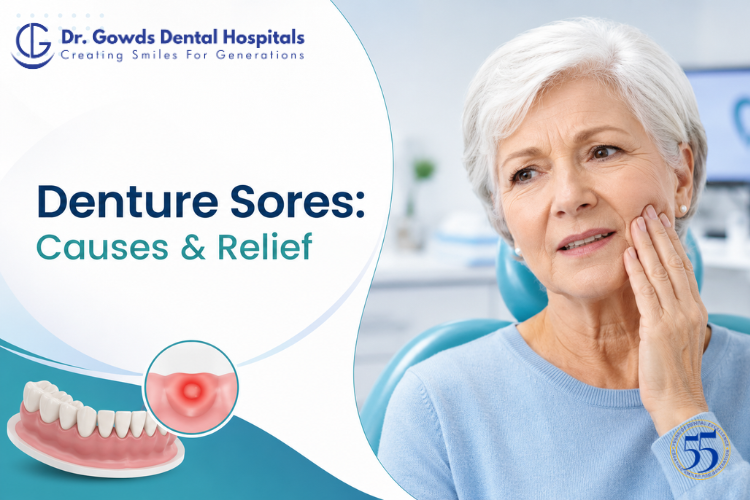
Denture sores are common during the first few days or weeks after receiving new dentures. Mild discomfort, pressure, and sore spots are part of the adjustment process as your gums, cheeks, and tongue adapt to the appliance. However, severe pain, persistent ulcers, bleeding, or dentures that feel loose or unstable are not normal and should be evaluated by a dentist.
At Dr. Gowds Dental Hospitals, denture specialists carefully design, fit, and adjust dentures to maximize comfort, restore chewing function, and help patients adapt with minimal discomfort.
Denture sores are painful or tender areas that develop where dentures repeatedly rub against the gums or other soft tissues inside the mouth.
These sore spots usually occur because the oral tissues are adjusting to new pressure or because the dentures need minor adjustments.
Most denture sores are temporary and improve after professional adjustments and proper denture care.
Yes—mild denture sores and discomfort are normal, especially if you have recently started wearing dentures.
Your mouth needs time to adapt to:
Most patients notice gradual improvement within the first few weeks.
The duration varies depending on the individual and the fit of the dentures.
You may experience:
As your mouth adjusts, discomfort usually begins to decrease.
Minor denture adjustments by your dentist often improve comfort significantly.
Most patients adapt well and can wear their dentures comfortably throughout the day.
Persistent pain beyond this period usually indicates that the dentures require professional adjustment.
Several factors can contribute to denture sores and discomfort.
Your gums have never supported an artificial appliance before.
The tissues need time to become accustomed to:
This is the most common reason for early denture discomfort.
Even accurately fabricated dentures may have tiny pressure areas.
Repeated pressure in one location can cause:
Fortunately, these areas are usually easy to correct with minor adjustments.
Dentures that are too loose or too tight can create continuous friction against the gums.
Ill-fitting dentures may cause:
Professional adjustment is often necessary to improve the fit.
After tooth loss, the jawbone gradually shrinks over time.
As the bone changes, dentures may no longer fit properly.
This can increase:
Regular dental reviews help identify when dentures need relining or replacement.
Saliva acts as a natural lubricant between the dentures and oral tissues.
Dry mouth reduces this protection, increasing friction and discomfort.
Common causes include:
Managing dry mouth often improves denture comfort.
Dentures that are not cleaned properly can accumulate bacteria and fungi.
This may lead to inflammation of the tissues beneath the dentures, increasing soreness and discomfort.
Daily denture cleaning is essential for maintaining healthy gums.
During the adjustment period, it is common to experience:
These symptoms generally become less noticeable as your mouth adapts.
Persistent or severe symptoms should never be ignored.
Seek dental care if you experience:
Dentures should not cause intense or unbearable pain.
Large ulcers or sores that do not heal require professional evaluation.
Occasional mild irritation may occur, but continuous bleeding is not normal.
Dentures that move excessively while eating or speaking require adjustment.
Persistent inability to chew comfortably suggests the dentures may not fit correctly.
While professional adjustments are often necessary, these measures may help reduce temporary discomfort.
A gentle saltwater rinse may soothe irritated tissues.
Choose foods such as:
This reduces pressure on sore areas during healing.
Allowing the gums to rest overnight promotes tissue recovery and reduces irritation.
Clean dentures daily using a denture brush and a non-abrasive denture cleanser.
Avoid regular toothpaste, as it may scratch the denture surface.
Adequate hydration supports saliva production and reduces friction between dentures and oral tissues.
Denture sores are a common part of adjusting to new dentures, but they should improve as your mouth adapts and your dentist makes necessary adjustments. Mild soreness, pressure, and temporary chewing difficulties are expected during the first few weeks, whereas persistent pain, bleeding, or loose dentures require professional attention.
Regular follow-up visits, good denture hygiene, and timely adjustments are essential for long-term comfort and oral health. If your dentures continue to cause discomfort, the specialists at Dr. Gowds Dental Hospitals can identify the cause and recommend personalized solutions to help you wear your dentures comfortably and confidently.
Visit us at-
Dr gowds dental hospital Nanakramguda
Dr gowds dental hospital Gachibowli
Dr gowds dental hospital madhapur
Yes. Mild denture sores are common when wearing new dentures and usually improve after your mouth adjusts and minor denture adjustments are made.
Most denture sore spots improve within a few days after adjustment, although complete adaptation to new dentures may take several weeks.
Pain while eating is often caused by pressure points, sore gums, or dentures that require adjustment. Persistent pain should be evaluated by your dentist.
Unless your dentist advises otherwise, continue wearing your dentures before your adjustment appointment so the sore areas can be accurately identified. After the appointment, follow your dentist’s instructions regarding wear time.
Maintain good denture hygiene, remove your dentures at night, attend regular dental checkups, and have your dentures adjusted whenever they become loose or uncomfortable.
 Gachibowli Branch