
Schedule Appointment

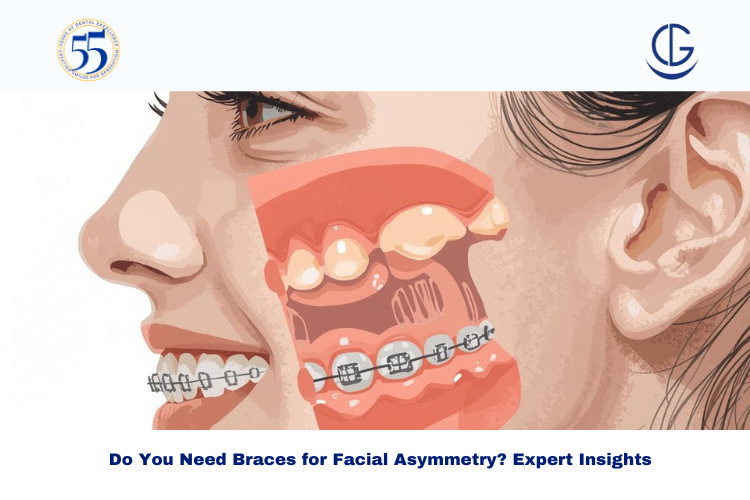
Facial asymmetry can come from several different sources, including tooth position, bite relationships, jaw growth, muscle activity, TMJ-related factors, and natural facial structure.
Braces may help when the asymmetry is related to dental alignment or certain bite problems. However, orthodontic treatment cannot correct every cause of facial asymmetry, especially when the main issue is skeletal, muscular, neurological, or unrelated to the teeth.
At Dr Gowds Dental Hospital in Hyderabad, evaluation can help determine whether the imbalance is mainly dental, skeletal, muscular, or joint-related before deciding whether braces, another orthodontic approach, or a different treatment pathway is appropriate.
If you are noticing jaw shifts, an uneven bite, smile asymmetry, or differences in chewing function, a clinical evaluation can help identify whether orthodontic treatment may be useful.
Before deciding whether braces may help, it is important to understand what type of asymmetry is present.
Facial imbalance may be mainly dental, skeletal, muscular, TMJ-related, or a combination of factors. The expected benefit from orthodontic treatment depends on which of these is actually contributing.
Dental asymmetry may involve differences in tooth position, crowding, spacing, bite relationships, or dental midlines.
These problems can sometimes affect smile symmetry or how the jaw closes.
When facial asymmetry has a meaningful dental or bite-related component, orthodontic treatment may help address that part of the problem.
Skeletal asymmetry involves differences in the size, position, or shape of the jaws or facial bones.
Examples may include jaw growth differences, chin deviation, or significant upper- and lower-jaw discrepancies.
Braces alone cannot correct major skeletal asymmetry. In selected cases, combined orthodontic and surgical treatment may be considered.
TMJ-related problems can affect jaw movement and may occur alongside facial asymmetry.
Possible signs include jaw clicking, pain, shifting during movement, or an uneven bite.
These symptoms do not necessarily mean the TMJ is causing the facial asymmetry, so joint, muscle, and bite factors should be assessed together.
Braces mainly change tooth position and bite relationships. When facial asymmetry has a dental or bite-related component, improving those relationships may also improve smile balance or how the lower face functions.
However, braces do not directly reshape every part of the face, and the amount of visible change depends on the underlying cause.
Braces can help correct certain bite problems such as crossbite, overbite, underbite, or dental midline differences.
This may improve how the teeth meet and how the jaw closes, but it should not be assumed that bite correction will automatically change overall facial symmetry.
Better dental alignment may help the jaw close more consistently in some patients.
This can be useful when an uneven bite is contributing to functional differences, but braces do not directly treat every TMJ or muscular problem.
If the upper or lower dental midline is off-centre, orthodontic treatment may improve tooth alignment and smile symmetry.
A dental midline correction does not necessarily mean the entire face will become symmetrical.
Braces may influence smile appearance and lower-face proportions in some patients as the teeth and bite change.
The amount of visible facial change varies and is usually more limited when the main cause is skeletal or unrelated to the teeth.
Braces alone may not be enough when facial asymmetry is mainly caused by skeletal jaw differences rather than tooth position or bite alignment.
In those cases, the treatment approach depends on the type and severity of the jaw discrepancy, the patient’s age, growth status, symptoms, and functional needs.
Orthognathic surgery may be considered in selected cases of significant skeletal jaw asymmetry, especially when the discrepancy affects bite function, jaw position, or facial balance.
This is usually planned together with orthodontic treatment rather than as a standalone cosmetic procedure.
Non-surgical treatment may be appropriate when the problem is mainly dental, functional, or TMJ-related rather than a major skeletal discrepancy.
Depending on the diagnosis, options may include:
Adults can still receive orthodontic treatment for dental alignment and bite-related problems.
Braces or clear aligners may be considered when facial asymmetry is associated with:
In such cases, a combination of orthodontic jaw correction and surgical options may be recommended.
Evaluation may include:
Depending on the case, photographs, digital scans, X-rays, or other imaging may also be recommended.
The purpose of the assessment is to determine whether braces are likely to address the relevant dental or bite-related component, or whether another treatment approach or specialist evaluation may be more appropriate.
Facial asymmetry has many causes, and the right treatment depends on whether the imbalance is dental, skeletal, or joint-related. Braces for facial asymmetry can make a significant improvement when the issue involves the teeth, bite, or functional jaw movement. For more complex skeletal concerns, targeted jaw correction may be needed.
At Dr Gowds Dental Hospital in Hyderabad, we create personalized treatment plans that restore comfort, function, and balance—helping your face look naturally harmonious.
If you’re unsure whether braces, jaw correction, or TMJ therapy is right for you, scheduling a consultation is the best first step.
Yes. When the imbalance is dental or bite-related, braces for facial asymmetry can improve alignment and overall balance.
It depends on whether your imbalance is skeletal or dental. Mild cases respond to braces. Severe cases may need jaw correction for facial symmetry.
Braces do not change bone shape, but they can improve lower facial proportions, smile balance, and jaw posture.
Not always. Some patients respond to non-surgical jaw correction options or combined orthodontic therapy.
Yes. We provide orthodontic treatment, TMJ care, bite correction, and jaw alignment therapy for patients with facial imbalance.
 Gachibowli Branch