

Schedule Appointment

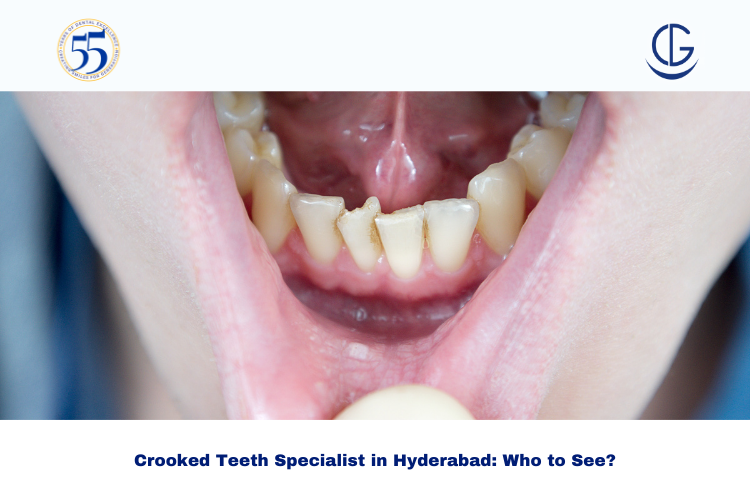
Crooked teeth specialist choices can feel confusing, especially when you’re trying to decide between an orthodontist vs dentist for the right treatment. If you’re in Hyderabad and wondering who you should consult first, this guide will help you make a clear, confident decision—based on your smile goals, your bite concerns, and the complexity of your case.
At Dr Gowds Dental Hospitals, patients across Hyderabad commonly ask this exact question: “Do I need an orthodontist, or can a general dentist treat crooked teeth?” The honest answer is: it depends on what’s causing the misalignment and what outcome you want. Some cases are cosmetic and minor. Others involve bite problems, jaw alignment, crowding, or long-term stability that require specialist orthodontic planning.
Dr Gowds Dental Hospitals is known as one of the Best Dental Hospitals in Hyderabad for advanced smile correction options—from braces to clear aligners and complete aesthetic dentistry planning.
If you’re searching for the right crooked teeth specialist in Hyderabad, book a consultation at Dr Gowds Dental Hospitals to meet an orthodontist, understand your options (braces or aligners), and get a treatment plan tailored to your lifestyle.
Crooked teeth are not just about appearance. In many cases, misalignment can affect:
This is why choosing the right provider—orthodontist vs dentist—matters. A dentist may be able to improve how teeth look, but an orthodontist focuses on how teeth and jaws function together over time.
Many people assume both do the same job, but their training and scope are different.
A general dentist is your primary dental care provider. They commonly handle:
A skilled general dentist can also guide you if you need braces or aligners and refer you to an orthodontist when your case requires specialist planning.
An orthodontist is a dentist with additional specialty training focused on:
If you’re specifically searching for a crooked teeth specialist, you’re typically looking for an orthodontist—especially when teeth movement and bite correction are involved.
You should consult an orthodontist (crooked teeth specialist) if you notice:
A general dentist may be appropriate when:
That said, even in these cases, a dentist may still coordinate with an orthodontist for best outcomes—because straightening teeth without correcting bite forces can create future issues.
Understanding orthodontist vs dentist recommendations becomes easier when you see what each treatment aims to solve.
Braces are often preferred for:
Aligners can be great for:
But aligners still need expert case planning—not every case is suitable without specialist oversight.
Veneers may improve appearance quickly, but they do not move teeth. They are usually used for:
Important: Veneers are not a substitute for orthodontics when bite correction is needed.
Many modern cases benefit from:
This is where a multi-specialty setup matters—because your plan is coordinated, not fragmented.
A common assumption is: “If my teeth look straighter, treatment is successful.”
That’s not always true.
The real goal is:
That’s why seeing the right crooked teeth specialist matters—especially for long-term comfort and confidence.
And if you want both expertise streams coordinated smoothly, choose a multi-specialty setup where dentists and orthodontists work together under one roof.
Clear aligners are popular because they’re discreet and lifestyle-friendly. But the key is case suitability.
Aligners can work well when:
Aligners may not be ideal without added planning if:
A consultation with a crooked teeth specialist helps you avoid wasting time and money on the wrong approach.
Ready to speak with a crooked teeth specialist in Hyderabad? Book your consultation at Dr Gowds Dental Hospitals and get clarity on orthodontist vs dentist, braces vs aligners, and the most comfortable path to a confident smile. Visit your nearest branch in Gachibowli, Madhapur, Koti, Nanakramguda , and explore aligner treatment with a specialist-led plan.
You may feel pressure or mild soreness for a few days after adjustments or new aligners. It is usually manageable and temporary, not constant pain.
If your issue involves bite correction, crowding, or long-term alignment stability, an orthodontist (crooked teeth specialist) is typically the right choice. For minor cosmetic concerns, a general dentist may help—but many cases benefit from both.
Dr Gowds Dental Hospitals is widely recognized for coordinated, specialist-led care and patient-friendly planning. You can ask for a clear treatment roadmap, expected duration, and follow-up schedule during your consultation.
Treatment time depends on severity and method. Mild cases may take a few months, while more complex alignment or bite correction can take 12–24 months. Your orthodontic plan will give a realistic timeline.
Teeth can relapse without proper retainer use. A good orthodontic plan includes retention strategy and follow-ups to help maintain results long-term.

 Gachibowli Branch