
Schedule Appointment

When it comes to dental health, two of the most common issues patients face are crooked teeth and misaligned bites. While these terms are often used interchangeably, they refer to two different dental concerns. Crooked teeth vs misaligned bite may sound similar, but they have distinct causes, symptoms, and treatments. Understanding the difference between these two conditions is crucial in determining the right course of action for improving your oral health and enhancing your smile.
At Dr. Gowds Dental Hospitals, one of the Best Dental Hospitals in Hyderabad, we frequently help patients address these concerns through our comprehensive dental services. Our experienced orthodontists and dental specialists are here to provide personalized care for all your dental alignment needs.
Let’s dive into the key differences between crooked teeth vs misaligned bites, explore their causes, and discuss the treatment options available to achieve a perfect smile.
Book an appointment today at Dr Gowds Dental Hospitals!
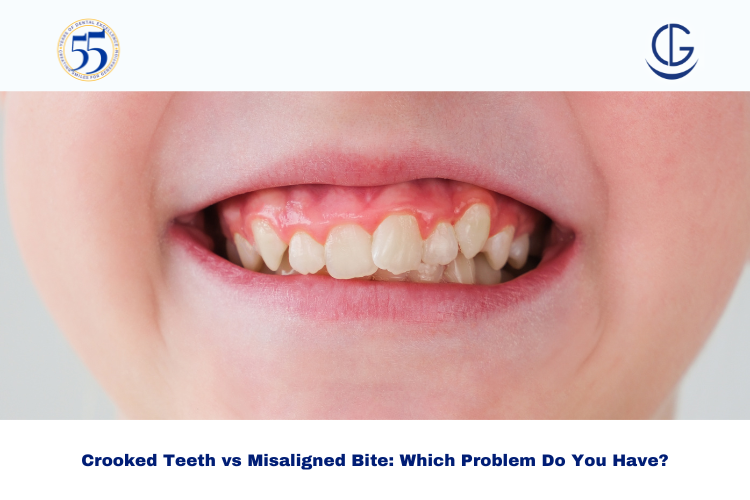
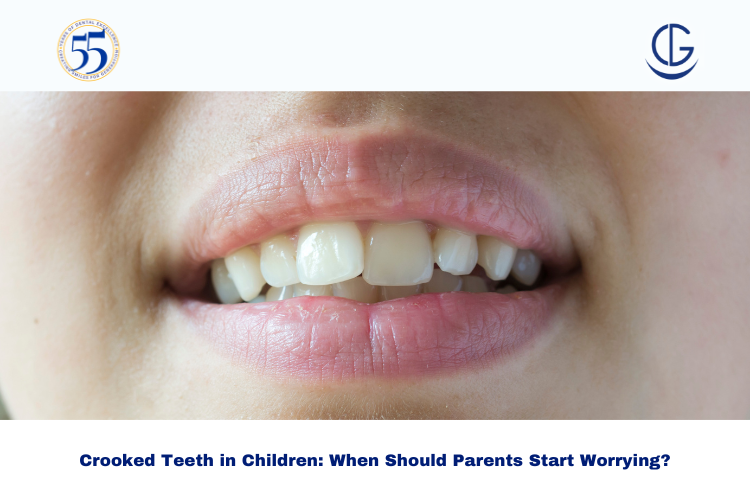
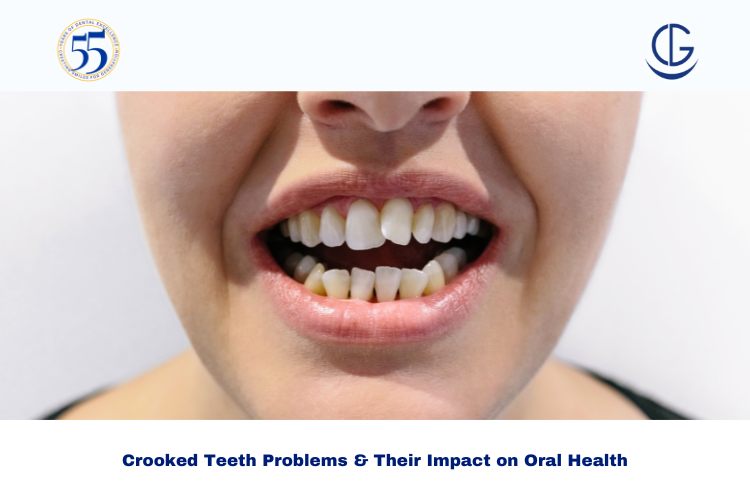
Crooked teeth refer to teeth that are not straight or aligned properly in the mouth. They can overlap, twist, or have gaps, making them less than ideal from both a functional and aesthetic standpoint. Crooked teeth can occur for a variety of reasons, including:
Although crooked teeth may not always cause significant problems, they can affect your self-esteem and make dental hygiene more challenging. Misalignment can lead to issues such as:
Treatment for crooked teeth typically involves orthodontic solutions such as braces or clear aligners. These methods gradually move the teeth into the correct position, improving both their appearance and function.
A misaligned bite, also known as malocclusion, refers to an improper relationship between the upper and lower teeth when the mouth is closed. Unlike crooked teeth, which focus on individual teeth, malocclusion deals with the alignment of the jaws and the way the teeth fit together. Types of malocclusion include:
Malocclusion can cause several functional problems, including:
| Feature | Crooked Teeth | Misaligned Bite (Malocclusion) |
| Definition | Teeth that are out of alignment | A misalignment of the upper and lower jaws when the mouth is closed |
| Appearance | Teeth may overlap, rotate, or have gaps | The teeth may not align properly when the mouth is closed, causing difficulty in biting |
| Causes | Genetics, habits, early tooth loss | Jaw size discrepancies, genetic factors, or childhood habits |
| Symptoms | Aesthetic concerns, difficulty cleaning teeth | Difficulty chewing, jaw pain, headaches, tooth wear |
| Treatment | Braces, aligners, veneers | Braces, clear aligners, jaw surgery (for severe cases) |
An overbite occurs when the upper teeth excessively overlap the lower teeth. This can cause discomfort when biting or chewing and may result in wear on the lower teeth.
In an underbite, the lower teeth extend beyond the upper teeth. This is typically noticeable when the mouth is closed, and it can affect the way you chew, speak, and smile.
Crossbite is when one or more of the upper teeth sit inside the lower teeth. This can cause tooth wear, gum recession, and bone loss if not addressed.
Open bite occurs when there’s a gap between the upper and lower teeth even when the mouth is closed. This can interfere with chewing and speaking, and may also lead to problems with jaw alignment.
Both crooked teeth and malocclusion can have negative effects on your dental health and overall well-being. Here’s why it’s important to address them:
Treatment for crooked teeth typically involves orthodontic solutions such as:
At Dr. Gowds Dental Hospitals, we offer a wide range of orthodontic and surgical treatments for both crooked teeth and misaligned bites. Our skilled team is here to create a personalized treatment plan based on your unique dental needs.
Understanding crooked teeth vs misaligned bite is essential for finding the right treatment to improve your oral health. Whether you’re dealing with mild misalignments or more complex bite issues, Dr. Gowds Dental Hospitals in Hyderabad is here to help you achieve a perfect smile. Schedule your consultation today and let us guide you to a healthier, more confident smile.
Visit us at our convenient locations in Gachibowli, Madhapur, Koti, Nanakramguda and start your journey towards a straighter, more aligned smile.
Crooked teeth refer to misaligned individual teeth, while malocclusion refers to a misaligned bite where the upper and lower teeth do not meet properly.
Yes, malocclusion can lead to jaw pain, headaches, and even difficulty chewing. It places unnecessary strain on the jaw muscles.
Treatment time varies depending on the severity of the misalignment. Braces typically take 18-24 months, while clear aligners may take 12-18 months.
In most cases, malocclusion can be treated with braces or clear aligners. Surgery is only recommended for severe cases.
If you experience difficulty chewing, jaw pain, or aesthetic concerns with your teeth, it’s best to consult with an orthodontist at Dr. Gowds Dental Hospitals for a thorough evaluation.
 Gachibowli Branch