

Schedule Appointment

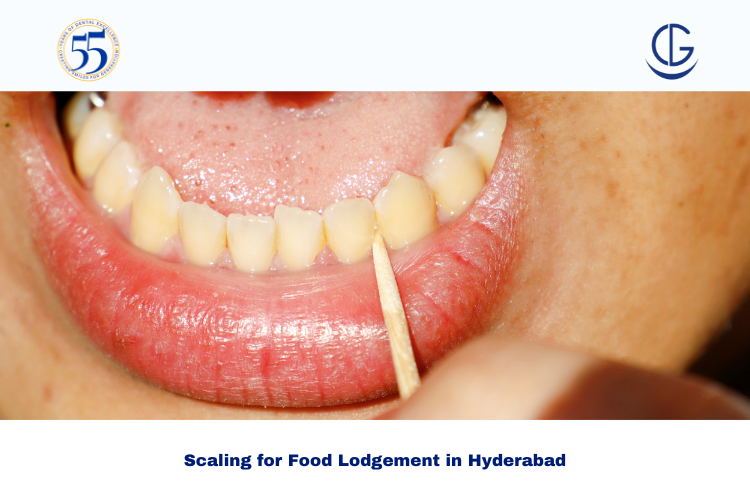
Food getting stuck between teeth isn’t always “normal” — and scaling for food lodgement is often the most practical first step when the root cause is tartar buildup, inflamed gums, or early gum disease. If you live in Hyderabad and you’ve started noticing frequent food trapping, bad breath, gum bleeding, or pressure between teeth after meals, this guide will help you understand when scaling is enough, when you may need deeper care, and how to prevent the problem from returning.
At Dr Gowds Dental Hospitals, we see food lodgement complaints daily across Hyderabad — especially in patients with gum inflammation, crowded teeth, old fillings, or early bone loss. Early treatment is simple. Delayed treatment can become complicated.
If food lodgement is bothering you repeatedly, don’t self-diagnose. Book a consultation at Dr Gowds Dental Hospitals.
Food lodgement is not just about “something stuck.” It’s usually a signal that something has changed in your mouth — either in your gums, tooth alignment, restorations, or bite.
Common reasons include:
Dental scaling is a professional cleaning that removes:
Scaling smoothens surfaces where food and bacteria cling, and helps gums tighten back around the teeth when inflammation is the main cause.
For many patients, scaling for food lodgement solves the issue quickly — especially if there’s bleeding during brushing, mild gum swelling, or buildup between teeth.
People often use “cleaning” as one word, but clinically there’s a difference:
Best when:
Often recommended when:
You should consider scaling when any of the following are true:
If it’s always the same two teeth, it usually means:
Bleeding is one of the earliest signs of gum inflammation. Inflamed gums loosen their seal, allowing food to pack more easily.
Persistent bad breath can be due to bacterial buildup around the gumline and under tartar — scaling removes that layer.
Tartar feels like a “sandpaper” patch. That roughness is a magnet for food lodging.
In many Hyderabad patients, food lodgement reduces significantly after a cleaning simply because deposits were causing the issue.
Here’s the truth: scaling is not a universal fix. If the cause is structural, you’ll need additional treatment.
Scaling may not fully solve food lodgement if you have:
A careful dental exam is essential because “food stuck” can be a symptom of multiple problems — not just tartar.
At Dr Gowds Dental Hospitals, the diagnosis usually involves:
This is especially important if you feel:
Most patients want to know what it feels like. A typical scaling appointment includes:
Usually not, but you may feel:
If your gums are very tender, your dentist may suggest numbing gel or proceed gently in sections.
Scaling improves things — but prevention keeps it away.
Here’s a key point many patients miss: sometimes food lodgement is caused by misaligned teeth or shifting contacts.
If you have:
…even perfect brushing won’t fully stop food from packing.
In those cases, you may benefit from:
That’s why an evaluation is important — to avoid repeating cleanings without fixing the underlying cause.
Food getting stuck isn’t something you should keep “adjusting” to. The earlier you treat the cause, the easier and more comfortable the solution.
Visit your nearest Hyderabad branch in Gachibowli, Madhapur, Koti, Nanakramguda.
If crowding or spacing is driving the issue, talk to an orthodontist and explore aligner treatment options for a long-term fix.
If food gets stuck repeatedly in the same area, home care may not solve it because tartar and gum inflammation can create traps. Scaling removes the hard deposits brushing cannot remove.
Most patients feel mild discomfort, not pain. Sensitivity depends on inflammation levels. Your dentist can use gentle techniques and comfort measures when needed.
If you have frequent bleeding, persistent bad breath, or deeper gum pockets, deep cleaning may be recommended because deposits are below the gumline.
Many patients notice improvement immediately or within a few days. If the cause is structural (cavity, filling edge, spacing), you may need additional treatment.
Yes, sometimes. Food lodgement can be an early sign of gum pocket formation, recession, or periodontal issues. Early evaluation helps prevent progression.
 Gachibowli Branch