

Schedule Appointment

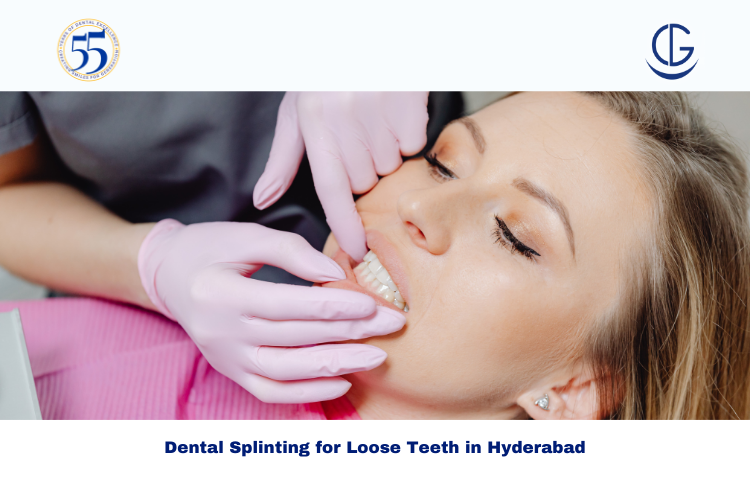
Dental splinting for loose teeth is a proven way to stabilize mobile teeth, reduce discomfort while chewing, and protect your smile while the underlying cause is treated. If you’ve noticed a tooth moving when you speak, eat, or brush—or you feel a “wobble” that wasn’t there earlier—don’t ignore it.
At Dr Gowds Dental Hospitals, we see many Hyderabad patients with loose teeth due to gum disease, trauma, bite issues, or habits like teeth grinding. Early care often helps prevent worsening mobility and can reduce the risk of tooth loss.
If you have a loose tooth, don’t wait for it to get worse. Book a consultation at Dr Gowds Dental Hospitals.
Tooth splinting (also called splinting loose teeth) is a dental procedure where a mobile tooth is joined to neighboring stable teeth using a supportive material. Think of it as creating a “team” of teeth—sharing biting forces so the loose tooth is not overloaded.
Splinting can be:
It’s important to understand: splinting often stabilizes the tooth, but it doesn’t automatically cure the cause of looseness. The best outcomes happen when splinting is combined with proper diagnosis and treatment—especially for gum disease.
A loose tooth in adults is usually a sign that the supporting structures (gum tissue and bone) are under stress. Common causes we see in Hyderabad patients include:
This is one of the most common causes. Infection and inflammation can lead to bone loss, making teeth mobile.
Constant pressure from grinding can loosen teeth over time, especially if there’s also gum weakness.
A fall, sports injury, or accidental hit can loosen a tooth even if it looks fine from the outside.
If your bite is uneven, one or two teeth may take excessive load. This can lead to mobility and discomfort while chewing.
Sometimes, old restorations change bite balance and contribute to mobility.
Your dentist may recommend dental splinting for loose teeth when:
Key Note: Splinting is not a “cover-up.” Done correctly, it’s a protective step that supports healing and reduces further damage—especially when paired with gum care and bite correction.
At a specialist-led dental setup like Dr Gowds Dental Hospitals, the splint type is chosen based on mobility level, tooth position, bite force, hygiene ease, and your long-term treatment plan.
A thin fiber strip is placed and bonded with tooth-colored composite behind the teeth.
Benefits: discreet, strong, comfortable, fast.
A wire is bonded across multiple teeth for stability.
Benefits: effective support, commonly used for trauma cases.
Used when you need short-term support—like after an injury or during gum treatment.
Benefits: easy to remove/adjust.
Used in cases with ongoing support needs, usually with periodontal bone loss and controlled gum health.
Benefits: prevents worsening mobility when carefully maintained.
Here’s how tooth splinting is typically done:
Your dentist checks:
The tooth surfaces are cleaned and isolated. If gum disease is present, deep cleaning may be recommended first or alongside splinting.
A fiber strip or wire is placed along the inner side of the teeth (or where appropriate) and bonded using composite.
Your bite is checked carefully to ensure the splint doesn’t take abnormal force. The splint is polished so it feels smooth.
Typical chair-time: Usually 30–60 minutes depending on how many teeth are being splinted.
Splinting isn’t just about stopping movement—it can significantly improve day-to-day comfort. Major benefits include:
After dental splinting for loose teeth, aftercare decides how long the splint lasts and how well the tooth improves.
Avoid:
Prefer:
Because splints create extra surfaces, plaque can accumulate if cleaning is weak.
Use:
If periodontitis caused the looseness, splinting alone won’t solve it. You may need:
Call your dentist if you notice:
If grinding is contributing, a night guard can protect both the splint and your teeth.
There isn’t one fixed answer because it depends on:
Some splints last a few weeks to months (temporary), while others can last longer with proper care and follow-ups.
This is where many patients get confused: “If my tooth is stable, am I done?”
Not always. If your bite is the reason a tooth became loose, long-term stability often requires bite correction.
Depending on your case, your dentist may recommend:
At Dr Gowds, orthodontists can evaluate whether alignment correction will reduce stress on the splinted tooth—helping protect it long-term.
A loose tooth is often a warning sign—but it doesn’t always mean tooth loss. With the right diagnosis and timely dental splinting for loose teeth, many teeth can be stabilized and protected for the long term.
Visit your nearest Hyderabad branch— Gachibowli, Madhapur, Koti, Nanakramguda—and speak to an orthodontist or specialist about tooth splinting, complete loose tooth treatment, and whether you should explore aligner treatment to improve bite balance and protect your smile.
Most patients feel minimal discomfort. The procedure is usually quick, and any soreness is commonly due to the underlying gum or bite issue—not the splint itself.
Splinting stabilizes the tooth, but the long-term result depends on treating the root cause (gum disease, grinding, trauma, or bite problems).
You can, but you should avoid very hard or sticky foods—especially in the first few days—and follow the dentist’s eating guidance based on which teeth were splinted.
A soft brush plus interdental brushes or a water flosser usually works well. Your dentist may suggest specific tools depending on where the splint is placed.
Yes—patients typically choose Dr Gowds because the evaluation is specialist-led and the treatment plan includes stabilization plus long-term solutions like gum care and bite correction when needed.
 Gachibowli Branch