

Schedule Appointment

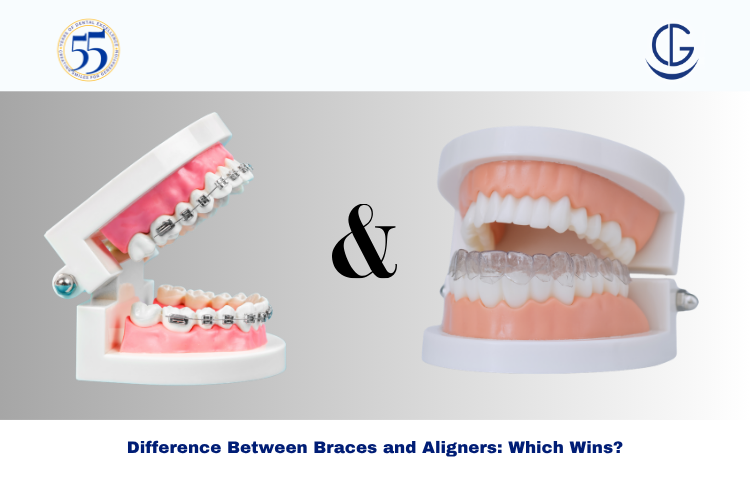
The difference between braces and aligners is a question that lands on our consultation desk at Dr Gowds Dental Hospitals more than almost any other in orthodontics. Patients arrive having done their research — they have read about Invisalign, seen before-and-after photographs, perhaps been quoted for both options — and they want a straight answer to what feels like a simple question: which one is better? The honest clinical answer is that neither is universally better. They are different tools designed for overlapping but not identical purposes, and the clinically superior choice for any individual patient depends on the specific nature of their malocclusion, their age, their lifestyle, their treatment history, and — critically — their compliance disposition.
| Medically Reviewed by: Prof. Dr. Snigdha Gowd, MDS (Orthodontics & Dentofacial Orthopaedics) |
| 📞 Call: 08065295050 | 📅 Book an Appointment Today |
Before comparing clinical performance, it is important to understand what these two appliances actually are and how each one moves teeth — because the mechanical difference between braces and aligners is not superficial. They operate through entirely different biomechanical principles.
Traditional braces — whether metal or ceramic — consist of brackets bonded directly to each tooth surface and connected by an archwire. The wire exerts a continuous, graduated force that moves teeth along its path. The orthodontist periodically adjusts the wire — increasing its stiffness, changing its shape, or adding auxiliary springs and elastics — to direct tooth movement. Because the wire is attached to every tooth simultaneously and cannot be removed, braces exert force 24 hours a day, 7 days a week, regardless of patient behaviour. This continuous force application is one of the core mechanical differences between braces and aligners.
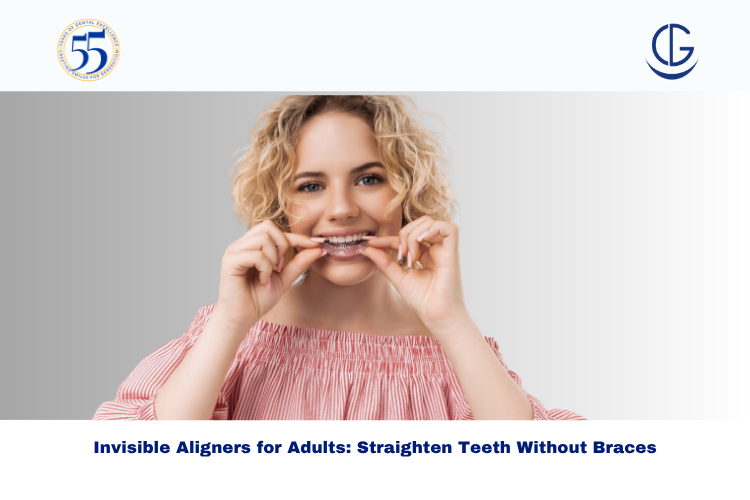
Clear aligners are custom-thermoformed plastic trays that fit over the teeth and move them through a series of small, sequenced positional changes. Each tray is slightly different from the previous one, directing specific teeth in specific directions. The aligner material’s elastic memory creates the force against the tooth surface. Attachments — small composite handles bonded to teeth — allow aligners to exert directional forces that a smooth tray surface alone cannot achieve. Unlike braces, aligners are removable. This removability is simultaneously their greatest practical advantage and their most significant clinical vulnerability — because the force they exert exists only when they are being worn. [See: How Clear Aligners Work — Blog I05]
This fundamental mechanical difference between braces and aligners — continuous vs intermittent force; fixed vs removable — drives most of the clinical comparisons that follow.
The following dimension-by-dimension comparison covers every factor that matters when choosing between braces and aligners for orthodontic treatment. Each section gives both appliances a fair clinical assessment — and closes with an honest verdict about which performs better in that specific dimension.
| Dimension 1: Clinical Versatility — What Tooth Movements Can Each Appliance Achieve? | |
| Braces (Fixed Appliances) | Aligners (Clear Removable) |
| Braces handle the full spectrum of orthodontic tooth movements without exception. • Bodily tooth movement (root and crown move together) — fully achievable• Severe rotations of any tooth type — achievable with auxiliary springs• Large vertical movements (extrusion and intrusion) — achievable• Significant root torque — achievable with rectangular wires• Complex bite corrections (Class II, Class III) — achievable with elastics and auxiliaries• Skeletal expansion — achievable with palatal expanders used alongside braces Verdict: No clinical movement is beyond the capability of fixed braces. | Aligners handle a broad but defined range of movements — and have documented limitations. • Tipping movements — excellent• Mild to moderate rotations — good (difficult teeth: round-rooted canines, premolars)• Vertical movements — possible with attachments; extrusion is the most challenging• Root torque — limited without precision attachments; improving with newer systems• Bite correction — possible with precision bite ramps and Class II elastics• Skeletal expansion — limited; not suitable for significant arch expansion Verdict: Excellent for mild-moderate cases; limitations exist for complex movements. |
| ⯈ Clinical Verdict: For clinical versatility: Braces are the superior choice for complex, multi-axis tooth movements. Aligners perform excellently within their defined range. | |
| Dimension 2: Aesthetics — Which Is Less Visible During Treatment? | |
| Braces (Fixed Appliances) | Aligners (Clear Removable) |
| Metal braces: highly visible — silver brackets and wire Ceramic (tooth-coloured) braces: significantly less visible — brackets blend with tooth colour, wire still partially visible Lingual braces (bonded to inner tooth surfaces): invisible from the front — the most discreet fixed appliance Bottom line: Metal braces are the most visible orthodontic appliance. Ceramic and lingual options reduce visibility significantly but at higher cost. | Clear aligners: near-invisible when worn — the most aesthetically discreet removable option Attachments (composite buttons on teeth): slightly visible on close inspection No wire, no visible brackets on labial surfaces Bottom line: Clear aligners are the most aesthetically discreet treatment option available for patients who require removable appliances. |
| ⯈ Clinical Verdict: For aesthetics: Clear aligners win decisively for removable appliances. Lingual braces match them for fixed appliances but at significantly higher cost. | |
| Dimension 3: Comfort — Which Causes Less Discomfort During Treatment? | |
| Braces (Fixed Appliances) | Aligners (Clear Removable) |
| • Initial placement discomfort: significant — mucosal irritation from brackets, wire soreness• After each adjustment: 2–5 days of aching from wire tightening• Soft tissue trauma: common — cheek and lip cuts from wire ends and bracket edges• Emergency appointments: wire poking, bracket debonding are routine occurrences• Speech: minimal impact for labial brackets; temporary lisp with lingual braces• Overall comfort rating: lower than aligners, particularly in the first weeks | • Initial placement: mild — pressure sensation only; no sharp edges• After each tray change: 1–3 days of pressure and mild soreness, then resolves• Soft tissue trauma: rare — smooth tray edges rarely cause mucosal cuts• Emergency appointments: fewer — mainly limited to debonded attachments• Speech: mild temporary lisp on new trays, resolves within 24–48 hours• Overall comfort rating: higher than braces for most patients |
| ⯈ Clinical Verdict: For comfort: Aligners are consistently rated more comfortable than braces in patient-reported outcome studies. The difference is most significant in the first weeks of treatment. | |
| Dimension 4: Oral Hygiene — Which Is Easier to Keep Clean? | |
| Braces (Fixed Appliances) | Aligners (Clear Removable) |
| • Brushing: possible but significantly restricted by brackets and wire• Flossing: requires threaders or specialised floss — time-consuming• Plaque trapping: high — brackets create multiple retention sites• Risk of white spot lesions (enamel demineralisation): elevated, particularly around brackets• Dietary restrictions: hard, sticky, and crunchy foods prohibited to prevent bracket damage• Professional cleaning: required more frequently during treatment | • Brushing: fully normal — aligners are removed for brushing• Flossing: fully normal — aligners are removed for flossing• Plaque trapping: minimal — teeth are accessible for normal cleaning at all times• Risk of white spot lesions: significantly lower than braces• Dietary restrictions: none — aligners are removed for eating and drinking• Aligner cleaning: required twice daily — a small additional hygiene task |
| ⯈ Clinical Verdict: For oral hygiene: Aligners win decisively. The ability to remove aligners for brushing and flossing eliminates the primary hygiene challenge of orthodontic treatment. Patients with a history of gum disease particularly benefit. | |
| Dimension 5: Treatment Speed — Which Completes Treatment Faster? | |
| Braces (Fixed Appliances) | Aligners (Clear Removable) |
| • Mild crowding / spacing: 12–18 months typically• Moderate malocclusions: 18–24 months• Complex cases: 24–36 months• Force application: continuous (24/7) — no compliance variable• Speed is not affected by patient behaviour within the treatment plan• Adjustments every 4–6 weeks — more frequent appointments than aligners | • Mild crowding / spacing: 6–12 months (short-course cases possible)• Moderate malocclusions: 12–18 months• Complex cases: 18–24+ months• Force application: intermittent — only when worn (20–22 hrs/day minimum)• Speed is directly affected by compliance — poor wear time extends treatment• Monitoring every 6–8 weeks — fewer appointments than braces |
| ⯈ Clinical Verdict: For treatment speed: Aligners are faster than braces for mild-moderate cases in compliant patients. Braces are more predictably timed for complex cases where compliance cannot be relied upon. | |
| Dimension 6: Cost — What Is the Financial Difference Between Braces and Aligners? | |
| Braces (Fixed Appliances) | Aligners (Clear Removable) |
| • Metal braces (full treatment): ₹30,000 – ₹90,000• Ceramic braces (full treatment): ₹60,000 – ₹1,80,000• Lingual braces (full treatment): ₹1,50,000 – ₹4,00,000+• Cost is generally lower for mild-moderate cases with metal brackets• Usually includes monitoring appointments and retainer• Fewer digital technology costs built into the price | • Domestic clear aligners: ₹45,000 – ₹1,20,000• Invisalign (all tiers): ₹75,000 – ₹3,50,000+• Cost reflects digital planning technology, iTero scanning, and ClinCheck simulation• At Dr Gowd’s: package includes all trays, monitoring, refinements, and retainer• Premium clear aligner brands command premium pricing — justified by clinical outcomes data• No hidden per-appointment fees within the agreed scope of treatment |
| ⯈ Clinical Verdict: For cost: Braces (particularly metal) are more affordable for most case complexities. Clear aligners carry a premium for the aesthetic advantage and removability — a premium most adult patients consider entirely justified. | |
| Dimension 7: Compliance Dependency — Which Gives Predictable Results Regardless of Patient Behaviour? | |
| Braces (Fixed Appliances) | Aligners (Clear Removable) |
| • Fixed to teeth — cannot be removed by the patient• Force applied 24 hours a day, 7 days a week• Treatment progress is entirely determined by the clinician, not patient behaviour• Suitable for patients with uncertain compliance, teenagers, and children• Cannot be ‘skipped’ or ‘taken a break from’• Results are predictably timed and clinician-controlled | • Removable — patient controls when they are worn• Require 20–22 hours of daily wear for planned tooth movement• Treatment progress is partially determined by patient compliance• Ideal for motivated, self-disciplined adults and teens• Poor compliance leads to tracking errors, extended treatment, and inferior outcomes• Results are compliance-dependent — the clinician plans, the patient executes |
| ⯈ Clinical Verdict: For compliance-independent results: Braces are the clear choice for patients who cannot be relied upon to wear a removable appliance consistently — particularly children and unmotivated teenagers. Aligners reward highly compliant patients with superior aesthetics and comfort for equivalent clinical results. | |
| Dimension 8: Lifestyle and Daily Impact — Which Disrupts Daily Life Less? | |
| Braces (Fixed Appliances) | Aligners (Clear Removable) |
| • Eating: restricted — no hard, sticky, chewy foods throughout treatment• Sports: mouthguard required; contact sports carry bracket injury risk• Musical instruments: wind and brass players require significant adaptation• Professional impact: visible metal or ceramic hardware throughout• Social events: cannot be removed for photographs or important occasions• Travel: no special storage required; no case to carry | • Eating: unrestricted — remove aligners for all meals and drinks• Sports: aligners removed for contact sports; no bracket injury risk• Musical instruments: aligners removed for wind/brass playing as needed• Professional impact: near-invisible during wear; removable for critical meetings• Social events: can be removed for photographs, presentations, first dates• Travel: aligner case must be carried; losing trays requires prompt replacement |
| ⯈ Clinical Verdict: For daily lifestyle: Aligners offer significantly less disruption to eating, professional life, sports, and social situations. The lifestyle advantage of aligners is the primary reason adult patients overwhelmingly choose them when both options are clinically appropriate. | |
The following table translates the dimension-by-dimension analysis into a practical decision framework. Bring this to your consultation at Dr Gowd’s Dental Hospitals and ask your orthodontist to walk through it with your specific case in mind.
| Your Situation | Recommended | Clinical Reason |
| Severe crowding (>8mm) | Braces | Complex arch development and root control beyond aligner capability for many such cases |
| Mild to moderate crowding (<6mm) | Clear aligners | Excellent aligner indication; shorter treatment with high compliance |
| Significant overbite correction | Braces or Invisalign | Both can manage; Invisalign uses bite ramps + Class II elastics |
| Open bite (dental origin) | Invisalign preferred | Vertical extrusion movements well-managed with modern aligner systems |
| Anterior diastema closure | Clear aligners | Highly predictable gap closure; visually rewarding result |
| Severe rotation of canines | Braces | Round-rooted teeth are the most challenging for aligner rotation |
| Complex skeletal discrepancy | Braces + surgery | Surgical cases require fixed appliances for pre- and post-surgical control |
| Previous relapse post-braces | Clear aligners | Shorter treatment; excellent compliance in adult relapse patients |
| Teenager with uncertain compliance | Braces | Fixed force application removes compliance variable entirely |
| Professional adult, aesthetic priority | Clear aligners (Invisalign) | Near-invisible; removable for professional commitments |
| Active gum disease history | Clear aligners (after perio treatment) | Removability allows normal oral hygiene throughout treatment |
| Existing crowns, bridges, implants | Discuss with clinician | Complex restorative picture requires individual assessment |
| Budget-primary consideration | Metal braces | Most clinically effective per rupee spent across most case types |
| Maximum discretion required | Clear aligners or lingual braces | Both near-invisible; lingual braces for cases beyond aligner range |
The Honest Answer to Which Is Clinically Superior
The difference between braces and aligners is not a ranking — it is a clinical map. Braces are mechanically superior for complex, multi-axis tooth movements and compliance-uncertain patients. Clear aligners are clinically equivalent for mild to moderate cases and offer decisive advantages in aesthetics, comfort, oral hygiene, and daily lifestyle. The clinically superior choice is not the same appliance for every patient — it is whichever appliance, used by an experienced clinician, delivers the best outcome for your specific teeth, your specific jaw, and your specific life. At Dr Gowd’s Dental Hospitals, Prof. Dr. Snigdha Gowd and our orthodontic team offer both options. We have no financial preference between them — only a clinical commitment to recommending what is genuinely right for each patient. If you are still uncertain about the difference between braces and aligners as it applies to your own case, the clearest answer comes from a full clinical assessment. Come in, let us examine your teeth, run a ClinCheck simulation if appropriate, and give you the honest recommendation your smile deserves.
| Book Your Braces vs Aligners Consultation at Dr Gowds Dental Hospitals — Expert Assessment, Honest Recommendation, Both Options Available.Our Hyderabad branches: Gachibowli, Madhapur, Koti, Nanakramguda |
There is a genuine and clinically significant difference between braces and aligners — both in the range of tooth movements they can reliably achieve and in the biomechanical mechanism through which they work. For mild to moderate cases, both options can deliver equivalent clinical outcomes, and the choice is legitimately driven by aesthetic and lifestyle preference. For complex cases, the difference between braces and aligners becomes clinically decisive — fixed appliances provide mechanical advantages for severe rotations, vertical movements, and skeletal corrections that clear aligners cannot match without supplementary treatment.
For mild to moderate cases with a compliant patient, clear aligners are often faster than braces — short-course Invisalign cases complete in 6–9 months, while comparable brace treatment rarely finishes in under 12 months. For complex cases, braces are typically more time-predictable because they are not compliance-dependent. The difference between braces and aligners in treatment speed is most significant for mild-moderate cases, and least significant for complex ones.
For the right patient in the right clinical scenario, yes — Invisalign delivers equivalent or superior outcomes to braces with significantly better aesthetics, comfort, and lifestyle compatibility. For the wrong patient (poor compliance) or wrong case (severe skeletal malocclusion), no — braces will deliver more reliable and often better outcomes. The most honest answer to ‘is Invisalign better than braces’ is: it depends entirely on your case and your compliance. A full clinical assessment at Dr Gowd’s will give you a definitive, personalised answer.
In some cases, yes — particularly where initial levelling and alignment was achieved with fixed appliances and the remaining movements are within aligner capability. This sequencing (braces first, aligners for finishing) is an established approach for certain complex presentations. However, switching mid-treatment requires re-scanning, re-planning, and fabricating new aligners — with implications for cost and timeline. Discuss this option explicitly with your Dr Gowd’s orthodontist if it is relevant to your situation.
Long-term stability of orthodontic results depends far more on retainer compliance after treatment than on whether braces or aligners were used during treatment. Both appliances produce stable results when followed by consistent, long-term retainer wear. Both produce relapse when retainers are abandoned. The difference between braces and aligners in long-term stability is clinically negligible when retention is properly managed.
 Gachibowli Branch