

Schedule Appointment

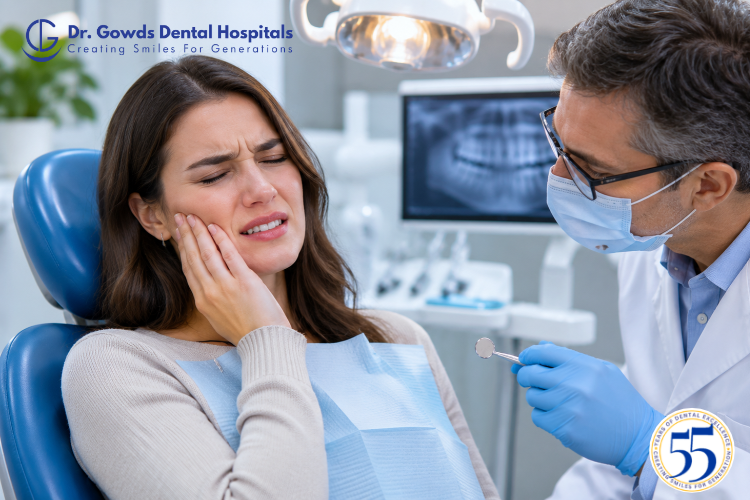
A sudden tooth problem can leave you wondering whether you should wait for a regular dental appointment or seek emergency dental treatment. A broken tooth, intense tooth pain, swelling, bleeding, or an injury can happen unexpectedly, and knowing what to do next can make the situation easier to manage.
Not every dental problem requires the same level of attention. However, certain changes should not be ignored, particularly when they appear suddenly or follow an injury.
In this guide, we look at six common tooth problems that may require prompt dental attention and explain what you can do while arranging an appointment. Dr Gowds Dental Hospitals provides dental care across Hyderabad, with branches in Nanakramguda, Gachibowli, Madhapur, koti.
Experiencing sudden tooth pain, a broken tooth, swelling, or a dental injury?
Emergency dental treatment refers to dental care provided when a tooth or mouth problem needs prompt assessment rather than being left until a routine appointment.
The situation may involve sudden pain, damage to a tooth, an injury, swelling, bleeding, or a noticeable change in the position of a tooth.
It is not always possible to determine the seriousness of a dental problem by looking at it yourself. When you are unsure, contacting a dentist and explaining what happened can help you understand how soon you should arrange an appointment.
Tooth pain can appear suddenly or develop gradually. It may be noticeable while eating, drinking, biting, or even when you are not using the affected tooth.
If tooth pain becomes persistent, difficult to manage, or starts interfering with normal activities, contacting a dentist is a sensible next step.
Different dental problems can cause similar symptoms, so trying to identify the exact cause based only on the sensation may be difficult.
Consider contacting a dentist if:
A dental examination allows the dentist to assess the affected tooth and discuss suitable treatment options.
A cracked or broken tooth can occur while eating, after an accident, or following an impact to the mouth. The damage may range from a small visible chip to a more noticeable break.
Sometimes a damaged tooth has a sharp edge that makes eating uncomfortable. In other situations, the tooth may look relatively normal even though you notice a change in how it feels.
Avoid unnecessarily chewing with the affected tooth and arrange a dental appointment.
If a piece of the tooth has broken off, keep it safely and take it with you when you visit the dentist.
Do not try to repair the tooth yourself. A dentist can examine the damaged area and explain whether options such as a filling, bonding, crown, or another form of treatment may be appropriate.
The right approach depends on the location and extent of the damage.
A tooth can be completely displaced from its normal position following an accident, fall, sports injury, or other impact.
A knocked-out permanent tooth should be treated as a situation requiring prompt dental attention.
Contact a dentist as soon as possible and explain what happened.
Avoid attempting to force the tooth back into place yourself. Handle the tooth carefully and follow the instructions provided by the dental team.
When contacting the clinic, mention:
Getting clear information to the dental team can help them understand the situation before you arrive.
Swelling around a tooth or gum can appear suddenly and may be accompanied by discomfort or tenderness.
A new area of swelling should not simply be ignored, particularly if it becomes more noticeable or continues over time.
There can be different reasons for swelling around the mouth, and identifying the cause requires an examination.
Instead of relying only on temporary measures, arrange a dental assessment so the affected area can be examined properly.
If swelling is accompanied by difficulty breathing or swallowing, seek urgent medical attention rather than waiting for a routine dental appointment.
Bleeding can happen after an injury to the mouth or following a dental procedure. If bleeding continues or you are concerned about it, contact your dentist for guidance.
An injury can affect different parts of the mouth, including the gums, lips, tongue, and tissues surrounding a tooth.
Contact a dental professional if:
Tell the dental team when the bleeding started and what happened immediately beforehand.
A tooth that suddenly becomes loose or changes position after an accident should be assessed by a dentist.
Dental injuries can happen during sports, falls, collisions, or other unexpected situations. Even if the tooth is still present, a noticeable change following an injury deserves attention.
Avoid repeatedly touching, pushing, or moving the affected tooth.
Try not to chew on that side of your mouth and contact a dentist for an assessment.
When arranging an appointment, explain how the injury happened, when it occurred, and whether you have noticed pain, swelling, bleeding, or a visible change in the tooth.
The dentist can examine the tooth and surrounding area and discuss the next steps.
It can be difficult to decide how quickly you need to see a dentist when a new problem appears.
As a general guide, contact a dental clinic promptly when you experience:
If you are unsure whether your problem requires urgent attention, call a dental clinic and explain your symptoms. The dental team can guide you on the appropriate appointment timing.
When contacting a clinic for emergency dental care, having a few basic details ready can make the conversation easier.
Tell the dental team:
If you have a broken piece of tooth, any relevant dental information, or details about a recent procedure, mention those when speaking with the clinic.
The appropriate steps depend on the type of dental problem. In general, avoid making the affected area worse while arranging professional care.
You can:
Avoid attempting to fix a broken, loose, or displaced tooth yourself.
Looking for urgent dental care in Hyderabad? Dr Gowds Dental Hospitals has branches in Gachibowli, Puppalguda, Madhapur, and Koti. Contact the branch that is most convenient for you to discuss your dental concern.
Not every dental injury can be prevented, but everyday dental habits can help you take better care of your teeth.
Consider these simple practices:
Regular attention to your oral health can also make it easier to notice changes before they become more disruptive.
A sudden tooth problem can be stressful, especially when you are unsure whether it requires immediate attention.
Sudden tooth pain, a cracked or broken tooth, a knocked-out tooth, swelling, persistent bleeding, and a loose or displaced tooth following an injury are all situations worth discussing with a dentist.
The important step is not to ignore a noticeable dental problem simply because you are unsure about its urgency. Contact a dental clinic, explain what happened, and ask about the appropriate next step.
For patients looking for emergency dental treatment in Hyderabad, Dr Gowds Dental Hospitals has branches in Gachibowli, Puppalguda, Madhapur, and Koti.
Need dental care for a sudden tooth problem? Contact Dr Gowds Dental Hospitals to enquire about an appointment at a convenient Hyderabad branch.
A dental emergency is a sudden tooth or mouth problem that may require prompt assessment by a dentist. Examples include significant tooth pain, a knocked-out tooth, a broken tooth, swelling, persistent bleeding, and a loose tooth following an injury.
Yes. Sudden or persistent tooth pain is a reason to contact a dentist, particularly when the discomfort continues or interferes with eating or daily activities. A dental examination can help identify the issue and determine the appropriate next step.
A broken tooth should be assessed by a dentist, particularly when the damage occurs suddenly, causes discomfort, or follows an injury. Contact a dental clinic to discuss how soon you should be seen.
Contact a dentist promptly and explain when and how the tooth was knocked out. Avoid attempting to force the tooth back into position yourself and follow the instructions provided by the dental team.
New or noticeable swelling around a tooth or gum is a reason to arrange a dental assessment. A dentist can examine the affected area and discuss the appropriate next step.
A tooth that becomes loose or changes position after an accident should be checked by a dentist. Avoid repeatedly touching or moving the tooth and contact a dental clinic for an assessment.
If tooth pain keeps returning, it is worth discussing the problem with a dentist. Even if the discomfort temporarily settles, a dental examination can help determine whether the tooth needs further attention.
 Gachibowli Branch