

Schedule Appointment


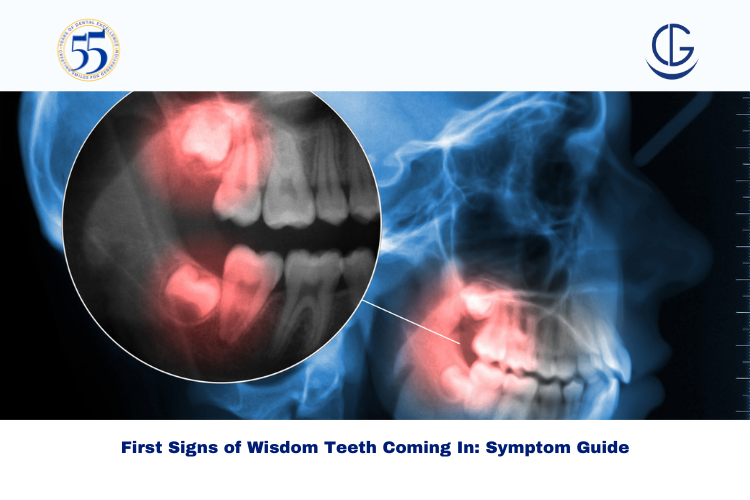
First signs of wisdom teeth often begin subtly — a faint pressure at the back of your jaw that’s easy to ignore. It may not feel like pain at first, just a sense that something is shifting beneath the gums. For many people between the ages of 17 and 25, this is the earliest indication that their wisdom teeth are starting to emerge.
As these third molars begin to push through, you might notice mild swelling in the gums, occasional discomfort while chewing, or even a slight stiffness when opening your mouth fully. Some people also experience redness or tenderness in the area, along with a feeling of tightness caused by limited space in the jaw. These symptoms can come and go, which is why they’re often dismissed — but that’s exactly what makes early attention so important.
Ignoring these early signs can lead to complications such as impaction, infection, or crowding of nearby teeth. What starts as minor pressure can gradually develop into significant pain, swelling, or difficulty eating and speaking. In more severe cases, delayed care may result in the need for urgent or more complex extraction procedures.
Recognising these changes early gives you options. A simple dental check-up can determine whether your wisdom teeth are growing in properly or if preventive steps are needed. Early monitoring is often far less invasive than waiting until symptoms worsen.
At Dr Gowds Dental Hospitals, many patients tell us they wish they had acted sooner. Paying attention to these first signals — however mild they seem — can make all the difference between a routine visit and a dental emergency.
| Are you experiencing any of these symptoms? A quick assessment at Dr Gowds Dental Hospitals — including a digital X-ray — can confirm whether your wisdom teeth are coming in and how to manage them. |
The first signs of wisdom teeth coming in are distinctive because third molars erupt into far less space than any other tooth. By the time wisdom teeth begin their journey through the bone and gum, all 28 of your other permanent teeth are already established. The jaw is essentially full. This creates unique pressures and sensations that earlier eruptions — like your adult molars at age six — simply did not produce.
This is typically the very first thing people notice. The gum tissue directly above the emerging tooth becomes sore, slightly swollen, and often looks redder than usual. It may feel sensitive to touch or to chewing. This tenderness is the tissue responding to the tooth beginning to push through — it is one of the hallmark first signs of wisdom teeth coming in and is, in itself, not a cause for alarm.
As the wisdom tooth pushes upward through the bone, patients frequently describe a dull, persistent pressure in the jaw — different from a sharp toothache. This sensation of fullness or ache deep in the back of the jaw is among the most consistent symptoms of wisdom teeth growing in, and it can come and go over days or weeks.
If you run your tongue along the back of your gum line and feel a hard ridge or bump where there was previously nothing, a wisdom tooth is very likely beginning to emerge. This is one of the more reassuring first signs of wisdom teeth coming in — you can often feel the tooth itself just below or breaking through the surface.
Some people experience puffiness around the jaw angle — the area just in front of the earlobe. This external swelling, when mild, is a normal tissue response. Significant or rapidly progressing swelling, however, deserves prompt attention. [See Blog B13 for a guide to distinguishing normal from concerning swelling]
As the gum and surrounding muscle adapt to the erupting tooth, opening the jaw fully — to yawn or take a large bite — can feel tight or uncomfortable. This is medically referred to as mild trismus and is among the later first signs of wisdom teeth coming in.
Perhaps the most surprising entry on this list: referred pain from an erupting wisdom tooth can manifest as a headache behind the eyes, a temple ache, or even ear pain. [See: Can Wisdom Teeth Cause Headaches and Ear Pain? — Blog B17] If you are experiencing unexplained head or ear pain alongside back-jaw discomfort, your wisdom teeth may be the culprit.
Normal Symptoms vs Signs That Need Attention
Not every symptom of wisdom teeth growing in requires intervention. Here is a simple framework:
| • Mild gum tenderness that comes and goes |
| • Slight jaw ache without fever |
| • Small bump on gum without discharge |
| • Mild headache that resolves with rest |
| • Pain that disrupts sleep or daily function |
| • Swelling that spreads to the cheek or neck |
| • Fever alongside jaw discomfort |
| • Pus or an unpleasant taste near the gum |
| • Difficulty swallowing or breathing (attend emergency immediately) |
Initial eruption symptoms can last from a few days to several weeks, often recurring as the tooth intermittently pushes through. If symptoms persist beyond a month without improvement, schedule a dental review.
Some degree of discomfort is normal. Pain that is manageable with standard over-the-counter analgesics and settles within a few days is generally expected. Escalating, constant, or severe pain is not typical and should be evaluated.
Absolutely — in fact, most people feel the pressure and tenderness days to weeks before any visible changes appear on the gum surface. The sensations occur as the tooth moves through bone, well before it breaks through the gum.
Yes, always. Mentioning early symptoms allows your dentist to take a timely X-ray. An OPG radiograph can show whether the wisdom teeth have adequate space and are erupting in the correct direction — information that changes management significantly.
Yes — earache from wisdom teeth is frequently attributed to ear infections. Jaw pressure can mimic TMJ disorder. A headache from wisdom teeth may be dismissed as tension headache. This is why a dental X-ray is such a valuable diagnostic tool.
The first signs of wisdom teeth coming in are your body giving you advance notice — and advance notice is an advantage.
| Visit Dr Gowd’s Dental Hospitals for a Wisdom Tooth Assessment — Gachibowli, Madhapur, Koti, Nanakramguda. |




 Gachibowli Branch