

Schedule Appointment


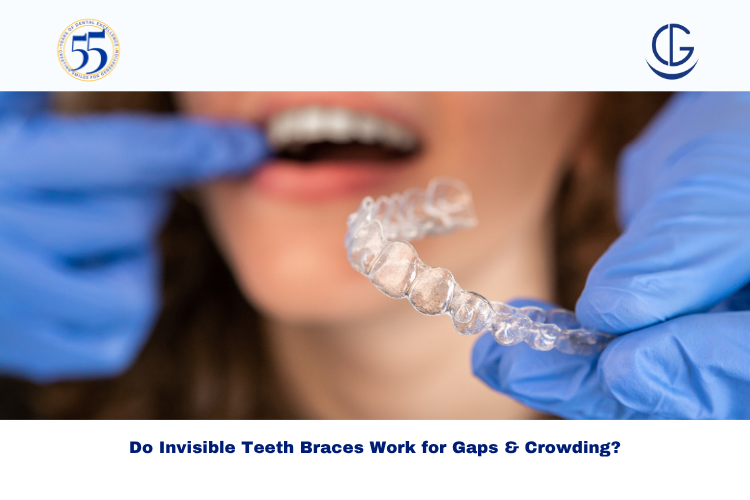
Invisible teeth braces — more precisely, clear removable aligners — have become the treatment of choice for a growing majority of patients who need to address gaps between teeth, crowding, or irregular spacing without the social and aesthetic burden of traditional fixed appliances. At Dr Gowds Dental Hospitals, we see a consistent pattern: patients arrive having lived with one of these three conditions for years, sometimes decades, assuming that treatment would be too visible, too expensive, or too disruptive to their daily lives. In almost every case, the reality of modern invisible teeth braces surprises them. This guide covers everything you need to know about how clear aligners treat gaps, crowding, and spacing — including the clinical approach for each condition, realistic expectations, and the cases where invisible teeth braces deliver outstanding results versus cases where additional support is needed.
| Medically Reviewed by: Prof. Dr. Snigdha Gowd, MDS (Orthodontics & Dentofacial Orthopaedics) |
| 📞 Call: 08065295050 | 📅 Book an Appointment Today |
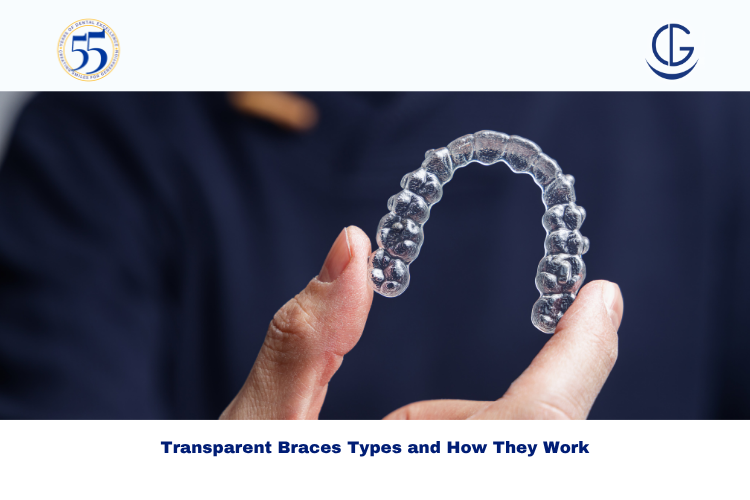
Invisible teeth braces in the aligner format are custom-fabricated from medical-grade thermoplastic — a clear, smooth material that is essentially transparent when worn. Each aligner in the series is manufactured to be slightly different from the previous one, programmed to exert gentle, controlled forces on specific teeth in a specific sequence. Over a course of weeks and months, this sequence of small movements accumulates into significant tooth repositioning.
Unlike traditional bracket-and-wire systems where the wire carries force continuously, invisible teeth braces work through the elastic memory of the aligner material pressing against precisely planned points on the tooth surface. For more complex tooth movements — rotations, vertical corrections, root control — small composite handles called attachments are bonded to specific teeth to give the aligner something to grip.
The result, when treatment is planned well and executed properly, is clinically equivalent to fixed braces for a broad range of orthodontic conditions. Invisible teeth braces are not simply a cosmetic-grade alternative to real orthodontics — they are a clinically rigorous treatment system that has produced tens of millions of successfully treated cases worldwide.
| ◆ Condition 1: Dental Crowding |
| When teeth do not have sufficient space in the arch and overlap, rotate, or sit out of alignment |
| Crowding is the single most common orthodontic problem treated with invisible teeth braces — and the condition for which clear aligner therapy has the longest and most robust evidence base. |
| How invisible teeth braces treat crowding: |
| • Arch expansion: In select cases, the aligner sequencing gradually widens the dental arch to create space for crowded teeth to align |
| • Interproximal reduction (IPR): The orthodontist carefully removes tiny amounts of enamel between crowded teeth — typically 0.2–0.5mm per contact — creating space without extraction |
| • Extraction-based alignment: In severe crowding, one or more premolar teeth may need to be removed to create the space needed for invisible teeth braces to properly align the remaining teeth |
| What results to expect: |
| • Mild crowding (less than 4mm): Excellent results in 6–10 months |
| • Moderate crowding (4–8mm): Very good results in 10–16 months, may require IPR |
| • Severe crowding (over 8mm): Possible with invisible teeth braces in some cases but may require supplementary fixed appliances or extractions |
| ◆ Condition 2: Spacing and Gaps Between Teeth |
| Including diastema (single gap between front teeth) and generalised spacing across the arch |
| Spacing problems — whether a single gap between the two upper front teeth (diastema) or multiple small spaces distributed across the arch — are among the most predictably correctable conditions with invisible teeth braces. |
| How invisible teeth braces treat spacing: |
| • Space closure: The aligner sequence progressively tilts and bodily moves adjacent teeth toward each other, closing the gap in controlled increments |
| • Space redistribution: Where spaces are generalised across the arch, aligners can consolidate them into a single manageable location for more predictable closure |
| • Anchorage control: Attachments on posterior teeth prevent unwanted tipping of back teeth as front gaps close |
| Important clinical considerations: |
| • Gaps caused by a low frenum attachment (the tissue connecting the upper lip to the gum) may reopen after invisible teeth braces treatment unless the frenum is released by a minor procedure |
| • Very large gaps (more than 6mm in the front) may close more predictably with ceramic fixed appliances combined with, or instead of, clear aligners |
| • Bone loss from gum disease must be stabilised before invisible teeth braces can safely close spaces |
| What results to expect: |
| • Small gaps (under 2mm): Excellent closure in 4–8 months |
| • Moderate diastema (2–4mm): Very good results in 8–14 months |
| • Large or complex spacing: Achievable in many cases; requires individual assessment |
| ◆ Condition 3: Irregular Spacing — Combined Crowding and Gaps |
| Where some teeth are crowded while others have gaps — the most complex spacing scenario |
| A significant proportion of patients present with combined spacing irregularities — crowded front teeth alongside gaps further back in the arch, or vice versa. This pattern is clinically more complex than a single presentation but is entirely within the scope of well-planned invisible teeth braces treatment. |
| How invisible teeth braces treat combined spacing: |
| • The ClinCheck or digital treatment plan maps each tooth’s movement individually, sequencing space creation and closure simultaneously across different parts of the arch |
| • Attachments are placed strategically to maintain arch integrity while selective space management occurs |
| • Refinement trays (additional aligner sets produced mid-treatment) fine-tune the result once the primary movements are complete |
| What results to expect: |
| • Results are case-specific and require a full digital treatment simulation to preview |
| • Treatment duration: typically 12–20 months for complex combined presentations |
| • Final outcome is reviewed against the original ClinCheck plan at completion |
• The patient is an adult or compliance-reliable teenager who will consistently wear aligners 20–22 hours per day
• The presenting condition is mild to moderately complex crowding, spacing, or a combination of both
• Bite corrections required are within the documented range of aligner capability (mild to moderate overbite, open bite in select cases)
• The patient has no significant pre-existing restorations, dental implants, or severely compromised periodontal bone that would complicate aligner planning
• Aesthetics are a primary concern and the patient is motivated by the invisible nature of the appliance
• Severe rotations of round teeth (such as canines and premolars) — the round cross-section provides limited grip for aligners
• Significant vertical tooth movements requiring large amounts of extrusion
• Skeletal discrepancies that exceed the range of dental compensation through aligners alone
• Patients with a history of very poor oral hygiene or active periodontal disease that has not been treated
• Cases where compliance is highly doubtful — fixed transparent options (ceramic or lingual brackets) will deliver more reliable outcomes
Invisible teeth braces have given millions of patients worldwide the straighter smiles they had written off as impractical, too visible, or too complicated to pursue. Gaps, crowding, and spacing irregularities — the conditions that most commonly bring patients through our doors at Dr Gowds Dental Hospitals — are precisely the scenarios where clear aligner therapy delivers its most predictable and impressive results. Whether your case is a simple diastema that has bothered you for years, moderate crowding you have always wanted to address, or a more complex combined presentation, the most important first step is the same: come in for an assessment. Let us show you what your smile could look like with invisible teeth braces — before you commit to a single tray.
| Book a Clear Aligner Assessment at Dr Gowds Dental Hospitals — See Your Smile Transformation Before Treatment Begins. Our Hyderabad branches: Gachibowli, Madhapur, Koti, Nanakramguda |
Severe crowding (more than 8–10mm of space deficit) can be challenging for invisible teeth braces alone and may require extraction of one or more premolar teeth or supplementary fixed appliances. Your orthodontist will assess your space requirements and recommend the most appropriate approach. Clear aligners can manage severe crowding in many cases when combined with IPR or extractions.
A small diastema of 1–2mm can close in as little as 3–5 months. Larger gaps of 3–4mm typically take 8–12 months. The rate of movement is limited by the biology of bone remodelling — safe tooth movement proceeds at approximately 0.25mm per week regardless of appliance type.
Gap closure achieved with invisible teeth braces is stable when followed by consistent retainer wear. Without a retainer, teeth naturally drift back toward their original position — regardless of whether braces or aligners were used. For diastema cases with a contributing frenum, a frenectomy reduces relapse risk significantly.
Invisible teeth braces produce mild pressure and temporary soreness for 1–3 days after switching to each new tray. This is the normal sensation of controlled tooth movement and is manageable with standard over-the-counter analgesics. Most patients find this significantly less uncomfortable than the wire adjustments associated with fixed braces.
Invisible teeth braces price at Dr Gowds is provided as a complete treatment package — never as a per-tray or incomplete quote. After your clinical assessment and digital simulation, you receive a full treatment plan with itemised pricing. This includes all trays, all monitoring appointments, and your retention appliance. There are no hidden charges.
Yes — this is one of the primary advantages of invisible teeth braces over fixed appliances. You remove your aligners before eating or drinking anything other than water. There are no food restrictions. The only discipline required is replacing your aligners promptly after meals and maintaining the 20–22 hour daily wear schedule.
 Gachibowli Branch