

Schedule Appointment

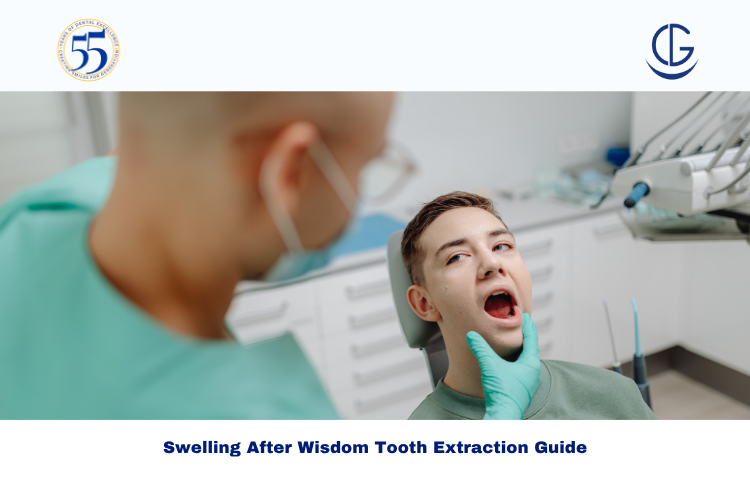
Swelling after wisdom tooth extraction is one of the most predictable — and most misunderstood — parts of recovery. At Dr Gowd’s Dental Hospitals, the number-one post-operative call we receive is from patients alarmed that their face has puffed up more than they expected. In almost every case, the answer is the same: this is normal, and it will improve. But ‘almost every case’ is not ‘every case.’ A small proportion of patients do develop swelling that signals something more than routine post-surgical inflammation — and knowing the difference is genuinely important. This guide gives you a clear, day-by-day picture of what swelling after wisdom tooth extraction should look like, and the specific warning signs that mean you should pick up the phone.
| Medically Reviewed by: Prof. Dr. Snigdha Gowd, MDS (Orthodontics & Dentofacial Orthopaedics) |
| 📞 Call: 08065295050 | 📅 Book an Appointment Today |
Swelling after wisdom tooth extraction is your body’s inflammation response — a necessary and healthy part of surgical healing. When tissue is cut, bone is disturbed, and blood vessels are disrupted during extraction, the body immediately mobilises inflammatory mediators: histamine, prostaglandins, and cytokines that increase local blood flow and vascular permeability. Fluid leaks from blood vessels into surrounding tissues, causing oedema — the medical term for swelling. This process is the foundation of healing; it delivers immune cells and growth factors to the wound site. The swelling is not a sign that something has gone wrong. It is a sign that your healing response is active.
The key variables that determine how much swelling after wisdom tooth extraction you will experience include the complexity of the impaction (fully bony impactions cause more tissue disruption), the number of teeth removed in one sitting, your individual inflammatory response, your age, and whether you followed pre- and post-operative care instructions.
Understanding what to expect at each stage removes the anxiety from the process. Here is the typical swelling progression Dr Gowd’s patients experience:
| Timeframe | Normal Swelling | Concerning Sign |
| Day 0 (Surgery day) | Mild puffiness beginning in the afternoon. Minimal visible change immediately after procedure. | Rapid, dramatic swelling within hours of surgery — seek advice. |
| Day 1–2 | Swelling peaks. Maximum puffiness of cheek and jaw area. Some patients develop mild bruising. This is the hardest day visually — it is also entirely expected. | Swelling spreading visibly below the jaw line or toward the throat. |
| Day 3–4 | Swelling begins to noticeably plateau and slowly reduce. Jaw stiffness (trismus) may still be present. Bruising, if present, begins to yellow and disperse. | Swelling still actively worsening on Day 3 with fever — call your dentist. |
| Day 5–7 | Significant reduction in external swelling. Most patients are comfortable appearing in public. Mild residual puffiness may remain. | Swelling re-emerging after apparent improvement — possible infection. |
| Week 2 | External swelling is fully resolved in most cases. Mild internal jaw stiffness may linger for another week. | Any new swelling appearing at Week 2 — requires immediate evaluation. |
Cold therapy is your most effective early intervention for swelling after wisdom tooth extraction. Apply an ice pack — wrapped in a cloth to protect the skin — to the outside of the cheek for 20 minutes on, 20 minutes off, throughout the first 24 hours. After 48 hours, switch to warm compresses to encourage residual swelling to resolve.
Lying flat increases fluid accumulation in the head and neck. Sleeping with your head elevated on two pillows for the first 3–4 nights after surgery measurably reduces the peak swelling.
Hot beverages, strenuous exercise, alcohol, and bending over all increase blood flow to the head — worsening swelling. Rest quietly for at least 48 hours and avoid anything physically demanding for the first five days.
Anti-inflammatory analgesics — particularly ibuprofen — when taken regularly (not just when pain becomes unbearable) significantly reduce both the intensity and duration of swelling after wisdom tooth extraction. Take them as prescribed, with food, for the full recommended period.
While most swelling after wisdom tooth extraction is entirely expected, the following signs indicate that something more than routine inflammation may be occurring:
| ⚠️ Contact Dr Gowd’s Dental Hospitals Immediately If You Notice:• Swelling that continues to worsen after Day 3 rather than plateauing• Swelling extending below the jaw line, toward the neck, or floor of the mouth• Fever above 38°C alongside swelling at any point in recovery• Pus, foul taste, or discharge from the extraction socket• Increasing pain that peaks (rather than improves) after Day 3• Difficulty swallowing, breathing, or opening the mouth fully — attend emergency care immediately• Swelling that re-emerges after it appeared to have resolved (Day 7 onwards) |
The most common causes of abnormal swelling after wisdom tooth extraction are dry socket (alveolar osteitis), wound infection, a retained root fragment, or — rarely — an abscess forming in the adjacent tissue space. All of these are manageable when identified early.
Swelling after wisdom tooth extraction is an expected part of the healing process that resolves predictably over 5–7 days for most patients. Understanding the normal timeline — and knowing precisely which signs fall outside it — means you can recover with confidence rather than anxiety. At Dr Gowd’s Dental Hospitals, our post-operative care team is always available to answer your concerns, assess your healing, and intervene promptly if anything is outside the normal range. Your recovery is our responsibility too — not just the procedure.
| Worried about your swelling? Book a post-operative review at Dr Gowds Dental Hospitals — same-day appointments available for post-extraction concerns. Gachibowli, Madhapur, Koti, Nanakramguda |
Absolutely yes. Swelling after wisdom tooth extraction typically peaks between 36 and 72 hours post-operatively — which means Day 2 is frequently the most swollen day. This is not a sign of complication. If swelling continues to worsen beyond Day 3, however, that warrants a call to your dental team.
For surgical extractions involving bone removal — particularly lower wisdom teeth — visible external cheek swelling is very common and should be expected. Simple extractions of fully erupted teeth may produce minimal or no external swelling.
For most patients, external swelling has substantially resolved by Day 5–7. Mild residual puffiness and jaw stiffness may persist for 10–14 days. Full soft tissue healing typically completes within 2–4 weeks.
Ice packs in the first 48 hours, warm compresses thereafter, keeping the head elevated, resting, avoiding heat and alcohol, and taking anti-inflammatories as directed are all evidence-backed strategies that reduce swelling duration. There is no safe shortcut beyond these measures.
Not at all. Swelling is a universal biological response to surgical tissue manipulation — it occurs regardless of how skilled the surgeon is. An experienced surgeon minimises unnecessary tissue trauma, which reduces swelling, but some degree of post-operative oedema is inevitable after any wisdom tooth extraction.

 Gachibowli Branch