

Schedule Appointment

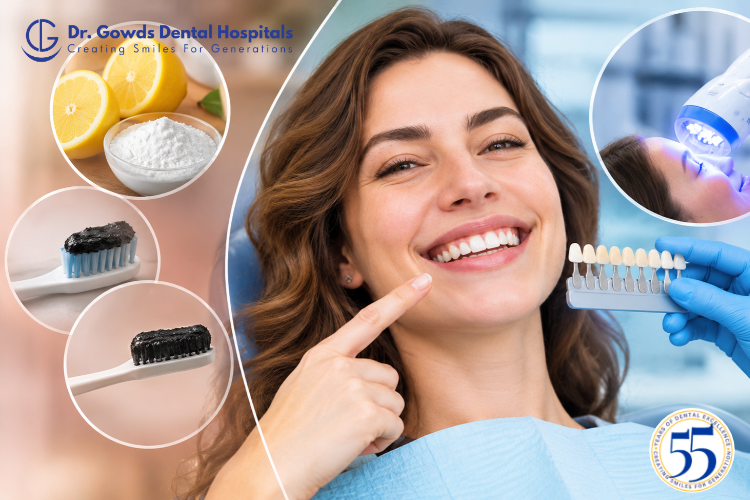
A brighter smile is something many people want, but searching for teeth whitening online can quickly become confusing. One method promises instant results, another recommends a kitchen ingredient, while some products suggest that regular toothpaste is all you need.
So, what should you actually believe?
Understanding the difference between teeth whitening myths and facts can help you choose an option that matches your goals instead of relying on every whitening tip you see online. From whitening toothpaste and strips to professional whitening and DIY methods, each approach is different.
At Dr Gowds Dental Hospitals, we believe that understanding your options is an important part of making an informed decision. This guide explains some of the most common teeth whitening myths and what to know before choosing a whitening approach in Hyderabad.
Looking for teeth whitening in Hyderabad?
Whitening toothpaste is often associated with teeth whitening, but it is important to understand what it is designed to do.
Many whitening toothpastes focus on helping remove certain surface stains. This is different from a dedicated whitening procedure designed to change the appearance of tooth color.
So, if you are asking, “Can whitening toothpaste whiten teeth?”, the better answer is that it may help with surface staining, but it should not automatically be treated as an alternative to every other whitening option.
Professional whitening is one option, but it is not automatically the right choice for everyone.
People have different expectations, types of discoloration, existing dental work, and preferences. Some may prefer an at-home approach, while others may want to discuss professional options.
The important point is to compare the options rather than assuming that one method is suitable for every smile.
The word “natural” can make a whitening method sound appealing.
However, a household ingredient is not automatically a good whitening solution. Lemon, vinegar, and other acidic ingredients are often promoted online as ways to brighten teeth. Baking soda and other DIY combinations are also frequently discussed.
These methods are not a substitute for a properly planned whitening approach. When considering natural teeth whitening, it is better to look at how reliable and appropriate the method is rather than simply whether it comes from a kitchen ingredient.
This is one of the biggest misconceptions about teeth whitening.
The appearance of teeth varies from person to person. The type and depth of discoloration, natural tooth shade, existing dental restorations, and the whitening method selected can all affect the final appearance.
This means two people can use the same whitening approach and still have different-looking results.
Whitening strips are a popular at-home option, but they should not automatically be considered identical to professional whitening.
At-home products and professional options can differ in formulation, application method, treatment process, and level of supervision.
If you are comparing professional vs at-home teeth whitening, consider more than just the price. The type of discoloration and the result you want are also important factors.
Teeth whitening is not something you should think of as a permanent change.
The appearance of a smile can change over time because of everyday eating and drinking habits, staining, and normal changes in tooth color.
This is why maintaining good oral hygiene and discussing appropriate maintenance with your dental team can be just as important as choosing the initial whitening method.
This is an important point if you already have dental restorations.
Whitening is focused on natural tooth structure. Crowns, veneers, fillings, and other restorations may not respond in the same way as natural teeth.
If you have visible dental restorations and are considering whitening, mention them during your consultation so the overall appearance of your smile can be considered before choosing an approach.
There is no single answer for everyone, but understanding the main categories can make your decision easier.
Professional whitening is carried out with guidance from a dental professional. The approach can be discussed based on your existing teeth, discoloration, expectations, and overall smile goals.
For people considering professional teeth whitening, a consultation can help clarify what type of whitening is appropriate and what kind of result can reasonably be expected.
Some people prefer whitening options that can be used at home. Whitening strips and other commercially available products are examples of this category.
The important thing is to follow the product instructions rather than assuming that using more product or using it more frequently will produce a better outcome.
Whitening toothpaste can be useful when the main concern is surface staining. It is best viewed as part of everyday oral care rather than automatically treating it as equivalent to a professional whitening procedure.
If you are considering teeth whitening at home, avoid making the process unnecessarily complicated.
Common mistakes include:
A simpler approach is often to understand the available options first and then choose one based on your individual situation.
Before choosing a whitening method, consider these questions:
A surface stain and a deeper change in tooth color are not necessarily the same problem. Identifying the concern can help narrow down the available options.
Think about whether you want to reduce visible staining, make your smile appear brighter, or achieve a more noticeable change.
Having a realistic goal can make it easier to compare different options.
Existing restorations can affect how the overall smile looks after whitening. This is worth discussing before starting a whitening process.
There are advantages and limitations to both approaches. Your choice may depend on convenience, expectations, budget, and the type of discoloration you want to address.
If you are unsure which teeth whitening option to choose, Dr Gowds Dental Hospitals can help you understand the available approaches and make an informed decision based on your smile goals.
After choosing a whitening approach, everyday habits can influence how your smile looks over time.
Simple habits include:
Whitening is only one part of maintaining the appearance of your smile. Regular dental care and good daily habits also matter.
There is no shortage of advice about how to whiten teeth, but not every popular tip deserves the same level of trust.
Whitening toothpaste, strips, professional whitening, and DIY methods are not interchangeable. Their purpose, application, and expected results can differ.
The most useful approach is to understand what you want to change, identify the type of discoloration involved, and compare suitable options rather than chasing the quickest whitening hack.
If you are searching for teeth whitening in Hyderabad, Dr Gowds Dental Hospitals offers dental care across Nanakramguda, Gachibowli, Madhapur, koti.
Want to understand your teeth whitening options? Contact Dr Gowds Dental Hospitals in Hyderabad and discuss the approach that best fits your smile goals.
Teeth whitening can improve the appearance of certain types of discoloration, but the outcome depends on factors such as the type of staining, natural tooth shade, and whitening method selected.
Whitening toothpaste can help with certain surface stains, but it should not automatically be considered equivalent to a dedicated teeth whitening procedure.
Neither option is automatically right for everyone. Professional and at-home whitening approaches differ in how they are used and what they are designed to achieve. Your choice should depend on your goals and the type of discoloration you have.
Baking soda is often promoted online as a DIY whitening ingredient. However, home recipes are not a substitute for a planned whitening approach. It is better to understand the available options before trying DIY methods.
Lemon is sometimes promoted as a natural teeth whitening solution, but using kitchen ingredients is not a reliable substitute for a dedicated whitening approach. Online whitening hacks should be approached with caution.
The appearance of whitened teeth can change over time. Everyday habits, staining, and natural changes in tooth color can affect how long a brighter-looking smile remains noticeable.
Whitening is intended for natural teeth and may not change the color of crowns, veneers, or other dental restorations in the same way. Existing restorations should therefore be considered before whitening.
There is no single best method for every person. The appropriate option depends on the type of discoloration, your expectations, existing dental work, and whether you prefer an at-home or professional approach.
 Gachibowli Branch