

Schedule Appointment

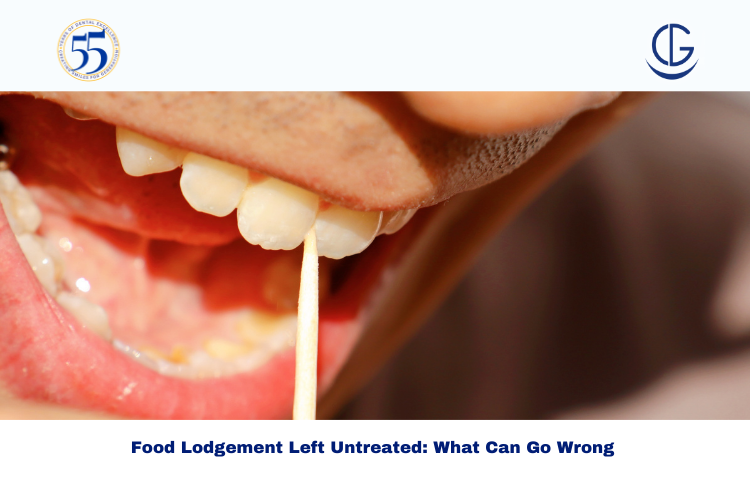
Untreated food lodgement may look like a small daily annoyance, but over time it can quietly trigger serious dental complications—especially when food impaction keeps repeating in the same area. Many people in Hyderabad ignore it for weeks or months, assuming it will “go away” with brushing. Unfortunately, it rarely does without fixing the cause.
At Dr Gowds Dental Hospitals, we see this concern often—from working professionals rushing between meetings, students with irregular routines, and families trying home remedies first. The earlier you address it, the easier (and more comfortable) the solution usually is.
If food keeps getting stuck in the same tooth gap, don’t wait for pain to start. Book a consultation at Dr Gowds Dental Hospitals in Hyderabad to identify the real cause and prevent bigger problems.
Food lodging isn’t always about “not brushing well.” In most cases, it’s a structural or functional issue that creates a trap where food gets pushed in during chewing.
When the cause is not corrected, untreated food lodgement tends to repeat daily, and the trapped food starts a chain reaction.
Let’s break down what typically happens step-by-step, so you can spot warning signs early.
The first impact is usually on the gums. Trapped food stays in contact with gum tissue, leading to:
In Hyderabad’s busy routines, people often keep chewing on the other side, which delays care and allows the inflammation to worsen.
Food that stays lodged begins to break down. This can cause:
This is one of the most common reasons patients search for help—because it affects confidence at work, social events, and daily conversations.
This is a big one. Repeated food impaction increases acid exposure and bacterial activity between teeth. Over time, this can lead to:
Once a cavity grows between teeth, it may not be visible early. Many patients only realise it when it becomes deep.
If bacteria multiply under the gum line, it can lead to infection. Signs may include:
At this stage, the concern is no longer just food impaction—it becomes an infection that may require deeper treatment.
Chronic gum inflammation can progress to gum disease. Over time, that can result in:
This is one of the most serious outcomes of untreated food lodgement, because bone loss is not something you want to delay.
When food consistently packs into one area, many people change their chewing pattern unconsciously. This may lead to:
This is also where dental complications can expand beyond one tooth and start affecting your bite system.
Seek urgent dental evaluation if you notice:
Delaying at this stage can increase risk and discomfort.
A proper dental evaluation usually includes:
At Dr Gowds Dental Hospitals, the goal is not just to remove trapped food—but to stop it from happening again.
This is where long-term correction helps:
Common reasons:
But here’s the truth: pain is a late symptom in many dental problems. By the time pain starts, the issue may already include decay or gum infection.
You can reduce recurrence, but prevention works best when the underlying cause is treated.
If you’re dealing with untreated food lodgement, don’t settle for temporary fixes. Book a consultation at Dr Gowds Dental Hospitals and get a proper diagnosis—whether it needs a simple filling adjustment, a restoration replacement, or a long-term solution like aligner treatment.
Visit your nearest branch in Gachibowli, Madhapur, Koti, Nanakramguda and speak with a specialist about the most comfortable, lasting option.
Usually because of an open contact, a cavity between teeth, gum recession, or a restoration (filling/crown) that has changed shape. A dental checkup can confirm the exact cause.
Not always at day one, but repeated untreated food lodgement can lead to cavities, gum infection, and even bone loss. If it’s happening frequently, it’s worth treating early.
Occasionally it is fine, but frequent toothpick use can injure gums and worsen gaps. Floss or interdental brushes are safer and more effective.
Most treatments—fillings, bite adjustments, cleaning—are routine and comfortable with local anesthesia if needed. The longer you delay, the higher the chance of pain due to infection.
It depends on the cause. Simple adjustments may be done in one visit, while deeper issues (cavities, gum problems, orthodontic correction) may need a planned follow-up schedule.



 Gachibowli Branch