

Schedule Appointment

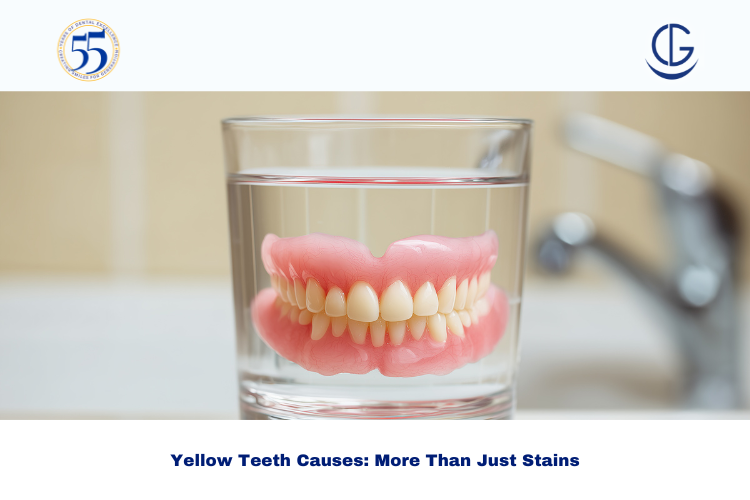
Yellow teeth causes can be more complex than simple surface stains, and understanding the real reason matters before you choose whitening or any treatment. Many people in Hyderabad assume yellowing means “I drink too much tea/coffee,” but that’s only one part of the story.
At Dr Gowds Dental Hospitals, we see patients across Hyderabad who try home remedies, random whitening kits, or “quick fixes” before learning the actual cause is deeper—like enamel thinning, cavity issues, or old restorations that have changed shade over time. If you’re unsure why your teeth look yellow, the first step is a proper evaluation with a dental specialist rather than trial-and-error.
If your teeth are yellow and you’re not sure why, book a consultation at Dr Gowds Dental Hospitals.
Many people use “stains” as a catch-all explanation for teeth yellowing. In reality, tooth color is influenced by:
Your tooth isn’t one single color. It’s built in layers:
If enamel becomes thin, dentin shows through more strongly—making teeth appear more yellow even if you don’t have heavy stains.
External staining is the most common reason teeth yellowing happens over time. These stains sit on the enamel surface.
If you live in Hyderabad, some very common causes include:
Yellow teeth from stains often show patterns like:
In such cases, professional scaling and polishing is often the first step, and whitening is considered only when needed.
This is where many people get surprised. Your teeth can look yellow even when the surface is clean.
As we age, enamel slowly wears down due to:
When enamel thins, dentin becomes more visible—creating a deeper yellow tone that surface cleaning won’t remove.
Frequent exposure to acids can strip enamel. Common triggers:
This can create a dull yellow appearance plus sensitivity.
Some people in India have tooth color changes due to enamel development issues. Mild fluorosis can look like:
Whitening isn’t always the best option here. Treatment depends on severity.
Certain medications (especially during tooth development years) can cause internal discoloration. A dentist can differentiate this from stains during an exam.
Sometimes, “yellow” isn’t cosmetic—it’s a dental health issue. Early decay or old restorations can change tooth shade and cause:
This needs treatment first—whitening won’t fix it.
A tooth that has suffered trauma can become darker/yellowish internally. This is often a single-tooth problem.
In those cases, dentists may recommend:
Teeth yellowing is not a single category. Whitening works best for:
Whitening is less effective when:
But risks include:
A clinic evaluation helps decide whether you need:
In Hyderabad, many people ignore early signs and keep trying remedies. You should get checked if:
Dr Gowds Dental Hospitals provides shade correction options based on the real cause—not assumptions.
Depending on your case, your dentist may recommend:
For stain-heavy cases, this removes buildup and improves shade naturally.
For generalized teeth yellowing when your enamel and gums are healthy.
If discoloration is from decay or leaking fillings.
For deep discoloration, enamel defects, or long-term cosmetic transformation.
If crowding or overlap traps stains, aligners can help improve hygiene access and final appearance. After alignment, whitening works more evenly.
If you want to reduce yellow teeth causes long-term:
If you’re dealing with teeth yellowing and you’re unsure whether it’s staining or something deeper, don’t guess. Book a consultation at Dr Gowds Dental Hospitals to identify the real cause and get a personalized plan—whether that’s cleaning, whitening, cosmetic correction, or even aligner treatment for better long-term results.
Visit your nearest Dr Gowds Dental Hospitals branch in Gachibowli, Madhapur, Koti, Nanakramguda, and speak with a dentist or orthodontist about improving your smile comfortably and safely.
Teeth can look yellow due to enamel thinning, acid erosion, or internal tooth color (dentin showing through). Brushing alone may not change the base shade.
Yes, scaling and polishing can remove surface stains and buildup. If the yellowing is internal, cleaning improves hygiene but may not fully change shade.
Some people feel temporary sensitivity, especially if enamel is thin. Dentist-guided whitening reduces risk and helps manage sensitivity safely.
Often yes, but dentists commonly advise aligning first if crowding is causing patchy staining. Whitening after aligners can look more even and natural.
If the color change is in one tooth, is sudden, or comes with pain/sensitivity, it may involve decay, trauma, or old restorations. A dental evaluation is the safest next step.
 Gachibowli Branch