

Schedule Appointment


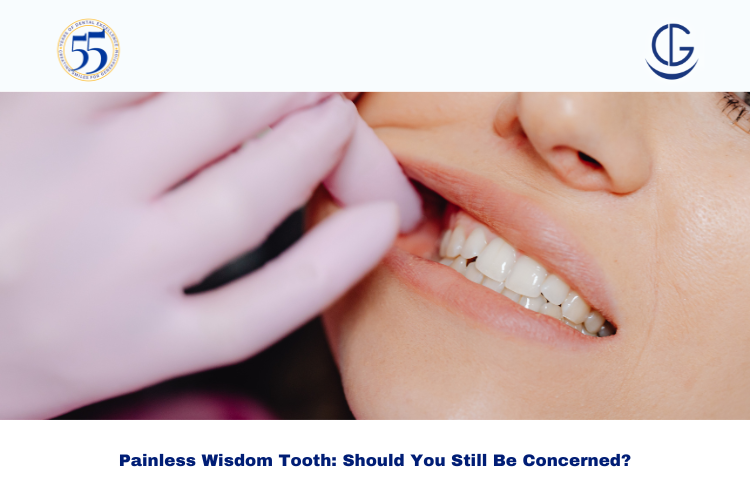
A painless wisdom tooth is more common than most people realize. Many patients in Hyderabad discover their wisdom teeth only during routine dental checkups—without pain, swelling, or discomfort. But does the absence of pain mean there’s nothing to worry about? Not always.
At Dr Gowds Dental Hospitals, we often meet patients who assume that wisdom teeth only need attention when they hurt. In reality, asymptomatic wisdom teeth can still create hidden dental problems if left unchecked.
If you’re unsure whether your wisdom tooth needs monitoring or treatment, book a consultation today at the Best Dental Hospital in Hyderabad and get clarity from an experienced orthodontist or oral surgeon.
A painless wisdom tooth refers to a third molar that erupts or remains partially erupted without causing immediate symptoms such as pain, swelling, or jaw stiffness.
These teeth may:
This condition is clinically known as asymptomatic wisdom teeth—and while they may seem harmless, they still deserve professional evaluation.
Not all wisdom teeth behave the same way. Several factors determine whether a wisdom tooth will be painful or painless.
When the jaw has enough room, the wisdom tooth may erupt normally without pressure on nearby teeth.
If the tooth grows vertically and aligns well with existing molars, discomfort is less likely.
Strong, infection-free gums reduce inflammation during eruption.
A gradual eruption gives the surrounding tissues time to adapt, preventing pain.
This is where many patients make a risky assumption.
Asymptomatic wisdom teeth can still cause problems silently, including:
Pain often appears late, once damage has already begun.
Even without pain, watch for subtle warning signs:
No. Not every painless wisdom tooth requires extraction.
A detailed digital X-ray and clinical exam help determine the right approach.
At Dr Gowds Dental Hospitals, evaluation includes:
This preventive approach helps patients avoid emergency pain later.
Yes—and this is often overlooked.
Asymptomatic wisdom teeth can:
That’s why patients considering braces or clear aligners are advised to evaluate wisdom teeth first.
Thinking about aligner treatment? Visit Us at – Gachibowli, Madhapur, Koti, Nanakramguda.
Dentists usually recommend removal:
Early removal is often:
If your wisdom tooth is painless and retained, dentists recommend:
Patients often delay care due to lack of pain—this is the most common reason for late complications.
Yes. A painless wisdom tooth can become painful if infection, decay, or gum inflammation develops later.
Not always. Even without pain, they may cause hidden problems. Regular monitoring is essential.
Modern techniques make the procedure comfortable. Most patients report minimal discomfort with proper aftercare.
Often yes. Wisdom teeth can affect alignment and treatment results. A specialist evaluation is recommended.
A dental exam and X-ray are the only reliable ways to determine this—pain alone is not a deciding factor.

 Gachibowli Branch