

Schedule Appointment

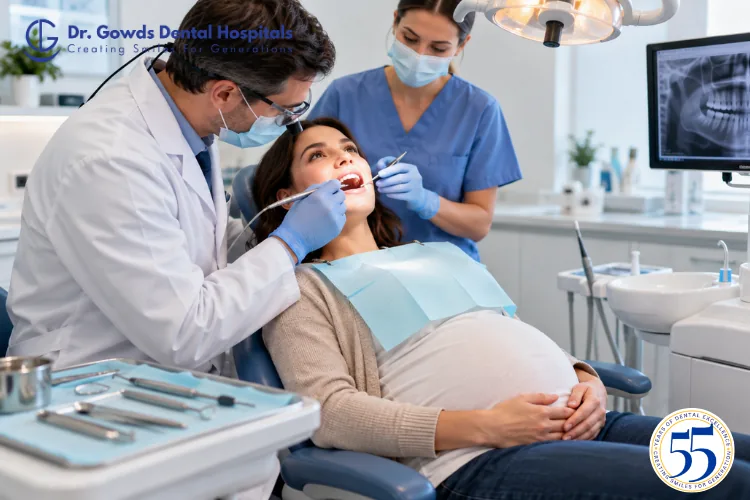
Finding out that you need a tooth extraction during pregnancy can be worrying. Many expectant mothers wonder whether the procedure, local anaesthesia, dental X-rays or medicines could affect the baby. The good news is that necessary dental treatment, including tooth extraction, can generally be provided during pregnancy when it is clinically needed.
The important point is not to delay an urgent dental problem simply because you are pregnant. A painful, infected or severely damaged tooth can become more complicated if treatment is postponed.
If you are pregnant and have tooth pain, swelling or an infected tooth, Dr Gowds Dental Hospitals can assess the problem and explain whether extraction or another treatment is appropriate. Consultations are available at our Gachibowli, Puppalaguda, Madhapur and Koti branches in Hyderabad.
Experiencing tooth pain during pregnancy?
Yes. A tooth can be extracted during pregnancy when a dentist determines that removal is necessary.
Extraction may be recommended when a tooth is:
Pregnancy does not automatically mean a tooth should be removed. If it can be saved with a filling, root canal treatment or another procedure, your dentist may recommend preserving it.
Necessary dental treatment can be performed in the first trimester when delaying care could allow pain or infection to worsen.
For non-urgent procedures, your dentist may consider your symptoms, pregnancy history and comfort when deciding timing. The first trimester does not automatically make dental treatment unsafe.
If you have severe pain, facial swelling, pus or fever, speak to a dental professional rather than waiting until a later trimester.
The second trimester is often a practical time for planned dental treatment because nausea and fatigue may have eased. A dentist may choose this period for non-urgent procedures when appropriate.
However, an extraction does not have to wait for the second trimester. Necessary treatment can be provided at other stages when the benefits of treating the dental problem outweigh the risks of waiting.
Yes, necessary dental treatment can still be provided during the third trimester.
Comfort may become a greater consideration as pregnancy progresses, so the dental team can make appropriate adjustments to positioning and appointment length.
If you develop a dental infection late in pregnancy, do not ignore it because delivery is approaching. Your dentist can plan treatment and coordinate with your obstetrician when needed.
Local anaesthesia is routinely used for dental procedures, including tooth extraction. ACOG notes that local anaesthetics such as lidocaine, with or without epinephrine, can be used during pregnancy when clinically indicated.
Before treatment, tell your dentist:
The type and amount of anaesthetic should be selected according to your procedure and medical history.
A dental X-ray may be needed to diagnose an infection, assess the roots of a damaged tooth or plan an extraction. Pregnancy does not automatically mean a clinically necessary X-ray must be avoided.
Modern dental radiographs use very low radiation doses, and imaging is recommended only when it can help with diagnosis or treatment. ACOG states that necessary dental radiographs can be performed during pregnancy.
Medication should be chosen carefully during pregnancy. Do not self-medicate with leftover antibiotics or painkillers.
Some antibiotics used in dentistry can be prescribed during pregnancy when clinically appropriate, but the choice depends on the infection, allergies, pregnancy stage and medical history.
Pain medicines also require care. Your dentist or obstetrician can advise you on the appropriate pain-relief option based on your individual circumstances.
The basic steps are similar to an extraction at any other time, with additional attention to pregnancy and comfort.
The dentist examines the tooth and surrounding tissues. Imaging may be recommended if needed.
Your dentist determines whether extraction is necessary or whether the tooth can be saved.
The area is numbed before the tooth is removed.
The tooth is removed using the appropriate technique. A simple extraction and surgical extraction differ in complexity.
You receive instructions on bleeding control, eating, oral hygiene and prescribed medicines.
Avoiding treatment is not always the safer choice. A severely infected or damaged tooth can cause:
The better question is: “Does this tooth need treatment now, and what is the most appropriate treatment for me?”
Seek urgent care for facial swelling, fever, difficulty swallowing, difficulty breathing, rapidly worsening pain, or swelling around the eye or neck.
Pregnancy can be associated with gum inflammation and changes in oral health. To reduce dental problems:
Regular dental care does not need to be postponed until after delivery.
So, is it safe to get a tooth extracted while pregnant? When an extraction is clinically necessary, current professional guidance supports appropriate dental care during pregnancy. The timing, local anaesthesia, X-rays, medicines and aftercare should be planned around your individual pregnancy and health.
Do not postpone an urgent dental problem simply because you are pregnant. Your dentist can assess the tooth and, when appropriate, coordinate with your obstetrician.
Looking for dental care during pregnancy in Hyderabad? Book a consultation with Dr Gowds Dental Hospitals at Nanakramguda, Gachibowli, Madhapur, koti for an evaluation and personalized treatment plan.
When an extraction is clinically necessary, it can generally be performed during pregnancy with appropriate planning. Your dentist will consider your pregnancy, medical history, anaesthesia and treatment needs.
Necessary dental treatment can be provided in the first trimester. Non-urgent treatment may sometimes be scheduled based on comfort and individual circumstances, but urgent pain or infection should not simply be ignored.
Yes. ACOG states that local anaesthetics such as lidocaine, with or without epinephrine, can be used during pregnancy when clinically indicated.
A clinically necessary dental X-ray can be performed during pregnancy. Your dentist will recommend imaging only when it is needed to diagnose or plan treatment.
A wisdom tooth can be removed during pregnancy when it is causing significant pain, infection or another problem that requires treatment. The dentist will first determine whether removal is necessary.
Do not choose a painkiller on your own. Your dentist or obstetrician should advise you based on your pregnancy stage, medical history and other medicines. NSAIDs require particular caution during pregnancy.
 Gachibowli Branch