

Schedule Appointment


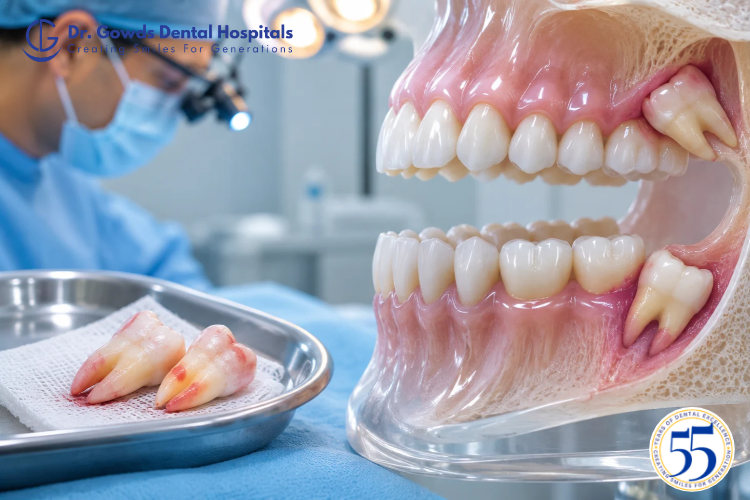
Lower vs upper wisdom teeth removal can look like a simple comparison, but the answer depends on the position and characteristics of the individual tooth. The tooth’s position, whether it has fully erupted, its root shape, and its relationship with nearby structures can all affect how straightforward removal may be.
Understanding these differences can help you have a more useful conversation with your dentist. This guide from Dr Gowds Dental Hospitals explains how upper and lower wisdom teeth compare, what can make either one more complex, and why individual assessment matters.
Wisdom teeth are the last molars at the back of the mouth. They can be fully erupted, partly erupted, tilted, or positioned below the gum.
Two people can therefore have very different situations even if both have an upper wisdom tooth or both have a lower one.
Factors that may influence difficulty include:
This is why a dentist evaluates the individual tooth rather than deciding difficulty based only on whether it is upper or lower.
Lower wisdom teeth are located at the back of the lower jaw. Their position can vary, particularly when there is limited space for the tooth to emerge.
A lower wisdom tooth may be fully visible, partly covered by gum, tilted toward a neighbouring tooth, or positioned differently within the jaw.
When access is limited or the tooth has an unusual position, more detailed planning may be needed. Dental imaging can help show the tooth’s position before the removal approach is discussed.
Upper wisdom teeth sit at the back of the upper jaw. Some are relatively accessible when they have erupted sufficiently, while others may be harder to access because of their position.
Their roots and surrounding anatomy also form part of the assessment. An upper wisdom tooth is therefore not automatically easier simply because it is in the upper jaw.
If you are asking, “Are lower wisdom teeth harder to remove than upper wisdom teeth?”, there is no universal answer.
Lower wisdom teeth can present more complex situations when they are deeply positioned, angled, or difficult to access. However, an upper wisdom tooth can also be challenging depending on its position, root shape, and surrounding anatomy.
A more useful question is:
“What factors make my particular wisdom tooth difficult to remove?”
That shifts the focus from a general upper-versus-lower comparison to the characteristics of the actual tooth.
A tooth that is fully visible may be easier to access than one that is partly covered by gum or positioned deeper in the jaw.
A wisdom tooth with room to emerge upright differs from one that is tilted or positioned toward another tooth. The angle can influence the approach.
Wisdom tooth roots can vary in shape and configuration. This is one reason imaging may be reviewed before removal.
The structures around a wisdom tooth differ between the upper and lower jaws. Understanding this relationship is part of planning.
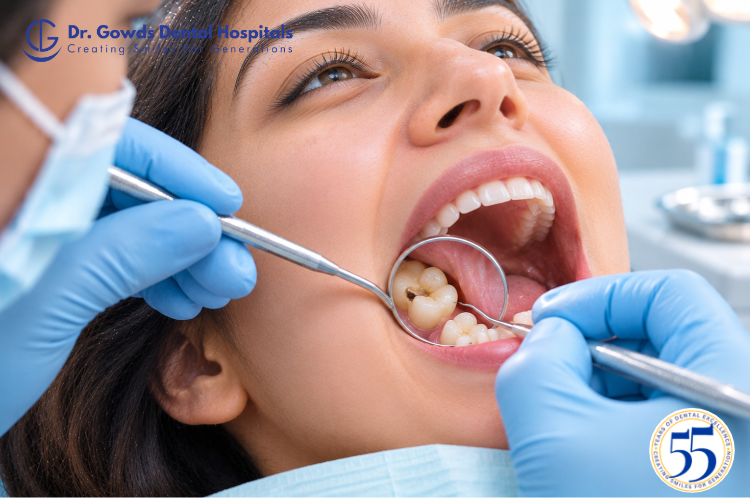
A dental assessment may include:
Dental imaging can provide information that cannot be seen simply by looking inside the mouth. This can be particularly useful when a wisdom tooth is partly erupted, angled, or positioned deeper within the jaw.
| Factor | Lower Wisdom Tooth | Upper Wisdom Tooth |
| Location | Back of the lower jaw | Back of the upper jaw |
| Access | Depends on position | Depends on position |
| Eruption | May be fully or partly erupted | May be fully or partly erupted |
| Root shape | Can vary | Can vary |
| Position | May be upright, tilted, or deeper | May be upright, tilted, or deeper |
| Difficulty | Depends on individual anatomy | Depends on individual anatomy |
| Assessment | Examination and imaging may be used | Examination and imaging may be used |
The comparison shows why there is no reliable rule that one type is always harder.
You do not need to decide whether an upper or lower wisdom tooth is difficult by yourself. A dentist can assess its position and explain what the examination or imaging shows.
Useful questions include:
Searches such as “lower vs upper wisdom teeth removal” are useful for understanding the basics, but they cannot determine how difficult one specific tooth will be.
A fully erupted lower wisdom tooth may have a very different situation from a partially erupted lower tooth. The same applies to upper wisdom teeth.
For that reason, discussions about removal should be based on the actual tooth, its position, imaging findings, and the dentist’s assessment rather than on general comparisons alone.
Dr Gowds Dental Hospitals has four branches in Hyderabad:
If you are unsure whether your upper or lower wisdom tooth needs attention, a consultation can help you understand its position and the factors that may influence the removal approach.
Not always. Lower wisdom teeth can be more complex when their position or access makes removal more involved, but upper wisdom teeth can also be difficult. The individual tooth matters more than its location alone.
No. An upper wisdom tooth may be relatively accessible in one person and difficult to access in another. Position, eruption, roots, and surrounding anatomy all matter.
Limited access, an unusual angle, deeper positioning, root shape, and the relationship with nearby structures can all affect how the tooth is assessed.
The dentist can examine the tooth and may review dental imaging to understand its position, roots, and relationship with surrounding structures.
Not necessarily. “Impacted” describes the tooth’s position or inability to erupt normally; the actual complexity depends on the individual tooth and its surrounding anatomy.
This depends on the individual dental assessment and the overall treatment plan. A dentist can explain whether addressing more than one wisdom tooth at a time is appropriate.
No. The upper or lower location alone does not determine whether removal is appropriate. A dental assessment is the better way to understand the specific tooth.
 Gachibowli Branch