

Schedule Appointment


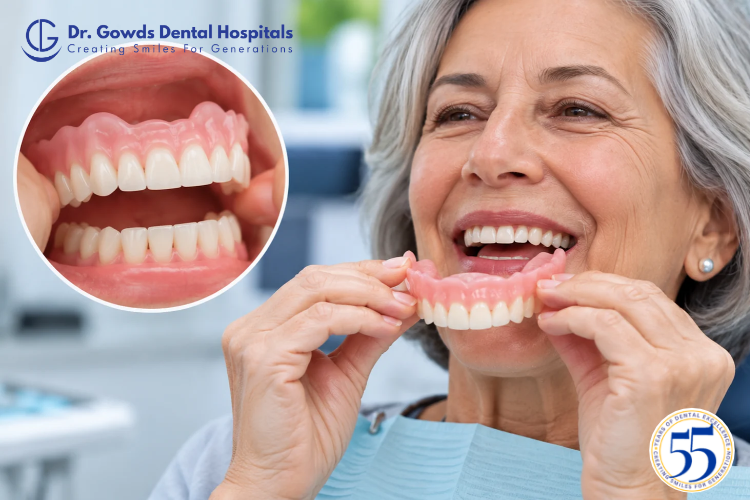
Losing several or all teeth can make choosing a replacement feel complicated. Traditional dentures are one option, while snap-on dentures offer another design that uses dental implants and attachment components.
Snap-on dentures are removable dentures that connect to dental implants. Depending on the treatment plan, the denture may be designed around two or four implants. The right configuration is not simply a matter of choosing the larger number; it depends on the mouth, denture design, bite, implant plan, cleaning routine, and individual treatment needs.
At Dr Gowds Dental Hospitals in Hyderabad, patients can discuss these options and understand how a 2-implant or 4-implant snap-on denture fits into their overall treatment plan.
Snap-on dentures are removable dentures designed to connect to dental implants through small attachment components. The denture is made with corresponding connection points so it can be attached to the planned implant positions.
You may also see terms such as:
These terms can describe closely related designs, although the exact denture and attachment system can differ.
A 2-implant snap-on denture uses two dental implants as attachment points for a removable denture. The denture is designed with corresponding attachment components.
The implant count is only one part of the plan. The dentist also considers the arch being treated, available space, denture shape, bite relationship, implant positions, and maintenance requirements.
For this reason, two implants should be viewed as one possible treatment configuration rather than a standard choice for everyone.
A 4-implant snap-on denture uses four dental implants as part of the attachment and retention design for a removable denture.
This involves additional implant positions and attachment planning. Whether four implants are appropriate depends on the individual’s oral condition, denture requirements, implant planning, and the treating dentist’s assessment.
The useful question is not simply, “Are four implants better than two?” It is, “Which configuration is appropriate for my treatment plan?”
The difference is primarily the number and arrangement of implant attachment points used in the denture design.
| Factor | 2-Implant Snap-On Denture | 4-Implant Snap-On Denture |
| Implant count | Two | Four |
| Denture type | Removable | Removable |
| Attachment | Connects to two implant positions | Connects to four implant positions |
| Planning | Based on individual assessment | Based on individual assessment |
| Maintenance | Denture and attachment care | Denture and attachment care |
| Suitability | Decided after assessment | Decided after assessment |
There is no universal rule that one configuration is right for every patient. A dental professional can explain the differences after assessing the mouth and discussing the intended treatment.
The main difference is how the denture is retained.
Conventional dentures are removable and are designed around the shape and fit of the mouth. Snap-on dentures are also removable, but they include an implant-based attachment system.
When comparing the two, ask about:
This makes it easier to compare treatment plans rather than comparing only the type of denture.
The exact sequence varies by treatment plan, but the process may include:
The dentist reviews your oral condition, existing teeth or dentures, bite, and treatment requirements. Dental imaging or other assessments may be used for planning.
If an implant-retained denture is being considered, the dentist determines the number and planned positions of the implants.
The planned implants are placed according to the treatment plan. The next stage is scheduled based on the progress of treatment.
The removable denture is designed to work with the selected implant attachment system. Fit, bite, shape, and attachment components are considered together.
Once the denture is ready, the dental team checks its fit and attachment. Follow-up visits can be used to assess the denture and make adjustments when needed.
Snap-on dentures may be worth discussing if you are looking for a removable tooth-replacement option that uses dental implants as part of its attachment design.
A consultation can be useful if you:
Suitability cannot be decided from implant count alone. A dentist needs to assess your individual situation before recommending a specific design.
Instead of asking only about the number of implants, ask how the complete treatment is being planned.
Useful questions include:
If you are deciding between conventional dentures, 2-implant snap-on dentures, or a 4-implant design, speak with Dr Gowds Dental Hospitals in Hyderabad for a personalised treatment discussion.
Daily care is an important part of maintaining any removable denture. Follow the cleaning instructions provided by your dental team for both the denture and its attachment areas.
Ask your dentist:
The denture and attachment components work as a system, so maintenance should address both.
There is no single price for snap-on dentures because treatment plans can include several components.
Cost may vary based on:
Ask for a written treatment estimate so you can see exactly what is included rather than comparing only the headline price.
Choosing between a 2-implant and 4-implant snap-on denture should be based on the complete treatment plan, not the assumption that more implants automatically means a better choice.
The dentist will consider the condition of the mouth, denture design, implant positions, bite, cleaning requirements, treatment preferences, and other relevant factors.
The next step is to ask why a particular configuration is being recommended and what alternatives are available.
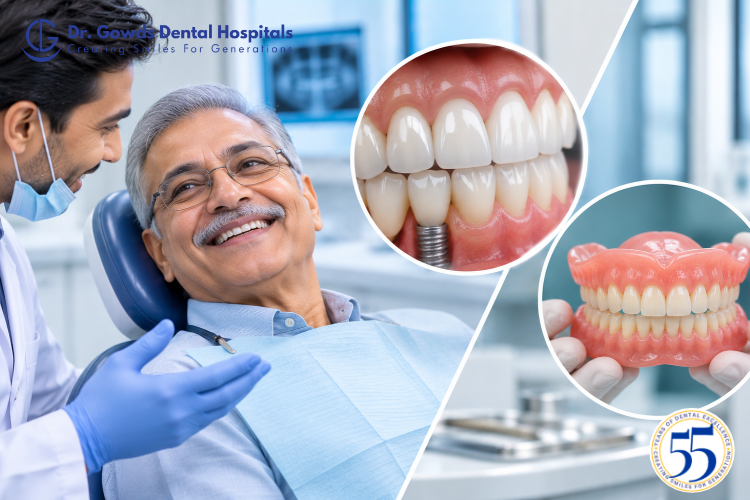
Snap-on dentures are removable dentures that connect to dental implants through an attachment system. Both 2-implant and 4-implant configurations can be discussed as part of a personalised denture treatment plan.
If you are comparing conventional dentures with implant-retained dentures, focus on the complete plan: implant count, denture design, attachment system, maintenance, appointments, and total cost.
Dr Gowds Dental Hospitals serves patients through its Hyderabad branches in Nanakramguda, Gachibowli, Madhapur, koti. Speak with the dental team to understand which denture and implant options are relevant to your individual needs.
Yes. Snap-on dentures are designed as removable dentures. They connect to dental implants through an attachment system and can be removed according to the instructions provided by the dental team.
The primary difference is the number of dental implants used as attachment points. A 2-implant design uses two planned implant positions, while a 4-implant design uses four. The appropriate configuration depends on the individual treatment plan.
No. Dental implants and snap-on dentures are different parts of the treatment design. The implants provide planned attachment points, while the snap-on denture is the removable prosthetic component.
Both are removable. Conventional dentures rely on their design and fit within the mouth, while snap-on dentures incorporate an implant-based attachment system.
There is no single timeframe that applies to every snap-on denture. The denture, attachment components, and other parts of the system can have different maintenance or replacement requirements. Your dental team can explain what to expect from your specific design.
The cost depends on factors such as the number of implants, denture design, materials, attachment components, planning requirements, and any additional procedures included in the treatment plan. A personalised estimate is needed for an accurate figure.
Yes. Because they are removable dentures, they can be taken out for cleaning according to the care instructions provided by the dental team. The attachment areas also need appropriate care.
There is no single denture design that is appropriate for everyone. A dental assessment is needed to determine whether a snap-on denture and which implant configuration fit the individual’s treatment requirements.

 Gachibowli Branch