

Schedule Appointment


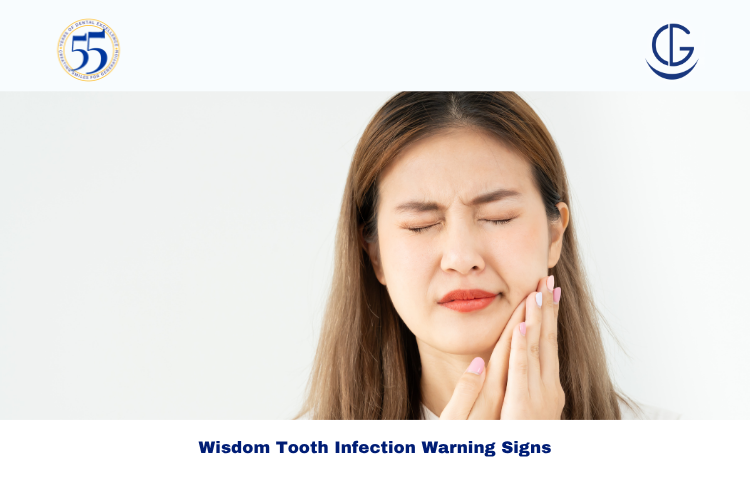
Wisdom tooth infection is not something your body quietly resolves on its own — and yet, every week at Dr Gowds Dental Hospitals, we see patients who have been hoping that is exactly what would happen. They describe days of worsening pain, a jaw that is becoming harder to open, and a persistent bad taste in the mouth. Some arrive with a fever and cheek swelling that has crept toward the neck. The honest truth is this: a wisdom tooth infection left untreated does not simply settle. It escalates. In rare but well-documented cases, it can become life-threatening. This guide is written to help you recognise a wisdom tooth infection at the earliest possible stage — and understand exactly what needs to happen next.
| Medically Reviewed by: Prof. Dr. Snigdha Gowd, MDS (Orthodontics & Dentofacial Orthopaedics)Senior Consultant & Chief of Dental Sciences, Dr Gowd’s Dental Hospitals |
| 📞 Call: 08065295050 | 🌐 Book an Appointment Today. |
The anatomy of wisdom teeth makes them uniquely vulnerable to infection. Situated at the very back of the mouth — where toothbrush access is poor and saliva flow reduced — third molars are difficult to keep clean even under the best circumstances. When a wisdom tooth is partially erupted, the situation becomes significantly worse. A flap of gum tissue called the operculum sits over the partially emerged crown, creating a warm, dark pocket where food debris and bacteria accumulate freely. This is the precise environment in which a wisdom tooth infection begins.
The medical term for this initial infection is pericoronitis — inflammation of the soft tissue surrounding a partially erupted tooth. In its early stage, a wisdom tooth infection may feel like simple gum soreness. As bacteria multiply and the infection deepens, however, it can spread into the surrounding bone, along fascial spaces of the jaw and neck, and — in severe cases — into the throat and airway.
Even a fully erupted wisdom tooth is not immune to infection: deep cavities that reach the pulp (nerve chamber) of the tooth will lead to pulpitis and, eventually, a periapical abscess — a pocket of pus at the root tip. Both types of wisdom tooth infection require professional treatment.
Recognising the symptoms of an infected wisdom tooth early gives you the best chance of straightforward, non-emergency treatment. Here are the most important signs to be aware of:
Unlike the ebb-and-flow discomfort of a wisdom tooth erupting normally, the pain of a wisdom tooth infection tends to escalate progressively. It is often described as a throbbing, constant ache that radiates from the back jaw into the ear, temple, and neck. If your pain has been consistently worsening over 48–72 hours rather than improving, a wisdom tooth infection should be your first consideration.
A localised swelling over the wisdom tooth site — puffy gum, tender to touch — is one of the hallmark infected wisdom tooth symptoms. As the infection spreads, swelling extends into the cheek and can become visible externally. Spreading swelling below the jaw line or toward the neck is a serious sign that requires same-day attention.
Pus discharge from around the wisdom tooth — visible as a white or yellowish fluid near the gum line, or experienced as a bitter, foul taste in the mouth — is definitive evidence of a wisdom tooth infection. Do not mistake this as the infection ‘draining and resolving.’ The source must be professionally treated.
When infection spreads into the muscles of mastication, it causes trismus: a spasm or stiffness that limits how far the jaw can open. If you find yourself unable to open your mouth more than two finger-widths, this signals that a wisdom tooth infection has progressed beyond the gum and into the adjacent tissues.
A temperature above 38°C accompanying jaw or tooth pain is a systemic signal that your immune system is actively fighting a spreading infection. Fever, chills, fatigue, and swollen lymph nodes under the jaw are all infected wisdom tooth symptoms that move the situation from ‘see a dentist soon’ to ‘see a dentist today.’
Persistent halitosis that is not explained by diet or general hygiene is frequently caused by the bacterial population thriving in an infected pericoronal pocket. It is an early stage wisdom tooth infection symptom that patients often dismiss — but worth noting alongside other signs.
Understanding which stage of infection you are in helps calibrate the urgency of your response:
| Stage | Symptoms | Action Required |
| Stage 1 — Early (Pericoronitis) | Gum tenderness, mild swelling over tooth, slight bad taste, manageable pain | Dentist appointment within 24–48 hours. Irrigation, antibiotics if indicated |
| Stage 2 — Moderate | Significant swelling, trismus beginning, fever, pus visible, radiating pain | Same-day dental appointment. Antibiotics + probable extraction plan |
| Stage 3 — Severe (Spreading cellulitis) | Cheek/neck swelling, high fever, difficulty swallowing, unable to open mouth | Emergency dental or hospital attendance immediately |
| Stage 4 — Critical (Ludwig’s Angina) | Floor of mouth elevated, drooling, breathing difficulty, voice change | Emergency services (999/112) — airway at risk. Life-threatening. |
| ⚠️ DENTAL EMERGENCY — Seek Immediate Care If You Have: • Swelling extending below the jaw line or toward the neck • Difficulty swallowing or breathing• Inability to open the mouth more than two finger-widths • High fever (above 39°C) with jaw pain • Voice changes or drooling alongside jaw swelling These signs indicate a spreading wisdom tooth infection that can become life-threatening within hours. |
| Do not wait to see if a wisdom tooth infection resolves on its own. Early treatment is simpler, faster, and safer. |
At Dr Gowd’s, we begin with a thorough clinical examination and a digital periapical X-ray or OPG to assess the extent of the infection, the position of the wisdom tooth, and the involvement of surrounding bone. This takes approximately 15–20 minutes and gives us all the information we need to plan treatment precisely.
For early stage wisdom tooth infections involving pericoronitis, the pericoronal pocket is irrigated under pressure with chlorhexidine solution to flush out bacteria and debris. This provides immediate relief for many patients and, combined with antibiotic therapy, can settle an acute infection within 48–72 hours.
A wisdom tooth infection almost always requires antibiotics — most commonly amoxicillin (or metronidazole for penicillin-allergic patients) for 5–7 days. It is critical to understand that antibiotics alone are not a cure for a wisdom tooth infection. They reduce the bacterial load and settle the acute phase — but the underlying cause (the problematic wisdom tooth) must subsequently be addressed to prevent recurrence.
Once the acute infection has settled and safe access to the mouth has been restored, the wisdom tooth is extracted. Attempting extraction through an active acute infection is generally avoided because inflamed tissue is difficult to anaesthetise adequately. The standard approach is: treat the infection first, extract the tooth second. [See: Wisdom Teeth Removal Surgery — Blog B06 for a full walkthrough of the extraction procedure]
After extraction, we review healing at 7–10 days post-operatively. Patients who experienced significant infections are also assessed for any residual lymph node involvement and jaw mobility issues.
A wisdom tooth infection is one of the few dental emergencies that can genuinely escalate into a medical one — and the window between early stage and serious complication can be surprisingly short. If you are experiencing any of the symptoms described in this guide, please do not take a ‘wait and see’ approach. At Dr Gowd’s Dental Hospitals, our team is experienced in managing all stages of wisdom tooth infection — from straightforward pericoronitis to complex spreading infections — with the urgency, precision, and compassion your situation deserves. The sooner you come in, the simpler and safer your treatment will be.
| Worried about a wisdom tooth infection? Visit Dr Gowds Dental Hospitals — same-day appointments available for dental pain and swelling. You can visit any of our Hyderabad branches: Gachibowli, Madhapur, Koti, Nanakramguda |
No. A wisdom tooth infection may temporarily appear to settle — particularly if pus drains spontaneously — but the underlying bacterial colonisation and the anatomical conditions that caused it remain entirely unchanged. Without professional treatment, a wisdom tooth infection will return, typically worse than before. Early treatment is always simpler than managing a recurrence.
Infection can spread from the pericoronal pocket to adjacent fascial spaces within 24–72 hours in susceptible individuals — particularly those who are immunocompromised, diabetic, or have delayed treatment. This is why deteriorating symptoms should never be observed at home for more than 24 hours.
Antibiotics prescribed without clinical assessment are rarely the correct antibiotic for the organism involved, are typically an inadequate dose, and — most importantly — do not address the tooth that is causing the infection. Antibiotics alone will not cure a wisdom tooth infection. They must be combined with professional dental management.
In most cases, dentists prefer to settle the acute infection with antibiotics first before proceeding with extraction. This is because severely inflamed tissue is resistant to local anaesthetic, making the procedure more difficult and potentially less comfortable. However, in some situations — particularly where drainage through the socket is needed — immediate extraction is the better choice. Your clinician will make this decision based on clinical findings.
An untreated wisdom tooth infection can progress from localised pericoronitis to spreading cellulitis, osteomyelitis (bone infection), cavernous sinus thrombosis, or Ludwig’s angina — a rapidly spreading infection of the floor of the mouth that can compromise the airway. These are medical emergencies. This is why a wisdom tooth infection should never be treated casually.
If the causative tooth is extracted, the infection will not return from that source. If antibiotics alone are used and the tooth is retained, pericoronitis recurrence rates are high — particularly for partially erupted, impacted wisdom teeth. At Dr Gowd’s, we always formulate a definitive plan for the tooth after acute infection management.

 Gachibowli Branch