

Schedule Appointment

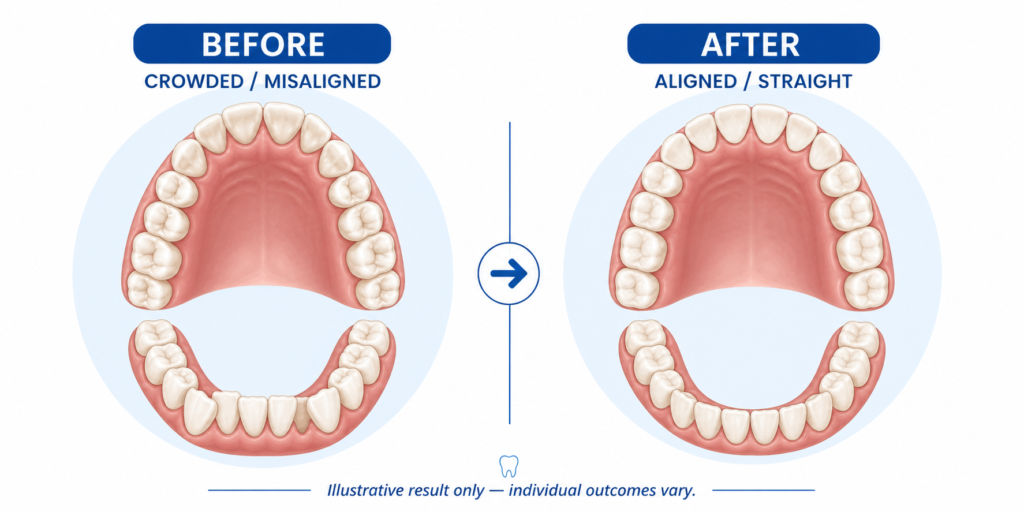
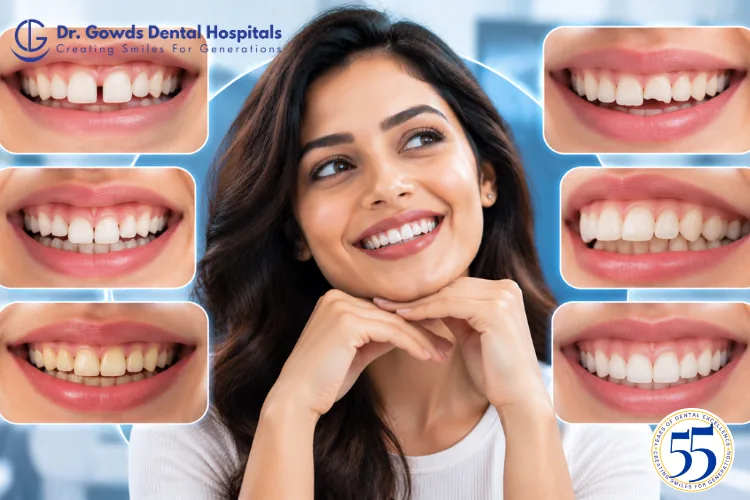
Crooked, gapped, or crowded teeth affect millions of people in India — not just the way a smile looks, but how teeth function, how the jaw sits, and how confident a person feels. For decades, metal braces were the only reliable fix. Today, teeth aligners have changed that conversation entirely.
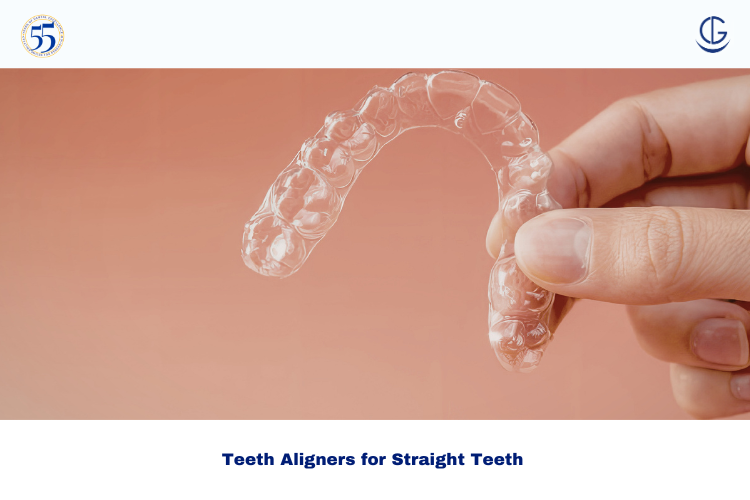
Teeth aligners are clear, removable trays custom-fitted to your teeth that gradually shift them into the correct position. No wires, no brackets, no dietary restrictions. Just a series of precisely designed trays worn for 20–22 hours a day, changed every one to two weeks, until your teeth reach their ideal alignment.
Medically Reviewed by: Prof. Dr. Snigdha Gowd, MDS (Orthodontics & Dentofacial Orthopaedics)

Teeth aligners — also called clear aligners or invisible aligners — are a modern form of orthodontic treatment. Each aligner is a thin, transparent tray made from smooth, BPA-free medical-grade plastic, custom-shaped to your unique dental anatomy using a 3D digital scan of your teeth.
You receive a full series of aligners at the start of treatment. Each tray in the series is slightly different from the last, designed to move specific teeth by a fraction of a millimetre at a time. As you progress through the series, your teeth shift gradually into their ideal final position. The process is controlled, predictable, and — critically — can be planned digitally before a single tray is made, so you can see your expected outcome before you begin.
The science behind aligners is straightforward: sustained, light pressure applied to a tooth in a specific direction causes the surrounding bone to remodel — the bone slightly dissolves on the pressure side and rebuilds on the tension side. Teeth move toward the space being created. Aligners control the direction, magnitude, and sequence of this pressure with remarkable precision.
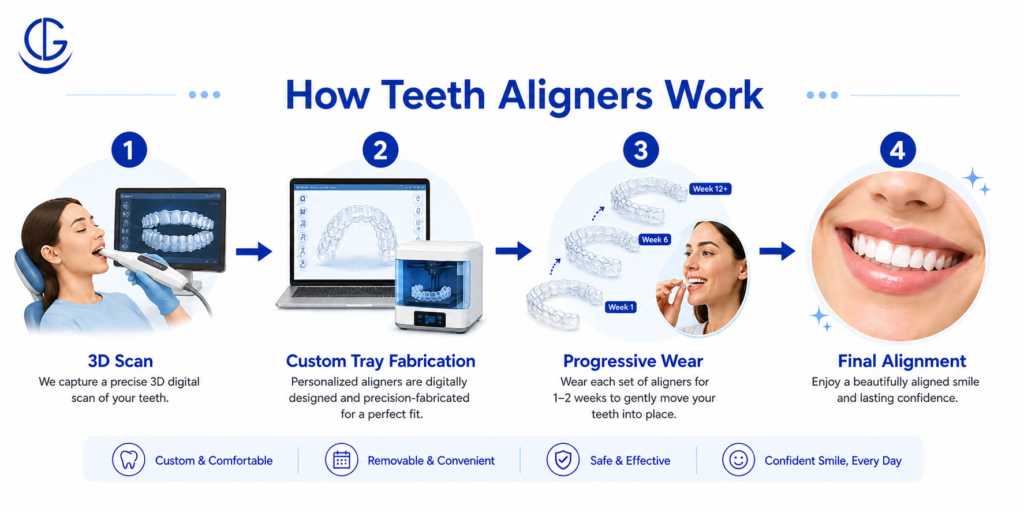
Modern aligner systems — including those at Dr. Gowds Dental Hospitals — use proprietary 3D treatment planning software that maps the exact movement of each tooth from its current position to its target position. This creates a digital simulation of your treatment outcome, that you can review and approve before any aligners are made.
From your first consultation to your final retainer, the process at Dr. Gowds Dental Hospitals is built around precision, personalisation, and transparency. Here is exactly what to expect.
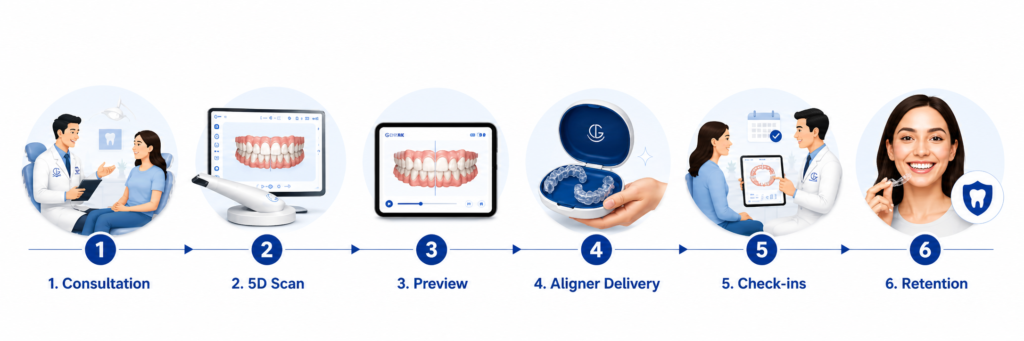
1. Initial consultation and 5D facial scan
Our orthodontists conduct a detailed examination including a 5D digital scan that captures your teeth, bite, and jaw relationship in precise 3D. Unlike traditional moulds, this is completely painless and takes under five minutes. The scan data is used to create your custom treatment plan.
2. Digital SmilePlan preview
Before a single aligner is made, you see a digital simulation of your treatment — tooth by tooth, stage by stage. You can review the expected outcome and timeline, ask questions, and approve the plan. This is something no metal brace can offer.
Once your SmilePlan is approved, your custom aligner series is fabricated using your precise 3D scan data. Each tray in the series is trimmed to your individual gum line — not a generic template — ensuring optimal comfort and aesthetics. Most patients receive their full aligner series within 2–4 weeks of their scan appointment.
Each aligner is worn for 1–2 weeks, for a minimum of 20–22 hours per day. You remove them only to eat, drink anything other than water, and brush your teeth. You attend check-in appointments at Dr. Gowds every 6–8 weeks so our team can monitor your progress and confirm each stage of movement is tracking correctly. Most patients need 18–36 aligners in a full treatment series.
Once your final aligner has been worn and your teeth have reached their target positions, you move into the retention phase. A custom retainer — typically worn nightly — maintains your results permanently. Skipping retention is the single most common reason teeth shift back after treatment. Dr. Gowds provides retainer guidance and follow-up as part of every treatment plan.
| Case Type | Estimated Duration | Approx. Number of Aligners |
| Minor spacing or mild crowding | 4–6 months | 12–20 trays |
| Moderate crowding or bite issues | 8–12 months | 24–36 trays |
| Complex alignment or jaw involvement | 12–18 months | 36–52 trays |
| Post-relapse (previous brace treatment) | 4–8 months | 12–24 trays |
| Do | Don’t |
| Rinse aligners in cool water every time you remove them. Clean with a soft toothbrush and mild soap daily. Soak in an aligner cleaning solution weekly. Store in the provided case when not wearing them. Brush and floss before re-inserting. | Never use hot water — it warps the plastic. Don’t eat with aligners in (except plain water). Avoid coloured toothpaste (stains trays). Don’t leave aligners exposed to direct sunlight. Never soak in mouthwash containing alcohol. |
Hyderabad-specific tip: In Hyderabad’s warm climate, storing aligners in a hot car or near a sunny window can cause warping within minutes. Always keep your case in a cool, shaded location. If you are outdoors for extended periods, keep an extra aligner case in your bag.
The single most common — and costly — mistake. Wearing aligners for 16–18 hours instead of 20–22 adds months to treatment. Every hour below 20 per day reduces the force applied to your teeth and slows movement. Set a daily timer or use a wear-tracking app.
Check-ins every 6–8 weeks are not optional. Your orthodontist assesses whether each tooth is tracking correctly. If a tooth has fallen behind the treatment plan (known as “tracking issues”), early intervention prevents the need for major refinements later.
Even if the current tray feels loose, changing early can result in the next tray not fitting correctly — a sign the teeth haven’t completed their planned movement for that stage. Follow your prescribed schedule unless your orthodontist advises otherwise.
Teeth have memory. Without a retainer, they begin drifting toward their original positions within weeks of finishing treatment. Wear your retainer as prescribed — this phase protects everything you invested in treatment.
Teeth aligner treatment is only as good as the expertise planning it. The aligner trays themselves are a tool — the clinical judgement that designs the treatment, places attachments correctly, monitors tracking, and manages refinements is what determines whether you get the result.
Teeth aligners are one of the most significant advances in orthodontic treatment of the last two decades. They offer a discreet, comfortable, and clinically effective way to straighten teeth — suitable for the majority of alignment cases without the dietary restrictions, visible hardware, or oral hygiene challenges of traditional braces.
The keys to success are consistent wear (20–22 hours daily), regular check-in appointments with your orthodontist, and committed retention wear after treatment completion. With the right clinical team planning and monitoring treatment, the results are predictable, lasting, and visible often within just a few weeks of starting.
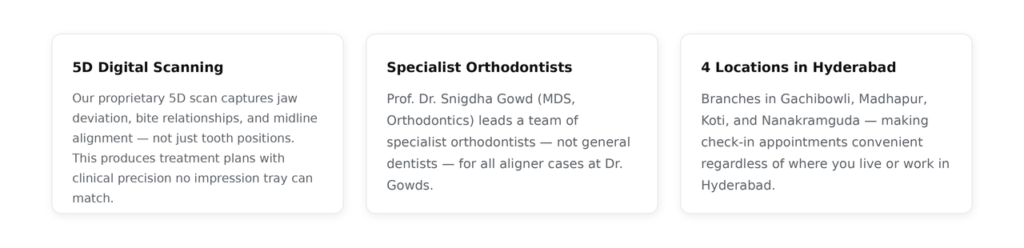
If you are considering teeth aligners in Hyderabad, the most useful next step is a 3D scan consultation — it is the only way to receive an accurate treatment plan, timeline, and cost estimate specific to your teeth. At Dr. Gowds Dental Hospitals, that consultation comes with a full digital smile preview so you can see your outcome before you decide.
Visit us at-
Dr gowds dental hospital Nanakramguda
Dr gowds dental hospital Gachibowli
Dr gowds dental hospital madhapur
Most patients notice visible movement within 6–8 weeks of starting treatment. Minor spacing cases may show significant improvement in as little as 4 months. Complex crowding or bite issues typically take 12–18 months for full correction. Your SmilePlan preview at Dr. Gowds will show your expected timeline before treatment begins.
Most patients experience mild pressure for 1–3 days when switching to a new tray — this is a sign the aligners are working. True pain is uncommon. The smooth plastic surface means no wire-related irritation to the cheeks or gums. Most patients describe the sensation as pressure,
not pain, and it diminishes significantly after the first 2–3 aligner changes.
Modern aligner systems have significantly expanded their capability for complex cases. Many conditions previously considered “braces only” — including overbites, underbites, and significant crowding — are now routinely treated with aligners. Truly severe skeletal jaw discrepancies may still require braces or combined surgical treatment. A 3D scan consultation will give you a definitive answer for your specific case.
Yes. Clear aligners are suitable for teenagers from approximately age 13–14 onwards, once the permanent teeth are fully erupted. Aligner brands designed for teens include compliance indicators (small dots that fade with wear) to help parents monitor wear time. At Dr. Gowds, we offer a specific teen assessment to confirm aligner suitability and guide parents through the process.
Neither is universally better — the right choice depends on your specific case, age, and lifestyle. Aligners are preferred for adults and older teens who want discretion, flexibility, and comfort. Braces remain the clinical gold standard for complex skeletal cases, significant rotations, and younger children where controlled, fixed force is required. Dr. Gowds offers both, and your orthodontist will recommend the option most likely to achieve the best outcome for your specific anatomy.
 Gachibowli Branch