

Schedule Appointment


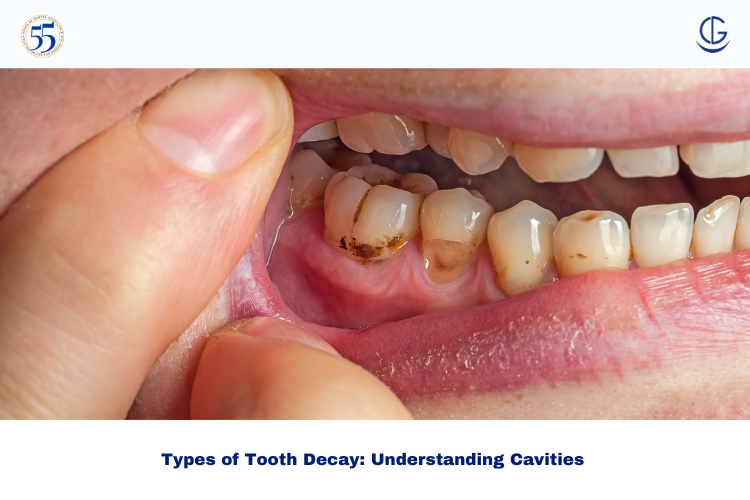
Tooth decay is one of the most common dental problems worldwide, affecting people of all ages. While many people think of cavities as a single condition, dentists actually classify decay based on where it develops on the tooth. Understanding the different types of tooth decay can help you recognize early warning signs and seek treatment before serious damage occurs.
At Dr. Gowds Dental Hospitals, dentists use advanced diagnostic tools to identify tooth decay at its earliest stages, helping patients avoid pain, infection, and more complex dental procedures.
Tooth decay occurs when bacteria in the mouth produce acids that gradually break down tooth enamel and underlying tooth structures.
The process typically begins when:
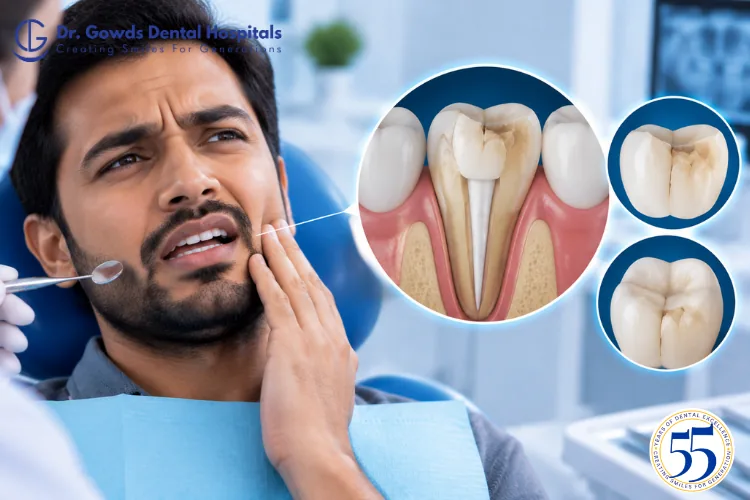
Without treatment, decay can spread deeper into the tooth and eventually affect the dental pulp, causing severe pain and infection.
Different areas of the tooth are vulnerable to different forms of decay.
The three main types of tooth decay are:
Each type develops differently and may require specific preventive measures and treatments.
Smooth surface decay occurs on the flat outer surfaces of teeth where plaque accumulates over time.
This type of decay usually develops:
Smooth surface decay is often associated with:
Because these surfaces are generally easier to clean, smooth surface decay often develops gradually over time.
Patients may notice:
If detected early, dentists may be able to reverse initial enamel damage through fluoride treatments and improved oral hygiene.
Treatment depends on severity.
Options may include:
Pit and fissure decay is one of the most common types of tooth decay, especially in children and teenagers.
It develops in the natural grooves and depressions found on the chewing surfaces of teeth.
These grooves are most commonly found on:
The deep grooves on chewing surfaces can trap:
Even regular brushing may not fully clean these narrow areas.
As a result, bacteria can remain hidden and begin damaging the enamel.
Common symptoms include:
In many cases, pit and fissure decay causes no symptoms until the cavity becomes larger.
Dentists often recommend:
Sealants are thin protective coatings applied to chewing surfaces.
They help prevent bacteria from entering deep grooves.
Professional fluoride strengthens enamel and reduces cavity risk.
Early detection can prevent small cavities from becoming larger problems.
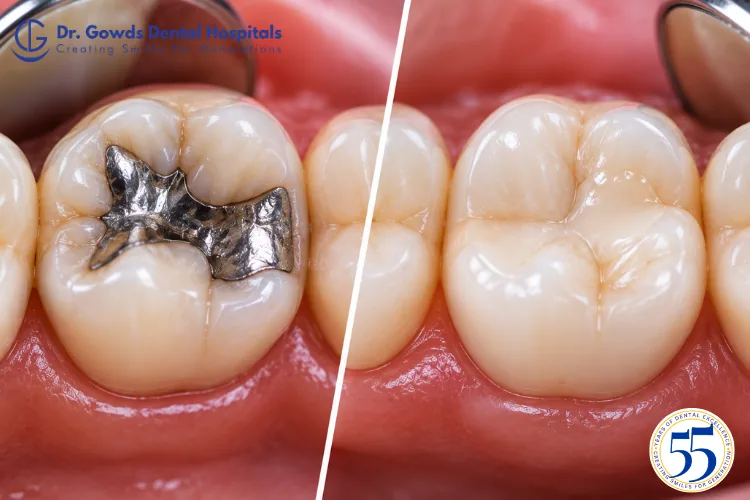
Depending on severity, treatment may include:
Root decay affects the exposed root surfaces of teeth.
Unlike enamel-covered crowns, tooth roots are protected by a softer material called cementum, which is more vulnerable to acid attacks.
Root decay is more common among:
As gums recede, root surfaces become exposed.
This exposure allows plaque and bacteria to attack areas that are less resistant to decay.
Risk factors include:
Patients may experience:
Because root decay can progress rapidly, early diagnosis is important.
Treatment options may include:
At Dr. Gowds Dental Hospitals, early intervention helps preserve natural teeth and prevent extensive damage.
Among the various types of tooth decay, pit and fissure decay is generally the most common, particularly in children and young adults.
This is because:
However, root decay is becoming increasingly common as people retain their natural teeth longer into older age.
Accurate diagnosis often involves:
Dentists inspect tooth surfaces for signs of damage.
X-rays help detect decay between teeth and beneath existing restorations.
Advanced imaging systems can reveal early-stage cavities.
At Dr. Gowds Dental Hospitals, digital diagnostic technology allows dentists to identify decay before symptoms become severe.
Understanding the different types of tooth decay can help you recognize early warning signs and take steps to protect your oral health. Smooth surface decay affects the flat outer surfaces of teeth, pit and fissure decay develops in the grooves of chewing surfaces, and root decay occurs on exposed root structures. Each type presents unique challenges, but all can be prevented and treated with proper dental care.
At Dr. Gowds Dental Hospitals, dentists provide comprehensive cavity detection, preventive care, and advanced restorative treatments to help patients maintain healthy, decay-free smiles. Regular dental visits and early intervention remain the best defenses against tooth decay.
Visit us at-
Dr gowds dental hospital Nanakramguda
Dr gowds dental hospital Gachibowli
Dr gowds dental hospital madhapur
The three main types of tooth decay are smooth surface decay, pit and fissure decay, and root decay. They are classified based on the location where the cavity develops.
Pit and fissure decay is generally the most common type because food and bacteria easily accumulate in the deep grooves of back teeth.
Root decay occurs when gum recession exposes the tooth roots, allowing bacteria and plaque to attack the softer root surface.
Early-stage decay that has not formed a cavity may sometimes be reversed with fluoride treatments and improved oral hygiene. Once a cavity develops, restorative treatment is usually required.
Brushing twice daily, flossing regularly, reducing sugar intake, staying hydrated, using fluoride products, and attending regular dental checkups can help prevent all types of tooth decay.
 Gachibowli Branch