

Schedule Appointment


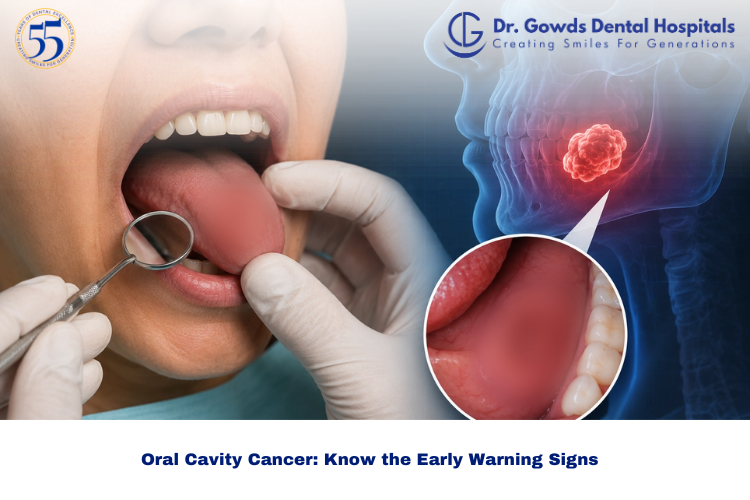
Oral cavity cancer is a type of cancer that develops in the tissues of the mouth, including the lips, tongue, gums, inner cheeks, floor of the mouth, and roof of the mouth. While it can affect people of all ages, early detection dramatically improves treatment outcomes and survival rates.
Many people associate oral health with cavities and gum disease, but oral cavity cancer is an equally important condition that deserves attention. Because early-stage oral cancer often develops without pain or obvious symptoms, it can go unnoticed until it becomes more advanced.
At Dr. Gowds Dental Hospitals, we emphasize the importance of routine oral examinations and early screening because identifying suspicious changes in the mouth at the earliest stage can help improve treatment success and protect overall health.
This guide explains the warning signs, risk factors, diagnosis process, treatment options, and preventive measures for oral cavity cancer.
Oral cavity cancer refers to cancer that develops in any part of the mouth, including:
Most oral cancers begin in the thin, flat cells that line the mouth, known as squamous cells. As a result, the majority of cases are classified as oral squamous cell carcinoma.
If detected early, oral cavity cancer is often highly treatable. However, delayed diagnosis can allow the disease to spread to nearby tissues, lymph nodes, or other parts of the body.
One of the biggest challenges with oral cavity cancer is that early symptoms may appear harmless or resemble common oral conditions.
A sore that does not heal within two to three weeks should be evaluated by a dental professional.
Persistent white patches (leukoplakia) or red patches (erythroplakia) may require further examination.
Any unusual lump, swelling, or thickening inside the mouth should not be ignored.
Changes in normal eating or swallowing patterns may indicate an underlying issue.
Difficulty moving the tongue or jaw can sometimes be associated with oral abnormalities.
Pain, tenderness, or numbness that continues without an obvious cause warrants professional evaluation.
If dentures suddenly fit differently or your bite feels altered, it may indicate tissue changes that require assessment.
While anyone can develop oral cancer, certain factors significantly increase the likelihood of developing the disease.
Smoking remains one of the strongest risk factors for oral cavity cancer.
This includes:
Long-term tobacco exposure increases cellular damage within the oral tissues.
Heavy alcohol use can irritate oral tissues and increase cancer risk.
When combined with tobacco use, the risk increases substantially.
HPV, particularly HPV-16, has become a significant contributor to oral and oropharyngeal cancers.
HPV-related oral cancers are increasingly being diagnosed in younger individuals who may not have traditional tobacco-related risk factors.
Prolonged ultraviolet (UV) exposure can increase the risk of lip cancer, particularly among individuals who spend extended periods outdoors.
Individuals with compromised immune systems may face a higher risk of developing oral cancers.
Previous cancer diagnoses and family history may influence overall cancer risk.
Early-stage oral cavity cancer often produces subtle symptoms.
When detected before spreading to lymph nodes or surrounding tissues, treatment outcomes are significantly more favorable.
Many oral cancers are first identified during routine dental examinations.
This highlights why regular dental visits remain essential even when no symptoms are present.
If a suspicious lesion is found, additional tests may be recommended.
A brush biopsy involves collecting cells from the affected area using a specialized brush.
These cells are then analyzed in a laboratory for abnormalities.
If further investigation is needed, a small tissue sample may be surgically removed and examined under a microscope.
A biopsy remains the definitive method for confirming an oral cancer diagnosis.
Treatment varies depending on:
Most patients receive care from a multidisciplinary team that may include:
Surgery is often recommended for localized oral cancers.
The goal is to remove the tumor while preserving as much healthy tissue as possible.
Radiation therapy uses targeted energy beams to destroy cancer cells.
It may be used:
Chemotherapy may be recommended in certain advanced cases or when cancer has spread beyond its original site.
Some patients may require reconstructive procedures following tumor removal to restore function and appearance.
Modern reconstructive techniques can significantly improve quality of life after treatment.
For residents of Hyderabad, regular oral cancer screening should be considered an important part of preventive healthcare.
Individuals should seek professional evaluation if they notice:
At Dr. Gowds Dental Hospitals, comprehensive dental evaluations help identify suspicious oral changes early, allowing timely referrals and appropriate management when necessary.
While not all cases can be prevented, several lifestyle choices can significantly reduce risk.
Quitting smoking and avoiding smokeless tobacco products remains one of the most effective preventive measures.
Reducing alcohol intake can help lower oral cancer risk.
HPV vaccination may help reduce the risk of HPV-related oral cancers.
Discuss vaccination options with your healthcare provider.
A diet rich in fruits and vegetables provides antioxidants that support overall health.
Use lip protection when spending extended periods outdoors.
Routine dental examinations remain one of the most effective ways to detect oral cancer early..
Oral cavity cancer is a serious but potentially treatable condition when identified early. Understanding the warning signs, recognizing risk factors, and attending regular dental examinations are essential steps in protecting your oral and overall health.
At Dr. Gowds Dental Hospitals, we encourage patients to take persistent oral changes seriously and seek professional evaluation whenever concerns arise. Early detection remains one of the most powerful tools in the fight against oral cancer.
Your oral health is an important part of your overall well-being. Staying informed, maintaining healthy habits, and scheduling routine dental check-ups can help safeguard your health for years to come.
Visit us at-
Dr gowds dental hospital Nanakramguda
Dr gowds dental hospital Gachibowli
Dr gowds dental hospital madhapur
Early signs may include persistent mouth ulcers, red or white patches, unexplained lumps, oral discomfort, or difficulty swallowing that lasts longer than two weeks.
Yes. Dentists are trained to identify suspicious oral lesions and tissue changes that may require further evaluation or biopsy.
No. Most mouth ulcers are not cancerous. However, any ulcer that does not heal within two to three weeks should be professionally evaluated.
People who use tobacco products, consume excessive alcohol, have HPV infection, or have a history of head and neck cancers generally face a higher risk.
Regular dental check-ups every six months are recommended for most individuals. Your dentist may suggest more frequent evaluations based on your risk factors.


 Gachibowli Branch