

Schedule Appointment


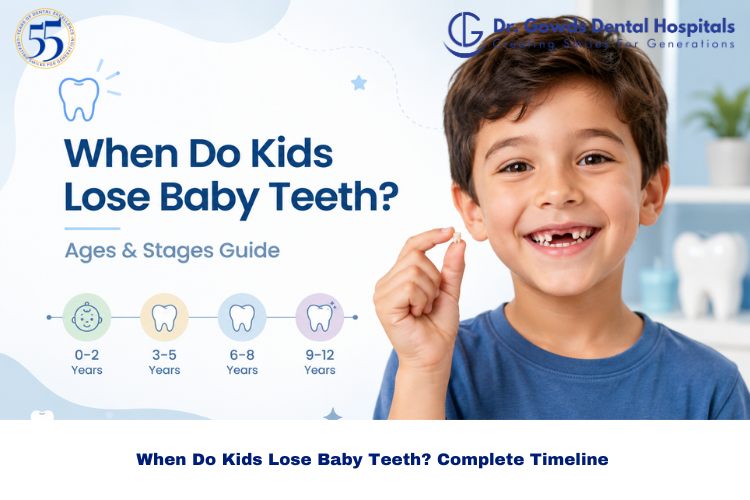
Most kids lose their first baby tooth between the ages of 6 and 7 years. The process continues gradually until around age 12 or 13, when most permanent teeth have erupted. Baby teeth usually fall out in the same order they appeared, starting with the front teeth and ending with the back molars.
At Dr. Gowds Dental Hospitals, one of the most common questions parents ask is whether their child’s tooth loss is happening at the right age. While every child develops differently, understanding the normal baby tooth loss timeline can help parents identify healthy dental development and recognize when a dental evaluation may be needed.
Baby teeth, also known as primary teeth, are temporary teeth that help children:
As permanent teeth begin developing beneath the gums, they gradually dissolve the roots of the baby teeth through a natural process called root resorption.
Once enough of the root disappears, the baby tooth becomes loose and eventually falls out, allowing the permanent tooth to erupt into its place.
This process is a normal part of childhood dental development.
Most children begin losing baby teeth around age 6.
However, it is perfectly normal for tooth loss to begin slightly earlier or later.
In general, children who get their baby teeth earlier may lose them earlier, while those whose teeth erupt later may experience delayed tooth loss.
The order in which baby teeth fall out usually follows the same pattern in which they first erupted.
Average Age Lost
6–7 years
These lower front teeth are often the first baby teeth to become loose and fall out.
Average Age Lost
6–7 years
These upper front teeth usually follow shortly after the lower incisors.
For many children, this is the stage when the classic “toothless smile” begins.
Average Age Lost
7–8 years
These teeth sit beside the upper front teeth and are typically replaced by permanent lateral incisors.
Average Age Lost
7–8 years
The lower side incisors usually fall out around the same age as the upper lateral incisors.
Average Age Lost
9–11 years
These back teeth help children chew food and are eventually replaced by permanent premolars.
Average Age Lost
9–12 years
Canines are important for guiding the bite and supporting proper tooth alignment.
They are generally among the later baby teeth to fall out.
Average Age Lost
10–12 years
These are usually the last baby teeth to be shed before the permanent dentition is complete.
| Baby Tooth | Average Age Lost |
| Lower Central Incisors | 6–7 years |
| Upper Central Incisors | 6–7 years |
| Upper Lateral Incisors | 7–8 years |
| Lower Lateral Incisors | 7–8 years |
| First Primary Molars | 9–11 years |
| Canines | 9–12 years |
| Second Primary Molars | 10–12 years |
Most children lose all 20 baby teeth by approximately age 12 or 13.
Many parents focus on when baby teeth fall out, but it is equally important to understand when permanent teeth appear.
In most cases, permanent teeth erupt shortly after a baby tooth is lost.
| Permanent Tooth | Average Age |
| First Molars | 6–7 years |
| Central Incisors | 6–8 years |
| Lateral Incisors | 7–9 years |
| Canines | 9–12 years |
| Premolars | 10–12 years |
| Second Molars | 11–13 years |
Wisdom teeth, or third molars, usually erupt much later between ages 17 and 25.
Many parents wonder whether a loose tooth is normal or if it requires attention.
Common signs include:
The tooth begins moving slightly when touched.
Children may notice slight discomfort around the loose tooth.
The tooth gradually becomes more mobile over several weeks.
Sometimes the adult tooth becomes visible underneath or behind the baby tooth before the baby tooth falls out.
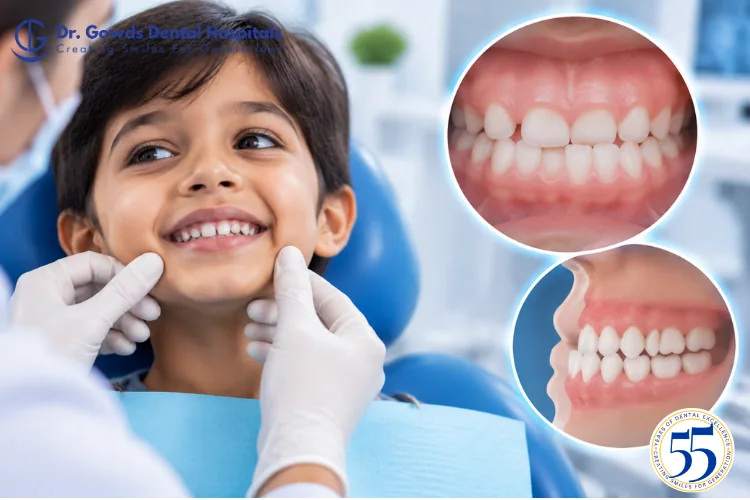
Yes. This condition is commonly known as “shark teeth.”
It occurs when a permanent tooth erupts before the baby tooth has completely fallen out.
This situation is most commonly seen behind the lower front teeth.
In many cases:
However, if the baby tooth remains firmly in place, a dental evaluation may be recommended.
At Dr. Gowds Dental Hospitals, digital imaging helps determine whether intervention is necessary.
Delayed tooth loss is not always a problem, but it should be evaluated when it falls significantly outside normal timelines.
Possible causes include:
Some children simply develop more slowly than others.
Certain permanent teeth may never form.
This condition is known as hypodontia.
A permanent tooth may become trapped beneath the gums or bone.
Some baby teeth remain in place longer than expected despite the presence of permanent teeth.
If you are wondering when do kids lose baby teeth, the answer is usually between ages 6 and 13, with the first tooth typically falling out around age 6 or 7.
Although every child follows a slightly different timeline, understanding the normal pattern of baby tooth loss helps parents recognize healthy development and identify potential concerns early.
Regular dental checkups, good oral hygiene habits, and professional monitoring can help ensure that permanent teeth erupt properly and support a lifetime of healthy smiles.
If you have concerns about your child’s dental development, the pediatric dental team at Dr. Gowds Dental Hospitals can provide expert guidance and personalized care.
Visit us at-
Dr gowds dental hospital Nanakramguda
Dr gowds dental hospital Gachibowli
Dr gowds dental hospital madhapur
Most children lose their first baby tooth between 6 and 7 years of age, usually one of the lower front teeth.
The lower central incisors are typically the first baby teeth to become loose and fall out.
Yes. Some children begin losing baby teeth as early as age 5, particularly if their baby teeth erupted early.
A dental evaluation is recommended to assess tooth development and ensure permanent teeth are forming and erupting normally.
Most permanent teeth begin erupting within a few weeks to several months after the baby tooth is lost, although timing can vary between children.
 Gachibowli Branch