

Schedule Appointment


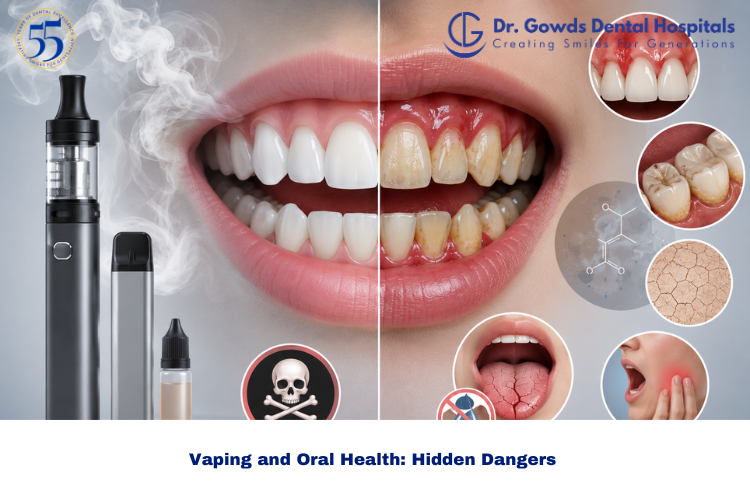
Yes, vaping can negatively affect your oral health. While many people view e-cigarettes as a safer alternative to traditional smoking, research suggests that vaping may contribute to gum disease, dry mouth, bad breath, tooth decay, delayed healing, and increased oral infection risk. The effects may be less obvious initially, but long-term vaping can have significant consequences for your teeth, gums, and overall oral health.
At Dr. Gowds Dental Hospitals, dental specialists increasingly see patients experiencing oral health issues associated with vaping, particularly among younger adults who may not realize the impact e-cigarettes can have on their smiles.
Vaping involves inhaling an aerosol produced by an electronic cigarette (e-cigarette) or vaping device.
The aerosol typically contains:
Unlike traditional cigarettes, vaping does not involve burning tobacco. However, this does not mean it is harmless.
Many of the chemicals found in vaping products can still affect oral tissues and overall health.
Your mouth is the first point of contact for vaporized chemicals.
Every puff exposes your:
to substances that may alter the natural balance of the oral environment.
Over time, these changes can increase the risk of dental problems.
One of the most common oral health effects of vaping is dry mouth.
Nicotine can reduce saliva production, leading to:
Saliva plays a critical role in protecting teeth by:
When saliva levels decrease, the risk of dental disease increases.
Healthy gums depend on adequate blood flow and a balanced oral environment.
Nicotine can constrict blood vessels and reduce circulation to gum tissues.
This may contribute to:
Some vaping users develop gum recession and chronic gum irritation over time.
Dry mouth and altered oral bacteria create favorable conditions for cavities.
Factors contributing to decay include:
Without adequate saliva protection, tooth enamel becomes more vulnerable to damage.
Many people assume vaping improves breath compared to smoking.
However, vaping can still contribute to chronic bad breath.
Common reasons include:
The sweet flavorings used in e-cigarettes may temporarily mask odors but do not eliminate underlying causes.
Research suggests that vaping may alter the oral microbiome.
This can lead to:
An unhealthy oral microbiome can affect both dental and overall health.
Emerging evidence indicates that vaping may increase susceptibility to gum disease.
The chemicals in vaping aerosols can:
Over time, these effects may contribute to:
The earliest stage of gum disease characterized by:
Advanced gum disease involving:
Early intervention is essential to prevent permanent damage.
Yes.
Patients considering or already having dental implants should be aware of the potential risks.
Nicotine may impair:
This can affect implant success and long-term stability.
At Dr. Gowds Dental Hospitals, patients undergoing implant treatment are often advised to minimize or stop nicotine use to improve healing outcomes.
Although vaping generally causes fewer stains than traditional cigarettes, it is not completely stain-free.
Certain flavorings and ingredients may contribute to:
Long-term users may notice gradual changes in tooth color.
Healing after dental treatment depends on adequate blood circulation and healthy tissues.
Vaping may interfere with recovery following:
Potential complications include:
Patients are often advised to avoid vaping during the healing period.
Research on vaping and oral cancer is still evolving.
While vaping may expose users to fewer carcinogens than traditional cigarettes, e-cigarette aerosols can still contain potentially harmful substances.
Some studies suggest exposure to:
may contribute to cellular changes within oral tissues.
More long-term research is needed, but vaping should not be considered risk-free.
You should schedule a dental evaluation if you experience:
Early detection can prevent more serious complications.
While quitting remains the best option, certain habits can help reduce damage.
Drink water frequently throughout the day to combat dry mouth.
Brush twice daily and floss regularly.
Good oral hygiene helps control plaque and bacteria.
Fluoride toothpaste may help strengthen enamel and reduce cavity risk.
Routine examinations help identify early signs of vaping-related dental problems.
Many people believe vaping is harmless compared to smoking, but growing evidence suggests otherwise.
The relationship between vaping and oral health continues to concern dental professionals due to its potential impact on saliva production, gum health, tooth decay, bacterial balance, and healing capacity.
While occasional symptoms may seem minor initially, long-term vaping can contribute to significant oral health complications.
If you vape regularly and have noticed dry mouth, bad breath, gum problems, or other dental concerns, a professional evaluation at Dr. Gowds Dental Hospitals can help protect your oral health and prevent future complications.
Visit us at-
Dr gowds dental hospital Nanakramguda
Dr gowds dental hospital Gachibowli
Dr gowds dental hospital madhapur
Yes. Vaping may contribute to dry mouth, gum disease, tooth decay, bad breath, and delayed healing after dental procedures.
Research suggests that vaping may increase inflammation and impair gum health, raising the risk of gingivitis and periodontitis.
Yes. Dry mouth and bacterial growth associated with vaping can contribute to persistent bad breath.
Yes. Nicotine may reduce blood flow and impair healing, potentially affecting implant success and long-term stability.
While vaping may cause fewer stains than traditional smoking, it is not risk-free and can still negatively affect oral health.
 Gachibowli Branch