

Schedule Appointment


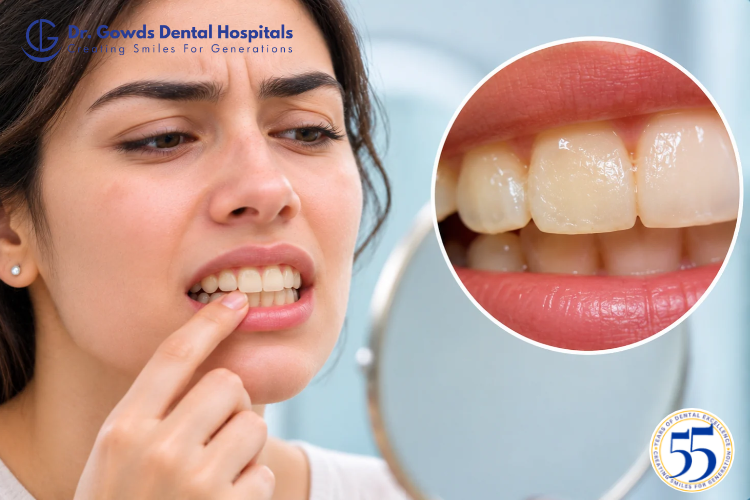
Have your teeth ever felt coated, tacky, or slightly rough even after brushing? If you keep noticing a sticky film on teeth throughout the day, you may be wondering why the clean feeling disappears so quickly.
A sticky coating can be related to everyday factors such as plaque or biofilm, food and drink residue, saliva, or areas that are difficult to clean thoroughly. The exact reason can vary from person to person.
In this guide, Dr Gowds Dental Hospitals explains what that sticky feeling may be connected to, what you can do as part of your daily oral-care routine, and when a dental check-up may be useful.
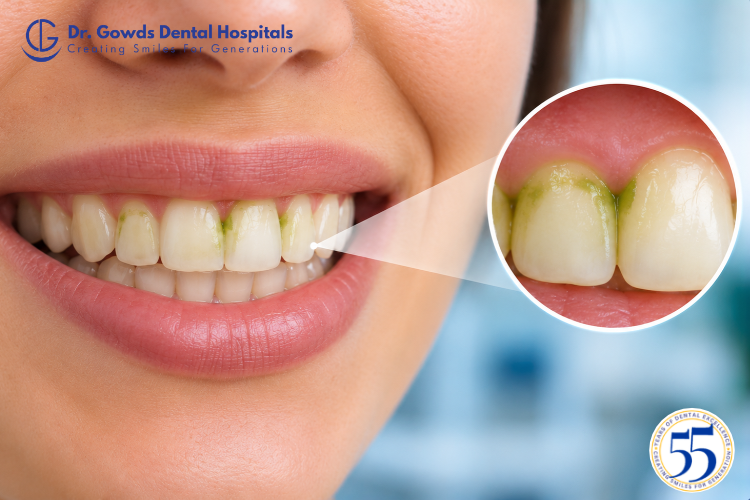
The sticky film you notice is often associated with plaque, also called dental biofilm. It is a soft layer that can collect on the surfaces of teeth and around areas such as the gumline.
The film can also become more noticeable when saliva mixes with small amounts of food or drink residue. Because it is not always easy to see, you may notice it first as a sensation: your teeth feel tacky, coated, or less smooth when your tongue passes over them.
A light film can develop during the day, so noticing some change between brushing sessions is not necessarily unusual. The more useful question is whether the feeling is persistent, difficult to clean away, or accompanied by other changes in your mouth.
There is not always one single reason. Several everyday factors can contribute to a sticky feeling.
Plaque is one of the most common things associated with a sticky coating on teeth. It can collect in places that are easy to miss, including between teeth, along the gumline, and around the back teeth.
If some areas are not cleaned thoroughly, the coating may become noticeable again soon after brushing.
Some foods and drinks leave a noticeable coating behind. Sticky, sweet, starchy, or highly textured foods can leave residues that make the teeth feel less clean.
Frequent sipping or snacking can also mean your teeth are exposed to food and drink residues repeatedly throughout the day.
Saliva naturally mixes with the surfaces inside your mouth. When the mouth feels drier than usual, a coating can sometimes feel more noticeable.
Your daily routine, hydration habits, environment, and certain products or medicines can affect how your mouth feels. If you regularly experience a dry or sticky mouth, mention it during a dental consultation.
Brushing is important, but the toothbrush does not reach every surface equally well. The areas between teeth, along the gumline, and behind the back teeth can be particularly easy to overlook.
This is one reason teeth may feel clean immediately after brushing but develop a coated sensation later.
Braces, retainers, aligners, bridges, and other dental appliances can create additional surfaces where food residue or plaque may collect. Cleaning instructions can vary depending on the appliance, so following the care guidance provided by your dental professional is important.
If your teeth feel sticky shortly after brushing, it does not automatically mean that brushing has been ineffective.
Consider a few simple questions:
If the same areas continue to feel coated, a dental professional can check whether there are areas that need more attention in your daily cleaning routine.
Not necessarily.
A sticky sensation usually describes a tacky or coated feeling. Roughness can feel different, almost like your tongue is moving over an uneven surface.
The two sensations can sometimes occur together, but they are not the same thing. If you notice a persistent change in how a tooth feels, especially in one particular area, it is better to have it assessed rather than trying to identify the cause by sensation alone.
A consistent oral-care routine can help you keep your teeth feeling cleaner throughout the day.
Use a toothbrush and toothpaste suited to your needs and clean the front, back, and chewing surfaces of your teeth. Pay attention to the gumline and the back teeth rather than focusing only on the front surfaces that are easiest to see.
A toothbrush cannot clean every space between teeth. Depending on your needs, your dentist may recommend floss or another interdental cleaning method.
The tongue can collect residue, so gently cleaning it can be a useful part of a daily oral-care routine.
If you cannot brush immediately after a meal, drinking or rinsing with water can help you feel fresher and remove loose food residue from the mouth.
If you are constantly eating or sipping drinks throughout the day, your mouth may repeatedly have food or drink residue present. Keeping snacks and drinks more structured can make oral hygiene easier to manage.
If you wear aligners, retainers, braces, or another appliance, clean them according to the instructions provided for that appliance.
Not sure why your teeth keep feeling sticky even with regular brushing? A dental consultation at Dr Gowds Dental Hospitals can help you understand your oral-care needs and the areas that may need closer attention.
A sticky feeling that comes and goes can be part of the normal changes you notice in your mouth during the day. However, if the sensation is persistent or keeps returning despite consistent cleaning, a dental visit can help you understand what is happening.
It is especially sensible to arrange a dental check-up if you also notice:
A dentist can examine your teeth and gums and suggest an oral-care routine suited to your needs.
A dental examination can look at the areas you may not be able to see easily at home. This can include plaque accumulation, areas that are difficult to clean, dental appliances, and changes in the surfaces of the teeth or gums.
Instead of guessing whether the sticky film is caused by food residue, plaque, or another factor, a professional assessment can help narrow down the likely reason and guide your next steps.
A sticky film on teeth can be frustrating, especially when your mouth feels clean immediately after brushing and coated again later. Plaque or biofilm, food and drink residue, saliva, cleaning habits, and dental appliances can all be relevant factors.
The best approach is not to keep brushing harder. Focus on consistent, thorough cleaning, including between the teeth and around the gumline, and pay attention to changes that persist.
If you are in Hyderabad and want to understand why your teeth feel sticky throughout the day, Dr Gowds Dental Hospitals has branches in Nanakramguda, Gachibowli, Madhapur, koti.
A sticky feeling can be associated with plaque or biofilm, food and drink residue, saliva, or areas that are not being cleaned thoroughly. If the feeling persists despite regular cleaning, a dental check-up can help identify the likely reason.
Teeth may still feel coated after brushing if certain areas, such as between the teeth, along the gumline, or around the back teeth, have not been cleaned thoroughly. Food or drink residue can also contribute to the sensation.
Maintain a consistent oral-care routine that includes brushing all tooth surfaces, cleaning between your teeth, gently cleaning your tongue, and rinsing with water after eating. If the coating remains difficult to remove, consider a dental consultation.
Plaque is a soft layer that can form on teeth during the day. A persistent or difficult-to-remove coating, however, is worth discussing with a dental professional.
Sticky and rough are different sensations, although they can sometimes occur together. A persistent change in the way a particular tooth feels can be checked by a dentist.
Yes, some foods and drinks can leave residues that make teeth feel coated or sticky. Sticky, sweet, starchy, or highly textured foods may be particularly noticeable.
If your teeth continue to feel coated despite consistent oral hygiene, a dental appointment can help determine what may be contributing to the sensation and whether your cleaning routine needs adjustment.
 Gachibowli Branch