

Schedule Appointment


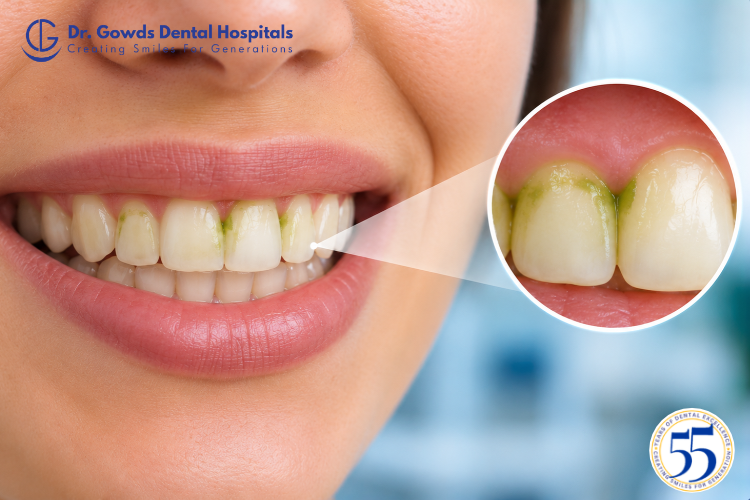
Seeing green stains on your teeth can be surprising, especially when you are expecting your teeth to look white or slightly off-white. Green-coloured buildup may appear on the visible surface of a tooth, around the gum line, or in areas that are harder to clean.
The good news is that the appearance of a green stain does not automatically tell you what caused it. Different types of surface buildup and staining can look similar, so trying to identify or scrape away the stain yourself may not be the best approach.
In this guide, Dr Gowds Dental Hospitals explains some common reasons green stains on teeth may appear, what you can do at home, when professional cleaning may be appropriate, and how to reduce the chances of stains returning.
Looking for help with stubborn tooth stains in Hyderabad?
Green stains on teeth are areas of green or greenish-coloured discoloration visible on the tooth surface or around the gum line.
They may appear as:
The appearance alone is not enough to determine the exact reason for the stain. A dental professional can examine the affected area and distinguish between surface staining, buildup and other causes of tooth discoloration.
There can be several contributors to green staining. Understanding the possible causes can help you decide what to do next.
Plaque is a soft layer that can accumulate on teeth when regular brushing and cleaning do not remove it completely.
When buildup remains around areas such as the gum line, between teeth or behind the teeth, it can become more noticeable. In some situations, the buildup may take on a greenish colour.
Foods and drinks containing strong natural or added colours can contribute to surface staining.
Regular exposure to coloured foods and beverages may make existing stains more noticeable, particularly when teeth are not cleaned thoroughly afterwards.
Some parts of the mouth are naturally harder to reach with a toothbrush.
Common examples include:
When these areas are missed repeatedly during daily cleaning, surface buildup can become more visible.
Inconsistent brushing or cleaning between teeth can allow surface deposits to accumulate.
Brushing twice a day and cleaning between the teeth can help maintain a cleaner tooth surface. However, established stains or hardened deposits may not disappear with routine brushing alone.
Tobacco use can contribute to tooth discoloration and may make existing surface stains more noticeable.
If you notice a new or persistent green, brown, yellow or dark stain, it is better to have the area examined rather than assuming it is simply caused by food.
Some surface discoloration may become less noticeable with consistent oral hygiene. However, not every type of stain can be removed effectively with a toothbrush.
A simple daily routine includes:
It is important not to use sharp objects, fingernails or abrasive household materials to scrape green stains from your teeth. Attempting to physically remove stubborn buildup can damage the tooth surface or irritate the gums.
The right approach depends on what is causing the discoloration.
A dentist can examine the affected teeth and the surrounding areas to understand whether the discoloration appears to be surface staining, buildup or something that needs closer evaluation.
If the stain is associated with accumulated deposits, professional dental cleaning may be considered.
During a cleaning appointment, dental professionals can work on areas that are difficult to clean effectively at home. The goal is to remove unwanted deposits from the tooth surfaces while maintaining comfortable and appropriate dental care.
Once the visible buildup has been addressed, maintaining a consistent home-care routine can help keep the tooth surfaces cleaner.
This includes brushing properly and cleaning between the teeth rather than focusing only on the front surfaces that are easy to see.
If green stains keep coming back, the next step is to look at the possible contributing habits or areas that are repeatedly being missed.
Your dentist may suggest changes to your brushing technique, cleaning routine or other aspects of your dental care based on what they observe.
The area where the teeth meet the gums can be particularly noticeable when surface buildup collects there.
This region can also be easy to miss during brushing because brushing too aggressively may feel uncomfortable, while brushing too lightly may leave deposits behind.
When you notice green stains along the gum line, avoid trying to scrape them away. Instead, focus on gentle, thorough cleaning and consider having the area checked if the discoloration remains.
Not every coloured mark on a tooth is a green stain. Tooth discoloration can appear in different shades and may affect different parts of the tooth.
| Appearance | Possible consideration |
| Green or greenish surface mark | Surface staining or coloured buildup |
| Yellowish buildup near gums | Surface deposits or staining |
| Brown stains | Coloured deposits or staining |
| Dark spots | May require dental examination |
| White patches | May have a different cause from surface staining |
This comparison is only a general guide. The colour of a mark alone cannot establish its cause.
Preventing recurring stains starts with consistent everyday dental care.
Brush twice daily and spend enough time cleaning all tooth surfaces. Pay particular attention to the gum line and areas that are easy to overlook.
A toothbrush cannot effectively clean every space between teeth. Regular interdental cleaning can help remove food particles and buildup from these areas.
If you frequently consume strongly coloured foods or drinks, rinsing your mouth with water afterwards can help reduce the amount of colour left on the tooth surfaces.
Regular dental appointments can help identify areas where buildup is accumulating and allow your dental team to recommend appropriate cleaning and home-care practices.
A stubborn stain can be frustrating, but using sharp or abrasive objects to remove it is not a good substitute for professional cleaning.
Consider arranging a dental examination if:
A dental examination can help determine what you are actually seeing and whether professional cleaning or further evaluation is appropriate.
If you have noticed green stains on your teeth and are unsure how to remove them, Dr Gowds Dental Hospitals can help you understand the possible cause and appropriate cleaning options.
Visit Dr Gowds Dental Hospitals in Hyderabad at Nanakramguda, Gachibowli, Madhapur, koti to discuss your dental concerns and find the right approach for cleaner-looking teeth.
Green stains can have several possible contributors, including surface buildup, coloured deposits, staining from foods or drinks and areas that are difficult to clean. The exact cause cannot be determined from colour alone.
Start with consistent brushing and cleaning between the teeth. If the stain remains or appears to be hardened buildup, professional dental cleaning may be appropriate.
Some surface discoloration may become less noticeable with good brushing. However, established deposits or stubborn stains may not be removed effectively with a toothbrush alone.
Not necessarily. Green-coloured buildup may occur alongside plaque or other deposits, but the colour itself does not establish exactly what the material is.
The gum line can collect surface buildup because it can be difficult to clean thoroughly. Greenish discoloration in this area should be assessed if it does not improve with regular cleaning.
Professional dental cleaning can address certain types of surface deposits and staining. Whether a stain can be removed through cleaning depends on what is causing the discoloration.
Maintain consistent brushing, clean between your teeth, pay attention to the gum line, manage staining habits and maintain regular dental care.
No. Avoid using sharp objects, fingernails or abrasive materials to scrape stains from your teeth. If the discoloration does not improve with normal cleaning, have it examined by a dental professional.

 Gachibowli Branch