

Schedule Appointment


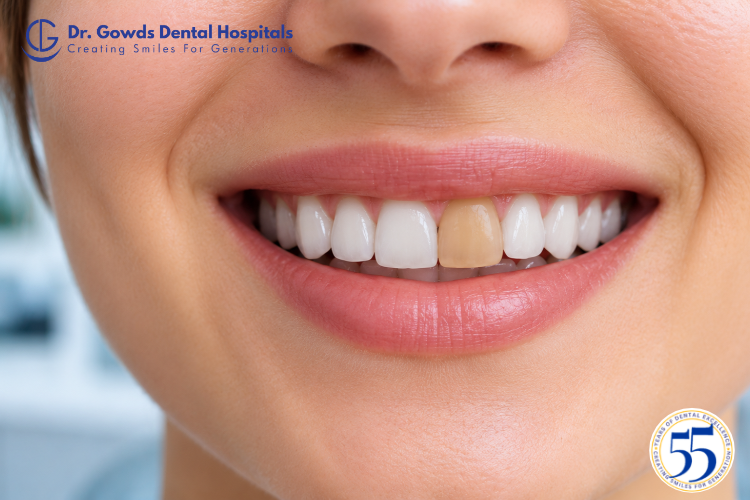
Have you noticed that one tooth is darker than the others, even though the rest of your teeth look normal? A single dark, greyish, yellowish or brownish tooth can stand out, especially when it is near the front of your smile.
A change in the colour of just one tooth can have several possible explanations. Sometimes the change is mainly on the surface, while in other situations it can be related to changes within the tooth itself. Previous dental treatment, an injury, staining or changes to the tooth structure can also affect its appearance.
Understanding why a tooth looks different is the first step towards deciding what to do next.
If you have recently noticed a darker tooth, consider having it looked at by a dental professional rather than trying to determine the cause from its colour alone.
Looking for dental care in Hyderabad?
Teeth do not always remain exactly the same colour throughout life. When only one tooth changes noticeably, dentists generally look at the tooth’s history, appearance and surrounding teeth to understand what may be contributing to the difference.
Some common possibilities include:
Food, drinks and tobacco products can contribute to staining on teeth. However, surface stains often affect more than one tooth because the same substances come into contact with multiple teeth.
If only one tooth looks darker, a dentist may look more closely at whether the colour difference is actually coming from the tooth surface or from within the tooth.
A tooth contains several layers, including enamel, dentin and the inner pulp area. Changes within these structures can sometimes make a tooth appear darker or more grey than neighbouring teeth.
This can be particularly noticeable when the other teeth have remained their usual shade.
A tooth that has experienced an injury in the past may develop a colour difference later. The injury does not necessarily have to be recent.
For example, someone may remember hitting a front tooth years ago but not connect the old incident with a later change in colour.
A tooth that has undergone dental treatment may look different from neighbouring teeth over time.
This can happen with teeth that have had procedures such as root canal treatment or certain restorations. The material used and changes within the tooth can influence its final appearance.
A darker area can sometimes be associated with changes to the tooth surface or structure. Colour alone, however, does not tell you exactly what is happening.
A dentist may need to examine the tooth and consider its history before deciding what the colour change means.
A tooth that looks grey, brown or significantly darker than the surrounding teeth can be noticeable because the colour is different from the rest of the smile.
The shade itself does not provide a complete explanation.
A grey tooth may have a different cause from a brown-stained tooth, and a tooth that looks yellow may have a different explanation again. This is why comparing photographs online or using home whitening products without understanding the reason for the colour change may not address the underlying issue.
The most useful questions are:
These details can help a dentist assess the situation more clearly.
A dark front tooth can be especially concerning because it is highly visible when speaking or smiling.
If one front tooth has gradually become darker, it is worth paying attention to when the change started and whether there is any history of injury or dental treatment.
A front tooth may also have a natural colour difference that becomes more noticeable over time. Professional assessment can help distinguish a surface colour issue from a change that may require closer attention.
Avoid assuming that whitening all your teeth will automatically correct a single darker tooth. If the colour difference is coming from within one tooth, ordinary surface whitening may not produce the result you expect.
The answer depends on why the tooth is darker.
External staining and a colour change within the tooth are not the same situation. Different types of discolouration may require different approaches.
Before considering whitening, a dental professional can assess the darker tooth and the surrounding teeth. This helps determine whether whitening is appropriate and what type of cosmetic or restorative option may be worth discussing.
Trying several whitening products at home without understanding the reason for a single dark tooth may also lead to an uneven result.
If you notice that one tooth has become darker, start by observing the change rather than immediately treating it yourself.
Was the change sudden, gradual or something you only recently became aware of?
Think about previous dental treatment, fillings, restorations or any injury involving that tooth.
Look at the tooth under normal lighting and compare it with the teeth next to it.
A darker tooth may not respond to the same approach as general surface staining. Treating every discoloured tooth as a simple stain can result in an uneven appearance.
A dental examination can help determine what may be contributing to the colour difference and whether any treatment is appropriate.
A new or noticeable colour change is worth discussing with a dentist, particularly when the difference continues to become more noticeable.
It is also sensible to arrange an evaluation when a darker tooth is associated with changes such as:
The important point is that tooth colour alone cannot tell you exactly what is happening. An examination provides more useful information than simply judging the shade.
A dental professional may begin by asking about the tooth’s history and when you first noticed the colour difference.
The tooth can then be examined alongside the surrounding teeth. Depending on what is found during the examination, the dentist may discuss whether further assessment is appropriate.
The goal is not simply to make the tooth look whiter. It is also to understand why the tooth looks different and then discuss suitable options based on the individual situation.
Treatment depends on the reason for the colour difference, the condition of the tooth and the patient’s expectations.
Depending on the situation, options may include:
There is no single solution that works for every dark tooth. The right approach starts with identifying what is causing the difference.
If one tooth is noticeably darker than the rest of your smile, Dr Gowds Dental Hospitals can help you understand the possible reason and discuss suitable dental options based on your tooth’s condition.
This depends on what caused the colour change.
Some surface stains may respond to professional cleaning, while other types of discoloration may require a different approach. A tooth that has changed colour because of internal changes may not respond to ordinary whitening in the same way as surface staining.
For this reason, it is better to identify the nature of the discoloration before choosing a cosmetic treatment.
You cannot prevent every cause of tooth colour change, but maintaining consistent oral care can help keep your teeth clean and make changes easier to notice.
Useful habits include:
A noticeable change in one tooth is easier to assess when you already know what your normal tooth colour looks like.
Finding one tooth darker than the others can be surprising, particularly when the rest of your teeth appear unchanged. The colour difference may be related to surface staining, previous dental treatment, an old injury or changes within the tooth.
The important thing is not to assume the cause based on colour alone. A dental examination can help you understand the difference and determine whether any treatment is appropriate.
If you have noticed a darker front tooth or another single tooth that looks different, consider getting it assessed instead of relying only on home whitening or online comparisons.
For dental care in Hyderabad, you can visit Dr Gowds Dental Hospitals at Nanakramguda, Gachibowli, Madhapur, koti. Contact the branch convenient for you to discuss your concern and explore the next steps.
A single darker tooth can have several possible explanations, including surface staining, previous dental treatment, an old injury or changes within the tooth. The colour alone cannot determine the exact reason.
A tooth may look darker because of staining, changes within the tooth, previous treatment or an earlier injury. A dental examination can help determine what may be contributing to the colour difference.
Because front teeth are highly visible, even a small colour difference can be noticeable. Previous injury, dental treatment, surface staining or changes within the tooth may contribute to a darker appearance.
It depends on the reason for the discoloration. Surface staining and colour changes within a tooth may respond differently to whitening. A dentist can assess the tooth before recommending a suitable approach.
A grey appearance can occur for different reasons, including changes within the tooth or a history of injury or dental treatment. The colour itself does not establish the cause.
A previous injury can be one factor associated with a later colour change in a tooth. Even if the injury happened some time ago, it is useful to mention it during a dental examination.
If you notice a new or persistent colour difference in one tooth, discussing it with a dentist can help clarify what may be causing the change and whether any treatment is appropriate.
If the colour difference is caused by surface staining, professional cleaning may be considered. However, a colour change originating within the tooth may not be removed through ordinary brushing.
 Gachibowli Branch