

Schedule Appointment


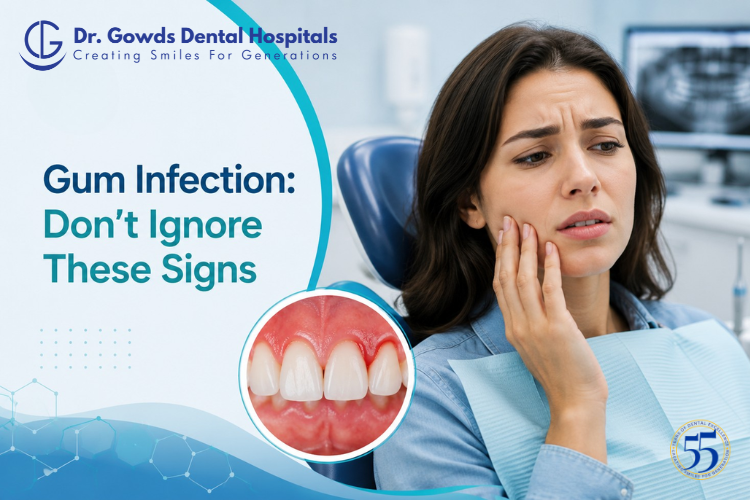
A gum infection occurs when harmful bacteria invade the tissues surrounding your teeth, causing inflammation, swelling, pain, and sometimes pus formation. While mild infections may begin as gingivitis, untreated gum infections can progress to periodontitis, damaging the gums, bone, and supporting structures of your teeth. If you notice swollen or bleeding gums, persistent bad breath, loose teeth, or pus near your gums, you should see a dentist or periodontist as soon as possible.
At Dr. Gowds Dental Hospitals, our experienced periodontists use advanced digital diagnostics and evidence-based periodontal treatments to diagnose and manage gum infections before they lead to permanent tooth and bone loss.
A gum infection is a bacterial infection that affects the soft tissues surrounding the teeth. It usually develops when plaque and tartar accumulate along the gumline, allowing bacteria to multiply and irritate the gums.
Initially, the infection may only cause mild inflammation. However, without timely treatment, it can spread deeper into the supporting tissues and jawbone.
Unlike temporary gum irritation, a true gum infection requires professional evaluation because it can permanently damage the structures that support your teeth.
Several factors can increase your risk of developing a gum infection.
The most common cause is inadequate brushing and flossing, which allows plaque to build up around the teeth.
As plaque hardens into tartar, it becomes difficult to remove without professional dental cleaning.
Plaque contains millions of bacteria that continuously irritate the gums.
Over time, untreated plaque causes inflammation and creates pockets where more bacteria can thrive.
Smoking reduces blood flow to the gums and weakens the body’s ability to fight infection.
Smokers are significantly more likely to develop advanced periodontal disease.
People with poorly controlled diabetes are more susceptible to infections, including gum infections, because high blood sugar affects healing and immune function.
Pregnancy, puberty, and menopause can increase gum sensitivity and make the gums more vulnerable to bacterial infection.
Medical conditions or medications that suppress the immune system may increase the risk of developing severe gum infections.
Early recognition can prevent serious complications.
Common gum infection symptoms include:
If these symptoms persist for more than a few days, professional dental care is recommended.
A gum infection often develops gradually. Understanding its stages helps patients seek treatment before permanent damage occurs.
Gingivitis is the earliest stage of gum infection.
Symptoms include:
At this stage, no permanent bone damage has occurred, and the condition is usually reversible with professional cleaning and good oral hygiene.
If gingivitis is left untreated, bacteria begin affecting the tissues supporting the teeth.
Signs include:
Early periodontitis requires professional periodontal treatment.
As the infection progresses, more supporting bone is destroyed.
Patients may notice:
At this stage, treatment becomes more complex but can often prevent further damage.
Advanced gum infection can severely damage the gums, ligaments, and jawbone.
Symptoms include:
Immediate periodontal care is essential to preserve remaining teeth.
Some gum infections require urgent treatment.
Seek immediate dental care if you experience:
These symptoms may indicate a spreading infection that requires prompt treatment.
Treatment depends on the severity of the infection.
For early-stage gingivitis, professional cleaning removes plaque and tartar that cannot be eliminated with brushing alone.
Deep cleaning removes bacteria and hardened deposits beneath the gumline while smoothing the tooth roots to encourage healing.
Localized antibiotics or oral medications may be prescribed when bacterial infection is significant.
Antibiotics are usually used alongside professional cleaning rather than as a standalone treatment.
If pus has accumulated, the abscess may need to be drained to relieve pressure and eliminate infection.
Advanced gum infections sometimes require surgical procedures to clean deep pockets, regenerate bone, or restore damaged gum tissue.
Patients with a history of periodontitis often benefit from regular periodontal maintenance visits to reduce the risk of future infections.
No.
A mild gum irritation may improve with better oral hygiene, but an established gum infection rarely resolves completely without professional treatment.
Ignoring the infection allows bacteria to spread deeper into the supporting tissues, increasing the risk of permanent bone loss and tooth loss.
Healthy daily habits can significantly reduce your risk of developing gum disease.
Follow these preventive measures:
Preventive care is the most effective way to maintain healthy gums.
A gum infection is more than just swollen or bleeding gums—it is a bacterial condition that can progress from mild gingivitis to advanced periodontitis if left untreated. Early diagnosis and prompt treatment are essential to prevent irreversible damage to the gums, supporting bone, and teeth.
If you notice persistent gum bleeding, swelling, pus, or loose teeth, seek professional care without delay. Whether you require preventive treatment or advanced periodontal therapy, the specialists at Dr. Gowds Dental Hospitals are committed to helping you restore healthy gums and protect your smile for years to come.
Visit us at-
Dr gowds dental hospital Nanakramguda
Dr gowds dental hospital Gachibowli
Dr gowds dental hospital madhapur
The earliest signs of a gum infection are usually swollen, red, tender gums that bleed while brushing or flossing.
Some early gum infections improve with professional cleaning and good oral hygiene. Antibiotics may be needed for more severe or spreading infections, depending on your dentist’s assessment.
If you have persistent gum bleeding, gum recession, loose teeth, recurring infections, or have been diagnosed with periodontitis, your dentist may refer you to a periodontist. If you’re searching for a periodontist near me, it’s a good idea to schedule an evaluation promptly.
A gum infection becomes a dental emergency if it causes severe swelling, fever, pus, facial swelling, difficulty swallowing, or intense pain, as these symptoms may indicate a spreading infection.
Yes. Untreated gum infections can destroy the bone and tissues that support your teeth, eventually leading to tooth mobility and tooth loss if appropriate periodontal treatment is not provided.

 Gachibowli Branch