

Schedule Appointment


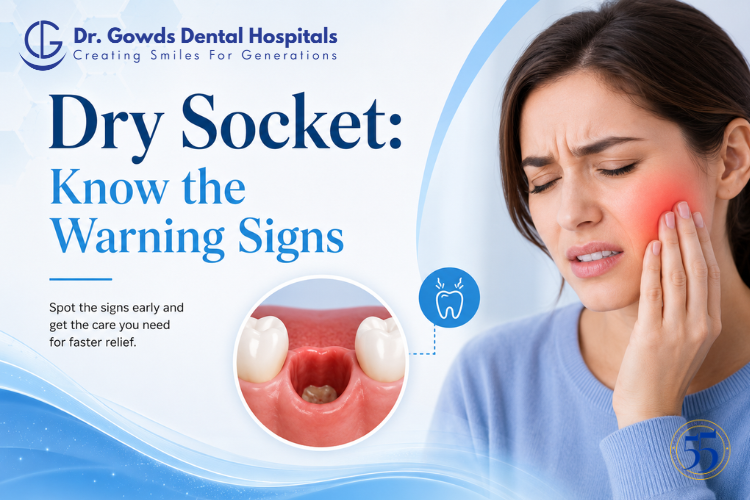
Dry socket is a painful complication that can develop after a tooth extraction when the protective blood clot at the extraction site becomes dislodged, dissolves too early, or fails to form properly. Without this blood clot, the underlying bone and nerve endings become exposed, causing severe pain and delaying the healing process. Dry socket most commonly occurs within two to five days after a tooth extraction, especially following wisdom tooth removal. Although it can be very painful, prompt dental treatment usually provides rapid relief and supports proper healing.
At Dr. Gowds Dental Hospitals, our experienced oral surgeons provide safe tooth extractions, detailed post-operative care instructions, and effective treatment for dry socket to help patients recover comfortably.
Dry socket, medically known as alveolar osteitis, is one of the most common complications following a tooth extraction.
After a tooth is removed, the body naturally forms a blood clot inside the empty socket. This clot protects the exposed bone and nerves while creating the foundation for new tissue and bone to grow.
When this clot is lost too early or never forms correctly, the bone beneath becomes exposed. This leads to significant pain and slows the normal healing process.
Although dry socket is uncomfortable, it is treatable and usually heals completely with appropriate dental care.
A healthy blood clot is essential for proper healing after a tooth extraction.
Dry socket develops when this clot is disturbed before the tissues have had enough time to heal.
Several factors can contribute to this complication.
Smoking is one of the biggest risk factors for dry socket.
Nicotine reduces blood circulation to the healing tissues, while the suction created during smoking can dislodge the blood clot.
Patients who smoke shortly after an extraction have a significantly higher risk of developing dry socket.
Using a straw creates suction inside the mouth.
This suction may pull the protective blood clot out of the extraction socket before healing begins.
Dentists generally advise avoiding straws for several days after tooth removal.
Dry socket occurs more frequently after surgical removal of impacted wisdom teeth.
These procedures often involve more tissue manipulation, making proper healing even more important.
Bacteria around the extraction site can interfere with healing and increase the likelihood of complications.
Keeping the mouth clean according to your dentist’s instructions supports faster recovery.
Patients who have experienced dry socket before may be more likely to develop it again after future extractions.
Some studies suggest that women taking oral contraceptives may have a slightly higher risk because of hormonal influences on blood clot stability.
More complex extractions that require additional surgical techniques may increase the chance of blood clot disruption.
Normal discomfort after a tooth extraction gradually improves each day.
With dry sockets, the pain usually becomes worse rather than better.
Common symptoms include:
Unlike routine post-extraction discomfort, dry socket pain is often intense and difficult to relieve with standard pain medication.
Understanding the difference between normal healing and dry socket helps patients know when to seek dental care.
| Normal Healing | Dry Socket |
| Blood clot remains in place | Blood clot is missing or dislodged |
| Mild discomfort gradually improves | Severe pain increases after 2–5 days |
| Socket fills with healing tissue | Exposed bone remains visible |
| Healing progresses normally | Healing becomes delayed |
| Minimal bad taste | Bad breath and unpleasant taste are common |
Treatment focuses on relieving discomfort while allowing natural healing to continue.
The dentist carefully removes trapped food particles and debris from the socket.
Cleaning reduces irritation and supports healing.
A medicated dressing may be placed inside the socket to cover exposed bone and reduce pain.
The dressing may need replacement during follow-up visits.
Your dentist may recommend:
After the initial healing phase, gentle saline rinses may help keep the socket clean.
Follow your dentist’s instructions carefully.
Regular review appointments allow your dentist to monitor healing and replace dressings if required.
Although dry socket is painful, recovery is generally straightforward with appropriate care.
Most patients notice significant pain relief within 24 to 48 hours after treatment.
Complete healing usually occurs within one to two weeks, depending on:
Most cases of dry socket can be prevented by carefully following post-extraction instructions.
Avoid smoking for as long as your dentist recommends after surgery.
Drink directly from a cup rather than using a straw.
Every extraction is different.
Following personalized aftercare instructions greatly reduces complications.
Brush carefully and clean your mouth as instructed without disturbing the extraction site.
Routine reviews allow your dentist to confirm that healing is progressing normally.
Dry socket is one of the most common yet preventable complications after a tooth extraction. It occurs when the protective blood clot at the extraction site is lost too early, exposing the underlying bone and nerves. While the pain can be severe, prompt dental treatment usually provides rapid relief and allows healing to continue normally.
Following your dentist’s aftercare instructions, avoiding smoking and straws, maintaining good oral hygiene, and attending follow-up appointments can significantly reduce your risk. If pain becomes worse instead of better after an extraction, don’t wait—early evaluation can make a significant difference in your comfort and recovery.
If you are preparing for a tooth extraction or think you may have dry socket, the experienced team at Dr. Gowds Dental Hospitals is here to provide expert care, effective treatment, and guidance for a safe and comfortable recovery.
Visit us at-
Dr gowds dental hospital Nanakramguda
Dr gowds dental hospital Gachibowli
Dr gowds dental hospital madhapur
Dry socket is a painful condition that occurs after a tooth extraction when the protective blood clot is lost or fails to form, exposing the underlying bone and nerves.
It usually develops 2 to 5 days after a tooth extraction, particularly after wisdom tooth removal.
Most people experience severe throbbing pain that may spread to the ear, jaw, or temple, along with bad breath and an unpleasant taste in the mouth.
Treatment typically includes cleaning the extraction site, placing a medicated dressing, managing pain, and monitoring healing through follow-up visits.
Dry socket will eventually heal as the tissues regenerate, but professional treatment is strongly recommended because it significantly reduces pain, protects the extraction site, and supports faster, more comfortable recovery.


 Gachibowli Branch