

Schedule Appointment

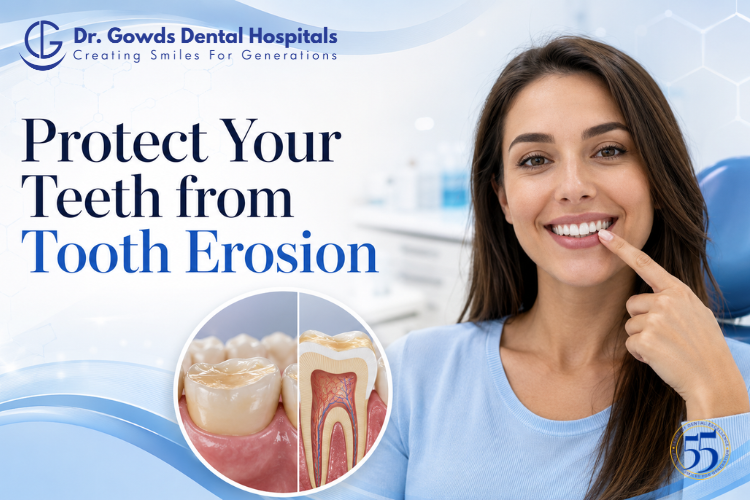
Tooth erosion is the gradual loss of tooth enamel caused by acids rather than bacteria. Acidic foods, beverages, acid reflux, certain medical conditions, and frequent exposure to stomach acid can slowly wear away the protective enamel covering your teeth. Unlike cavities, tooth erosion cannot heal naturally because enamel does not regenerate. However, early diagnosis, lifestyle changes, and professional dental treatment can slow its progression, relieve sensitivity, and protect your teeth from further damage.
At Dr. Gowds Dental Hospitals, our dental specialists diagnose and treat tooth erosion using advanced technology and personalized preventive and restorative care to help patients preserve their natural smiles.
Tooth erosion is the gradual wearing away of the outer protective layer of the teeth, known as enamel.
Enamel is the hardest substance in the human body, but repeated exposure to acids can slowly dissolve it over time. Once enamel is lost, it cannot grow back naturally.
As enamel becomes thinner, the softer dentin underneath becomes exposed, making teeth more sensitive and vulnerable to damage.
Unlike tooth decay, which is caused by bacteria, tooth erosion results directly from acid exposure.
Every time you consume acidic foods or drinks, your enamel temporarily softens.
Normally, saliva helps neutralize these acids and restore minerals to the enamel.
However, when acid exposure occurs too frequently or saliva cannot repair the damage effectively, enamel gradually wears away.
This continuous process eventually leads to tooth erosion, affecting both the appearance and strength of your teeth.
Several factors contribute to tooth erosion.
One of the leading causes of enamel erosion is frequent consumption of acidic foods and drinks, including:
Regular exposure increases the risk of enamel loss.
People with gastroesophageal reflux disease (GERD) often experience stomach acid flowing back into the mouth.
Because stomach acid is extremely acidic, repeated exposure can rapidly erode tooth enamel, especially on the inner surfaces of the teeth.
Medical conditions such as eating disorders or chronic vomiting expose teeth to stomach acid repeatedly.
This significantly increases the risk of severe tooth erosion.
Saliva protects teeth by washing away acids and replacing lost minerals.
When saliva production decreases due to medications, dehydration, or certain medical conditions, enamel becomes more vulnerable to erosion.
Frequent snacking—especially on acidic foods—does not give saliva enough time to neutralize acids.
As a result, enamel remains under constant attack.
Some medications contribute to dry mouth or contain acidic ingredients that may increase enamel wear.
Early tooth erosion may not cause noticeable discomfort.
As enamel continues to wear away, patients may experience:
Because dentin is naturally yellow, teeth often appear darker as enamel becomes thinner.
Understanding the progression of tooth erosion helps emphasize the importance of early treatment.
At this stage:
Professional fluoride treatments and lifestyle changes can help slow progression.
As enamel continues to wear:
Restorative treatment may be recommended to protect weakened teeth.
Severe tooth erosion can lead to:
Comprehensive restorative treatment is often necessary.
Although both conditions damage teeth, they have different causes.
| Tooth Erosion | Tooth Decay |
| Caused by acid exposure | Caused by bacteria |
| Gradual enamel wear | Localized cavities |
| Often affects multiple teeth | Usually affects specific areas |
| Smooth worn surfaces | Holes or pits in teeth |
| No bacterial infection required | Bacterial plaque is the main cause |
A dental examination helps determine the exact condition.
Treatment depends on the severity of enamel loss.
Professional fluoride applications strengthen the remaining enamel and reduce tooth sensitivity.
This treatment is most effective during the early stages.
Specialized toothpaste helps block exposed dentinal tubules, reducing sensitivity to hot, cold, and sweet foods.
Composite bonding restores worn areas and protects exposed dentin.
It also improves the appearance of affected teeth.
If tooth erosion has caused significant structural damage, crowns may be recommended to restore strength and function.
For front teeth affected by enamel erosion, porcelain veneers may improve aesthetics while protecting the underlying tooth.
Patients with acid reflux or other medical conditions should seek appropriate medical treatment to prevent ongoing acid exposure.
This is one of the most common questions patients ask.
Unfortunately, tooth erosion cannot be reversed because lost enamel does not regenerate naturally.
However, early intervention can:
Prompt diagnosis is the key to preserving your natural teeth.
Tooth erosion is a gradual but permanent condition that affects the protective enamel of your teeth. Although enamel cannot regenerate once it is lost, early diagnosis and appropriate treatment can slow the progression of the condition and protect your smile from further damage.
Simple lifestyle changes, such as reducing acidic food and drink intake, maintaining excellent oral hygiene, and addressing underlying medical conditions like acid reflux, play a significant role in preventing enamel loss. When necessary, restorative treatments such as bonding, veneers, or crowns can rebuild damaged teeth and restore both appearance and function.
If you are experiencing tooth sensitivity, worn enamel, or changes in your teeth, schedule a consultation at Dr. Gowds Dental Hospitals. Our experienced dental specialists can identify the cause of tooth erosion and develop a personalized treatment plan to help protect your smile for years to come.
Visit us at-
Dr gowds dental hospital Nanakramguda
Dr gowds dental hospital Gachibowli
Dr gowds dental hospital madhapur
Tooth erosion is the gradual loss of tooth enamel caused by repeated exposure to acids from foods, drinks, or stomach acid rather than bacterial infection.
No. Lost enamel cannot grow back naturally. However, early treatment can slow further erosion and restore damaged teeth when necessary.
Common causes include acidic foods and beverages, acid reflux, frequent vomiting, dry mouth, certain medications, and frequent snacking on acidic foods.
Treatment may include fluoride therapy, desensitizing toothpaste, dental bonding, veneers, crowns, and addressing the underlying cause of acid exposure.
You can reduce your risk by limiting acidic foods and drinks, drinking water after consuming acids, using fluoride toothpaste, staying hydrated, managing acid reflux, waiting before brushing after acidic meals, and visiting your dentist regularly.
 Gachibowli Branch