

Schedule Appointment

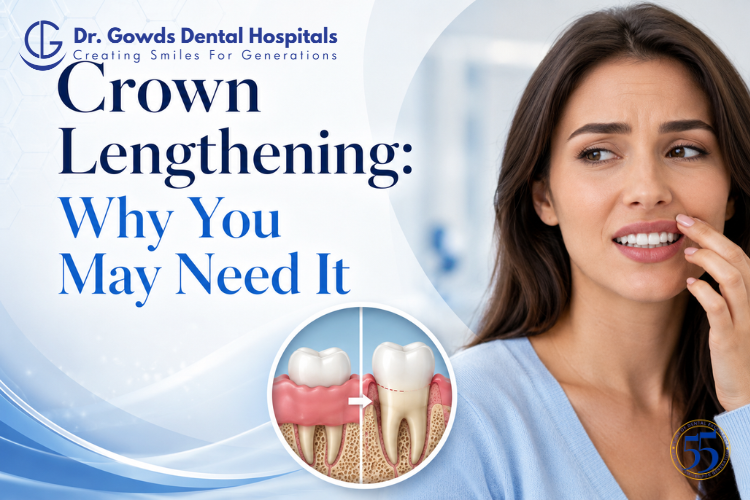
Crown lengthening is a periodontal surgical procedure that reshapes the gum tissue and, when necessary, the underlying bone to expose more of the natural tooth. Dentists commonly recommend crown lengthening to prepare a tooth for a dental crown, treat tooth fractures below the gum line, remove decay hidden beneath the gums, or improve the appearance of a “gummy smile.” The procedure helps create healthy tooth structure for long-lasting restorations while also enhancing smile aesthetics.
At Dr. Gowds Dental Hospitals, crown lengthening procedures are performed by experienced periodontists using advanced surgical techniques to improve both oral health and cosmetic outcomes.
Crown lengthening is a minor periodontal surgery that exposes more of the visible portion of a tooth by carefully reshaping the surrounding gum tissue. In some cases, a small amount of supporting bone is also reshaped to provide adequate tooth structure.
Despite its name, the procedure does not actually make the tooth longer. Instead, it reveals more of the existing natural tooth by adjusting the gum and bone levels.
The procedure may be performed on a single tooth or several teeth depending on the treatment goal.
Dentists recommend crown lengthening for both restorative and cosmetic reasons.
The procedure creates better access to healthy tooth structure while improving gum symmetry and smile appearance.
One of the most common reasons for crown lengthening is preparing a damaged tooth for a dental crown.
If a tooth is broken or decayed below the gum line, there may not be enough healthy tooth structure available to securely support the crown.
By exposing more of the tooth, the dentist can place a crown with improved retention and long-term stability.
Sometimes cavities extend beneath the gum tissue, making them difficult to clean and restore.
Crown lengthening exposes the affected area, allowing the dentist to completely remove decay before placing a restoration.
When a tooth breaks below the gum line, restoring it can be challenging.
Crown lengthening provides access to the remaining healthy tooth, allowing many teeth to be restored instead of extracted.
Some people naturally show excessive gum tissue when they smile.
This condition is commonly called a gummy smile.
Crown lengthening reshapes the gums to expose more of the natural teeth, creating a more balanced and attractive smile.
In selected cases, reshaping excess gum tissue may make oral hygiene easier by improving access around the teeth.
However, treatment recommendations depend on the patient’s specific periodontal condition.
Your dentist or periodontist may recommend crown lengthening if you have:
A comprehensive dental examination determines whether crown lengthening is the best option.
The crown lengthening procedure is typically completed under local anesthesia.
The exact technique depends on the amount of gum and bone that must be reshaped.
Your dentist performs:
Advanced imaging helps determine how much tissue should be adjusted.
The treatment area is completely numbed to ensure patient comfort throughout the procedure.
Most patients experience little to no pain during surgery.
The periodontist gently removes or repositions excess gum tissue to expose more of the natural tooth.
When only soft tissue requires adjustment, healing is generally faster.
If the bone lies too close to the tooth, a small amount may be carefully reshaped.
This creates adequate space for proper healing and allows the future crown to fit correctly.
Not every patient requires bone reshaping.
The gums are repositioned and secured with small sutures.
Protective dressings may occasionally be placed depending on the procedure.
One of the most common concerns patients have is whether crown lengthening is painful.
Because local anesthesia is used, patients generally do not feel pain during the procedure.
After surgery, mild discomfort may occur for several days.
Most patients describe the recovery as manageable with:
Pain usually improves significantly within the first few days.
The crown lengthening procedure offers several restorative and cosmetic advantages.
Exposing healthy tooth structure improves the stability and longevity of crowns.
Instead of extracting damaged teeth, crown lengthening often makes restoration possible.
For patients with excessive gum display, crown lengthening creates a more balanced smile by revealing more of the natural teeth.
Properly contoured gums are often easier to clean, reducing plaque accumulation around restorations.
Adequate tooth exposure helps dentists create restorations with healthier margins and improved durability.
Recovery varies depending on the complexity of the procedure.
Most patients experience:
Initial healing generally occurs within one to two weeks.
Complete gum maturation may take several weeks to a few months, especially before placing permanent crowns in restorative cases.
Your dentist will advise the ideal timing based on your treatment plan.
Although the procedures may appear similar, they serve different purposes.
| Crown Lengthening | Gum Contouring |
| Often performed for restorative and cosmetic reasons | Primarily cosmetic |
| May involve gum and bone reshaping | Usually reshapes gum tissue only |
| Helps expose healthy tooth structure | Improves smile aesthetics |
| Frequently performed before crowns | Usually performed for cosmetic enhancement |
Your dentist will recommend the most appropriate procedure based on your needs.
Crown lengthening is a versatile periodontal procedure that plays an important role in both restorative and cosmetic dentistry. By carefully reshaping the gum tissue—and, when necessary, the underlying bone—it exposes more of the natural tooth, allowing dentists to restore damaged teeth effectively and create healthier, longer-lasting restorations. It is also an excellent option for improving the appearance of a gummy smile and achieving a more balanced smile.
Whether you need crown lengthening before receiving a dental crown or are considering treatment for cosmetic reasons, a thorough evaluation is essential to determine the most appropriate approach.
At Dr. Gowds Dental Hospitals, our experienced periodontal and restorative specialists provide personalized crown lengthening procedures using advanced technology and evidence-based care to help you achieve a healthier, more confident smile.Crown Lengthening: Why You May Need It
Crown lengthening is a periodontal surgical procedure that reshapes the gums and, if necessary, the supporting bone to expose more of the natural tooth for restorative or cosmetic purposes.
If there is not enough healthy tooth structure above the gum line due to decay or fracture, crown lengthening exposes additional tooth structure so the crown can fit securely.
The procedure is performed under local anesthesia, so patients generally do not feel pain during treatment. Mild soreness and swelling are common afterward and usually improve within a few days.
Initial healing typically occurs within 1 to 2 weeks, while complete gum healing may take several weeks to a few months, depending on the extent of the procedure.
Yes. Crown lengthening is commonly used to treat a gummy smile by removing excess gum tissue and revealing more of the natural teeth, creating a more balanced and attractive smile.
 Gachibowli Branch