

Schedule Appointment


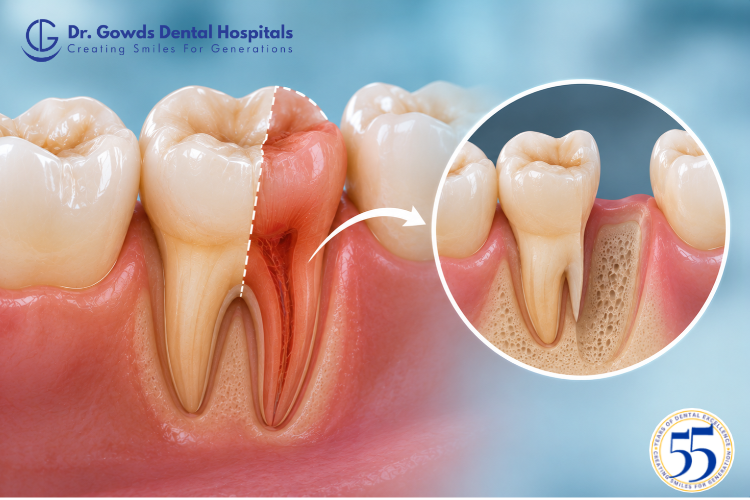
A tooth problem does not always affect every part of a multi-rooted tooth. In selected situations, a dentist may discuss a hemisection tooth procedure, where one root and the corresponding portion of the crown are removed while the remaining part is retained.
If you have been told that one root of a molar needs to be removed, it is natural to wonder whether the entire tooth must come out. This guide explains what tooth hemisection means, how it differs from root amputation and root canal treatment, what the procedure involves, and what happens to the remaining tooth.
A tooth hemisection is a procedure generally associated with multi-rooted teeth, particularly molars. The tooth is divided so that one root and its associated part of the crown can be removed, while the remaining portion is retained.
The exact approach depends on the tooth’s anatomy and the amount and condition of the remaining structure. The dentist also considers how the retained portion can be restored and maintained.
These terms can sound similar, but they do not always describe the same procedure.
A root canal treatment focuses on the internal canals of a tooth. Hemisection involves removing a selected portion of a multi-rooted tooth.
In some cases, root canal treatment may form part of the overall treatment plan, but the two procedures have different purposes.
The key question is whether the remaining part of the tooth can be retained and appropriately restored.
A dentist may discuss hemisection when the problem is mainly associated with one root or one section of a multi-rooted tooth. The assessment may include:
This is why hemisection is not determined by symptoms alone. A dental examination and appropriate imaging help the dentist understand the tooth before recommending a treatment approach.
The exact steps vary from case to case, but the process can generally be understood in stages.
The dentist examines the tooth and reviews its root structure. Dental imaging may be used to assess the roots and surrounding area.
The treatment area is prepared. Local anaesthesia may be used as part of the procedure.
The multi-rooted tooth is carefully divided so the selected portion can be separated from the part intended to remain.
The affected root and corresponding tooth segment are removed according to the treatment plan.
The remaining tooth structure may require a suitable restoration. The choice depends on the amount of tooth structure remaining and the dentist’s assessment.
Follow-up appointments allow the dental team to review the treated area and the restoration.
The retained portion is an important part of the treatment plan. Hemisection is not simply about removing a root; it also involves deciding how the remaining tooth structure will be restored and used.
The type of restoration depends on factors such as the amount of remaining tooth structure, the tooth’s position and the planned function. There is no single restoration that applies to every hemisection case.
With a complete extraction, the entire tooth is removed. With hemisection, a selected portion of a multi-rooted tooth is removed and the remaining portion is retained.
The choice between these approaches depends on the condition and structure of the individual tooth. If hemisection is not appropriate, the dentist can discuss other treatment options.
After the procedure, your dentist will provide instructions based on the treatment performed and the restoration planned.
General points to discuss with your dental team include:
Following the specific instructions provided for your case is important because the treatment and restoration can differ from one tooth to another.
No. Hemisection is considered only after examining the tooth and its remaining structure.
The dentist may assess:
This assessment helps determine whether retaining part of the tooth is a reasonable option or whether another approach should be considered.
If you have been told that one root or one section of a molar is affected, consider asking:
Understanding the reason behind the recommended procedure can make it easier to compare your options and make an informed decision.
CTA: If you have been advised to remove one root of a molar, speak with Dr Gowds Dental Hospitals in Hyderabad to discuss your tooth’s condition and the treatment options available.
A hemisection tooth procedure is a treatment approach in which a selected portion of a multi-rooted tooth is removed while the remaining portion is retained. The procedure is planned around the tooth’s anatomy, remaining structure and restoration needs.
If your dentist has mentioned removing only one root, ask whether the procedure being discussed is hemisection, root amputation or another form of treatment. A clear explanation of the tooth’s condition can help you understand why a particular option has been recommended.
Looking for dental care in Hyderabad? Dr Gowds Dental Hospitals has branches in Nanakramguda, Gachibowli, Madhapur, koti. Book a consultation to discuss your dental concern and understand the treatment options for your tooth.
A hemisection tooth procedure involves dividing a multi-rooted tooth and removing one root with its associated part of the crown, while retaining the remaining portion when it can be appropriately treated and restored.
Not exactly. Hemisection generally involves removing one root along with the corresponding part of the crown. Root amputation or root resection may refer specifically to removing a root while retaining the crown.
Hemisection is associated with multi-rooted teeth, particularly molars. Whether a particular molar is suitable depends on its anatomy, remaining structure and overall dental condition.
No. Root canal treatment addresses the internal canals of a tooth, while hemisection involves removing a selected portion of a multi-rooted tooth. The two procedures can sometimes be part of the same treatment plan.
After hemisection, the remaining tooth portion may require restorative treatment. Follow-up is used to review the treated area and the restoration according to the dentist’s plan.
A dentist needs to assess the tooth’s roots, remaining structure, surrounding area, bite and restoration requirements. Symptoms alone cannot determine whether hemisection is appropriate.
Depending on the condition of the tooth, a dentist may discuss other options, including different forms of root treatment, restoration or complete tooth removal followed by a suitable replacement option. The choice depends on the individual case.
 Gachibowli Branch