

Schedule Appointment

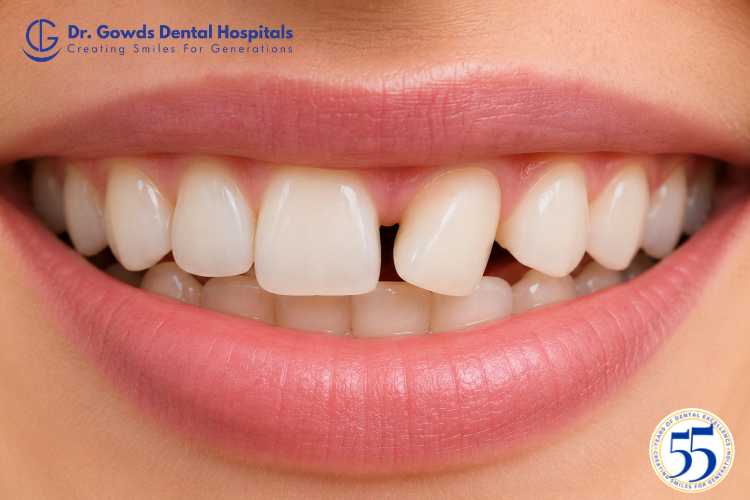
Have you noticed a tooth leaning sideways into a space next to it? A tilted tooth gap can sometimes appear gradually, making you wonder why a tooth that was once straight has started moving towards an empty space.
Teeth are positioned in relation to the teeth around them. When there is a gap, changes in the surrounding space can affect how neighbouring teeth sit and meet. The result may be a tooth that looks tilted, rotated or out of line.
Understanding why teeth drift can help you recognise changes in your smile and know when it may be worth having the area checked.
At Dr Gowds Dental Hospitals, patients in Hyderabad can discuss concerns about changing tooth positions, gaps and alignment with a dental professional.
A tooth does not always remain in exactly the same position throughout life. Changes in the space around it can sometimes be associated with noticeable movement or changes in alignment.
One common situation is an empty space created when a tooth is no longer present. The teeth next to the space may gradually change their position, making one of them appear to lean towards the gap.
Other situations can also be associated with changes in tooth position, including:
The exact reason cannot be determined simply by looking at a photograph or noticing a gap. A dental examination can help identify what is happening in that particular area.
A tilted tooth may be easy to notice when you look closely at your smile.
Depending on the tooth and the direction of movement, you may notice:
Sometimes the change is subtle and develops slowly. This is why comparing your current smile with older photographs can make the difference more noticeable.
An empty space can change the arrangement of the teeth around it. The neighbouring teeth are no longer bordered by the same dental arrangement, and their position may change over time.
This does not mean that every tooth next to a gap will move or tilt. Tooth position varies from person to person, and several factors can influence the appearance of the area.
For someone searching “why is my tooth moving into a gap?”, the important point is that the cause should be assessed rather than assumed.
A tilted tooth may be related to the space itself, the position of surrounding teeth or the overall alignment of the bite.
A tooth that has changed position can make the surrounding area look different from the rest of the smile.
It may also make cleaning certain areas more difficult, depending on how the tooth is positioned. A tilted tooth can also change the way neighbouring teeth appear relative to one another.
However, the significance of a tilted tooth is different for every person. The appearance of the tooth alone does not tell you whether treatment is necessary.
A dental professional can assess the position of the tooth, the surrounding teeth and the available space before discussing suitable options.
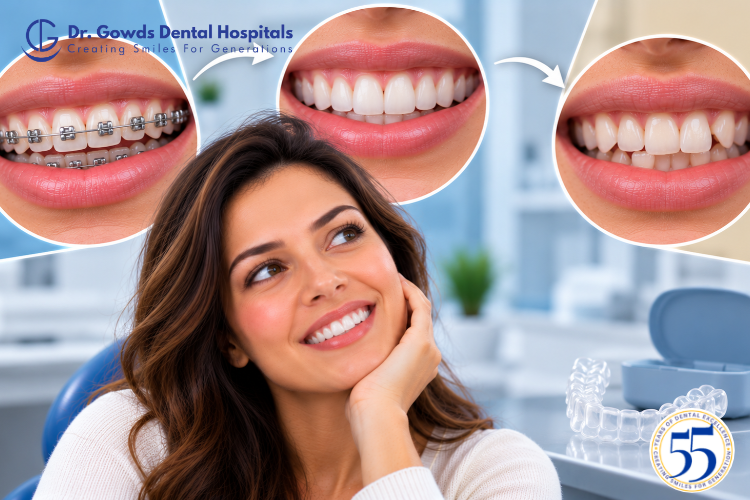
In some situations, tooth alignment can be addressed with orthodontic treatment. The appropriate approach depends on factors such as the tooth’s position, the amount of available space and the overall alignment of the teeth.
Possible approaches may include:
Braces use controlled forces to guide teeth towards planned positions. They may be considered when several teeth require alignment rather than when only one tooth appears tilted.
Clear aligners are another approach used for certain alignment concerns. They are removable trays designed according to an individual’s planned tooth movements.
Whether clear aligners are suitable for a particular tilted tooth gap depends on the individual dental situation.
If the gap is associated with a missing tooth, simply moving another tooth into the space may not always address the underlying concern. The overall arrangement of the teeth and the space may need to be considered before deciding on an approach.
No. An empty space does not automatically mean that nearby teeth will tilt into it.
Some people may notice changes in tooth position, while others may not notice a significant difference. The appearance of the gap can also depend on which tooth is missing, where the gap is located and how the surrounding teeth are positioned.
This is why a simple rule such as “a gap always makes teeth move” would be misleading.
If you have noticed a new or increasing gap together with a tilted tooth, an examination can provide a clearer understanding of what is happening.
If you have recently noticed a tooth drifting into a gap, start by paying attention to when the change became noticeable.
You can:
Avoid trying to push or reposition the tooth yourself. Tooth movement should be planned and monitored by a dental professional.
A tilted tooth does not necessarily indicate a serious problem. However, a new or noticeable change in tooth position is worth discussing with a dentist, particularly if you are unsure why it has occurred.
Consider arranging an appointment if:
An examination allows the dental team to look at the tooth rather than relying only on its appearance.
There is no single approach that applies to everyone because the reason for the change in tooth position can differ.
The most useful step is to understand why the tooth is tilted and whether the position is changing. Regular dental care can also provide an opportunity to discuss changes you notice in your teeth.
If an empty space is present, discussing it with a dental professional can help you understand the available options rather than leaving the situation to guesswork.
A tooth leaning into a gap can be a noticeable change, especially when it develops gradually. The tooth may appear tilted, rotated or closer to the neighbouring space than it was previously.
The important question is not simply “Why is my tooth crooked?” but “What has changed around this tooth?”
A dental assessment can help evaluate the gap, tooth position and overall alignment. From there, you can understand whether observation, orthodontic treatment or another dental approach is appropriate for your situation.
At Dr Gowds Dental Hospitals, patients across Hyderabad can discuss tooth gaps, alignment concerns and treatment options at the Nanakramguda, Gachibowli, Madhapur, koti branches.
A tooth can change position relative to the space around it. If you notice a tooth leaning towards an empty space, a dental examination can help determine why the position has changed.
A tooth may appear to lean into a gap for different reasons, including changes in the surrounding tooth arrangement and overall alignment. The exact reason needs to be assessed individually.
Depending on the tooth position and overall alignment, orthodontic options such as braces or clear aligners may be considered. Suitability varies from person to person.
Changes in the position of neighbouring teeth can occur around an empty space. However, the extent and direction of any movement can differ between individuals.
Not necessarily. The appearance of a tilted tooth does not by itself determine whether treatment is required. A dental examination can help you understand the situation.
Clear aligners may be suitable for some tooth-alignment concerns. Whether they are appropriate for a particular tilted tooth depends on the individual’s dental arrangement and treatment requirements.
If you have noticed a new or noticeable change in tooth position, discussing it with a dentist can help identify what is happening and whether any treatment should be considered.
Do not try to move the tooth yourself. Arrange a dental assessment so the tooth, gap and surrounding alignment can be evaluated properly.
 Gachibowli Branch