

Schedule Appointment


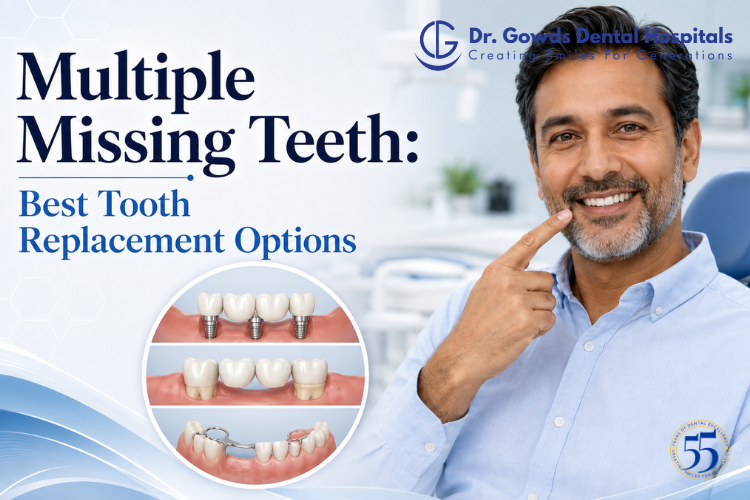
Having multiple missing teeth can affect much more than your smile. Missing several teeth may make it difficult to chew, speak clearly, maintain proper bite alignment, and preserve jawbone health. Fortunately, modern dentistry offers several effective tooth replacement options, including dental implants, implant-supported bridges, partial dentures, and full dentures. The right treatment depends on the number of missing teeth, jawbone condition, oral health, lifestyle, and budget.
At Dr. Gowds Dental Hospitals, our restorative dentistry and implant specialists create personalized treatment plans to restore function, comfort, and confidence using advanced digital technology and evidence-based care.
Many people believe they can live comfortably with multiple missing teeth, especially if the gaps are not visible.
However, untreated tooth loss can gradually lead to several oral health problems.
These include:
Replacing missing teeth early helps preserve both oral health and facial appearance.
Several dental and medical conditions can result in multiple missing teeth.
Common causes include:
Advanced periodontal disease is one of the leading causes of adult tooth loss.
Severe infection damages the gums and supporting bone, causing teeth to loosen and eventually fall out.
Untreated cavities may become so extensive that extraction becomes the only treatment option.
Accidents, sports injuries, and facial trauma can result in the loss of multiple teeth.
Some individuals are born without several permanent teeth due to developmental conditions such as hypodontia or oligodontia.
As people age, years of wear, gum disease, and previous dental problems may contribute to losing multiple teeth.
Ignoring multiple missing teeth can cause progressive oral health problems.
Potential complications include:
The jawbone relies on tooth roots for stimulation.
After tooth loss, the bone gradually shrinks because it is no longer being used.
Teeth Shifting
Adjacent teeth slowly drift into empty spaces, affecting alignment and bite.
Bite Problems
Uneven chewing forces may strain the jaw joints and remaining teeth.
Difficulty Eating
Chewing hard or fibrous foods becomes increasingly challenging.
Modern dentistry offers several ways to replace multiple missing teeth.
The most appropriate treatment depends on your individual needs.
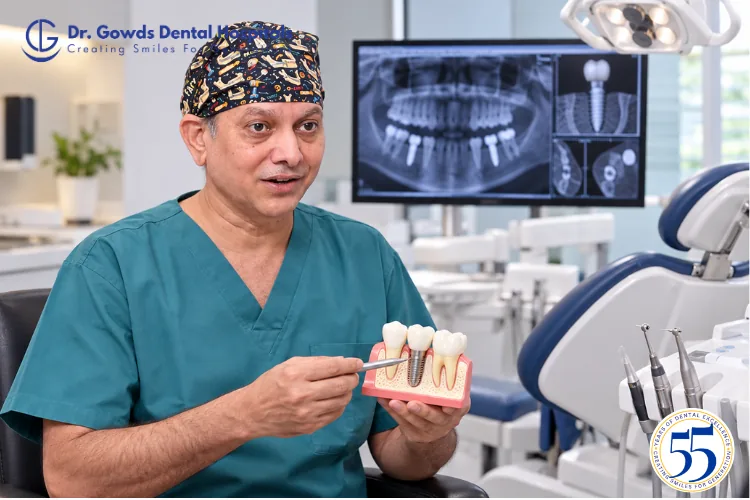
Dental implants are widely considered one of the most effective long-term solutions for replacing multiple missing teeth.
An implant is a titanium post placed into the jawbone to replace the natural tooth root.
After healing, crowns, bridges, or dentures are attached to the implants.
Benefits
Dental implants are suitable for patients with healthy gums and sufficient bone.
When several adjacent teeth are missing, an implant-supported bridge may replace them without placing an implant for every missing tooth.
Instead, strategically positioned implants support the bridge.
Advantages
Patients missing many or all teeth may benefit from implant-supported dentures.
Unlike traditional removable dentures, these attach securely to dental implants.
Benefits
Many patients find implant-supported dentures significantly more comfortable than conventional dentures.
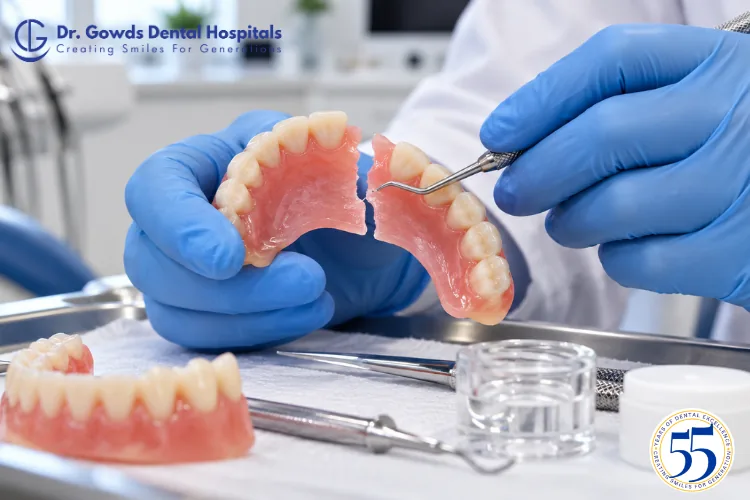
Partial dentures are removable appliances used when some natural teeth remain.
They replace multiple missing teeth while using the remaining teeth for support.
Advantages
However, they may require periodic adjustment as the mouth changes over time.
If all teeth in one or both arches are missing, complete dentures may be recommended.
Modern dentures provide improved comfort and aesthetics compared with older designs.
Benefits
Although effective, traditional dentures may become loose as the jawbone gradually shrinks.
| Treatment | Best For | Fixed or Removable | Bone Preservation |
| Dental Implants | Individual or multiple teeth | Fixed | Excellent |
| Implant-Supported Bridge | Several adjacent missing teeth | Fixed | Excellent |
| Implant-Supported Dentures | Many or all missing teeth | Fixed or removable | Excellent |
| Partial Dentures | Several missing teeth | Removable | Limited |
| Full Dentures | Complete tooth loss | Removable | Limited |
Your dentist will recommend the most suitable option after evaluating your oral health.
There is no single solution for everyone with multiple missing teeth.
Your treatment plan depends on factors such as:
Replacing three missing teeth requires a different approach than replacing an entire arch.
Patients with sufficient bone are often excellent candidates for dental implants.
Bone grafting may be recommended if bone volume is inadequate.
Healthy gums are essential for successful implant treatment.
Existing gum disease should be treated before replacing missing teeth.
Each treatment option offers different advantages regarding longevity, maintenance, and cost.
Your dentist will explain all available options so you can make an informed decision.
Living with multiple missing teeth can affect your ability to eat comfortably, speak clearly, and smile confidently. It can also lead to jawbone loss, shifting teeth, and long-term oral health problems if left untreated.
The good news is that modern dentistry offers several effective tooth replacement options, including dental implants, implant-supported bridges, implant-supported dentures, partial dentures, and full dentures. The ideal solution depends on your oral health, the number of missing teeth, and your personal goals.
If you are missing several teeth, an early consultation can help you understand your options and prevent further complications. At Dr. Gowds Dental Hospitals, our experienced team provides personalized treatment plans designed to restore your smile, improve your quality of life, and protect your oral health for years to come.
Visit us at-
Dr gowds dental hospital Nanakramguda
Dr gowds dental hospital Gachibowli
Dr gowds dental hospital madhapur
The best treatment depends on the number of missing teeth, jawbone health, and your individual needs. Dental implants are often considered the most durable option, while bridges and dentures may be suitable in other situations.
Yes. Dental implants can replace several missing teeth using individual implants, implant-supported bridges, or implant-supported dentures, depending on the clinical situation.
Dentures are generally more affordable and non-surgical, while dental implants provide greater stability, preserve jawbone, and offer a more natural feel. Your dentist can help determine the best option for you.
With proper oral hygiene and regular dental check-ups, dental implants can last for many years and often serve as a long-term tooth replacement solution.
Leaving multiple missing teeth untreated can lead to jawbone loss, shifting of nearby teeth, bite problems, difficulty chewing, speech changes, and changes in facial appearance. Early treatment helps prevent these complications.
 Gachibowli Branch