

Schedule Appointment


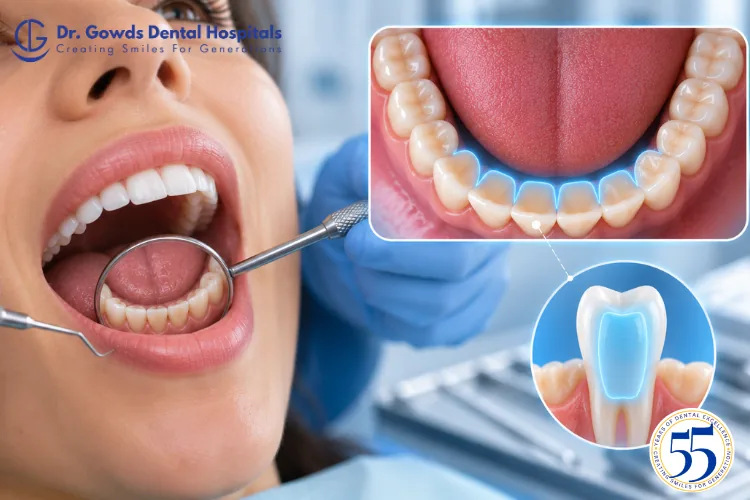
When a dentist says that a cavity, stain, restoration, or other dental finding is located on the lingual tooth surface, the term may sound complicated. In reality, it describes a straightforward anatomical location.
The lingual tooth surface is the part of a tooth that faces the tongue. Because this surface is located on the inner side of the dental arch, it is often less visible than the outer surfaces of the teeth.
However, being less visible does not make it less important.
Plaque and tartar can accumulate around lingual surfaces, while tooth decay, gum problems, staining, and tooth wear can also affect this area. Lingual surfaces are therefore important in routine dental examinations, oral hygiene, orthodontics, and restorative dentistry.
Understanding the lingual surface of a tooth can make dental terminology easier to understand and help you recognize why dentists examine areas that may be difficult to see at home.
The lingual tooth surface is the surface of a tooth that faces toward the tongue.
The term “lingual” comes from lingua, meaning tongue.
In simple terms:
Lingual = toward the tongue.
For example, the inner surface of a lower front tooth that faces the tongue is its lingual surface.
The term is commonly used for teeth in both the upper and lower dental arches, although a different term may sometimes be used for the inner surfaces of upper teeth.
The exact terminology depends on the tooth being described.
For lower teeth, the inner surface generally faces toward the tongue and is called the lingual surface.
For upper teeth, the inner surface faces the palate. Dentists may therefore use the term palatal surface when specifically describing this area.
The inner surface of the front teeth that faces the tongue is generally called the lingual surface.
The inner surface of upper premolars and molars may be described as the palatal surface because it faces the roof of the mouth.
The inner surface of lower premolars and molars is generally referred to as the lingual surface.
These terms allow dental professionals to describe the location of a finding precisely.
The lingual and labial surfaces are located on opposite sides of many front teeth.
The labial surface is the part of the tooth facing the lips.
The lingual surface is the part of the tooth facing the tongue.
For example, on a lower front tooth, the surface visible from the front is the labial surface, while the surface behind the tooth facing the tongue is the lingual surface.
This distinction can be useful when describing cavities, restorations, fractures, discoloration, and orthodontic appliances.
Another common dental term is buccal.
Faces the tongue.
Faces the cheek.
Buccal is commonly used to describe the outer surfaces of premolars and molars.
A simple way to remember these terms is:
These anatomical terms allow dentists to identify the location of a dental finding more accurately.
Although the lingual surfaces are difficult to see when you look at your teeth in a normal mirror, they are exposed to the same oral environment as other tooth surfaces.
Several dental problems can affect this area.
Plaque is a sticky bacterial film that continually develops on teeth.
The lingual surfaces can sometimes be difficult to clean effectively, particularly around the lower front teeth.
If plaque remains on the teeth, it can contribute to:
Good brushing technique should therefore include both the visible and less visible surfaces of the teeth.
Many people notice hard deposits behind their lower front teeth.
This area can be particularly prone to tartar accumulation because salivary gland openings are located nearby. Minerals in saliva can contribute to the hardening of plaque into calculus, commonly called tartar.
Unlike soft plaque, established tartar cannot usually be removed effectively with normal brushing.
Professional dental cleaning may be necessary to remove hardened deposits.
Tooth decay can affect almost any tooth surface, including the lingual surface.
The risk of decay can increase when:
A cavity on the lingual surface may be difficult for a person to notice because it is located behind the teeth.
Regular dental examinations can help identify changes that may not be visible during routine self-checks.
Discoloration can also occur on the inner surfaces of teeth.
Surface staining may be associated with:
However, not every dark area is simply a stain.
A dark or discolored area may also represent tooth decay or another change in the tooth. Professional evaluation is therefore more reliable than trying to determine the cause based only on appearance.
The gumline around the lingual surfaces can accumulate plaque just like the outer surfaces of the teeth.
Persistent plaque can irritate the gums and contribute to gingivitis.
Possible signs include:
Frequent or persistent gum bleeding should be discussed with a dental professional.
One of the main challenges is visibility.
You can easily see the front surfaces of your teeth when you smile, but the inner surfaces are much harder to observe.
As a result, people may spend more time brushing visible areas while unintentionally neglecting the surfaces facing the tongue.
The lower front teeth can be particularly easy to overlook.
A good oral hygiene routine should deliberately include the inner surfaces of every tooth.
Cleaning the lingual surfaces does not require aggressive brushing.
Instead:
The goal is to clean the surfaces facing the tongue effectively without unnecessarily irritating the gums or wearing down tooth surfaces.
Flossing and other forms of interdental cleaning are important, but they serve a different purpose from brushing.
A toothbrush cleans the accessible surfaces of the teeth, while floss or another suitable interdental cleaning method helps remove plaque from between teeth.
Because toothbrush bristles may not adequately reach all interdental areas, both tooth-surface cleaning and interdental cleaning are important parts of an effective oral hygiene routine.
The lingual surface also has an important role in certain orthodontic treatments.
Some orthodontic appliances are attached to the inner surfaces of teeth rather than the outer surfaces. This approach is commonly known as lingual orthodontics.
Because these appliances are positioned toward the tongue, patients may initially notice changes in tongue comfort or speech.
Brackets and wires can also make plaque control more challenging, making careful oral hygiene especially important during treatment.
Not every patient is suitable for every orthodontic technique. The appropriate approach depends on individual dental and orthodontic needs.
Dentists may place fillings or other restorations on the lingual surface when a tooth has decay, damage, or another structural problem affecting that area.
Depending on the clinical situation, a restoration may help:
The choice of restorative material and treatment depends on factors such as the affected tooth, location, extent of damage, bite forces, and overall oral health.
A lingual cavity is tooth decay affecting the surface of a tooth that faces the tongue.
Because this area can be difficult to see, patients may not notice a developing cavity during routine self-checks.
Possible signs include:
Importantly, early tooth decay may not cause pain.
The absence of symptoms does not necessarily mean that the tooth is healthy.
Yes. Tooth surfaces can experience wear for several reasons.
Potential contributors include:
The pattern and location of tooth wear can provide useful information during a dental examination.
If you notice a change in tooth shape, increasing sensitivity, or unusual wear on the lingual surfaces, a dental examination can help determine the possible cause.
Consider scheduling a dental examination if you notice:
Because the lingual surfaces can be difficult to inspect yourself, professional dental examinations are particularly useful for identifying problems in these areas.
Consistent oral hygiene can help protect the lingual surfaces and the rest of your teeth.
Brush twice a day using fluoride toothpaste and a soft-bristled toothbrush.
Make sure your toothbrush reaches the surfaces facing the tongue rather than focusing only on the areas visible when you smile.
Use floss or another suitable interdental cleaning method to remove plaque from areas that a toothbrush may not reach effectively.
Frequent consumption of sugary foods and drinks can increase the risk of tooth decay.
Adequate hydration supports normal saliva production, which contributes to the natural protective environment of the mouth.
Tobacco use can contribute to staining, gum problems, and other oral health concerns.
Routine dental examinations allow areas that are difficult to see at home, including lingual surfaces, to be assessed professionally.
At Dr Gowds Dental Hospitals, identifying the exact location of a dental problem is an important part of diagnosis and treatment planning.
A concern affecting the lingual surface may require a different approach depending on whether it involves enamel, dentin, the gumline, or another oral structure.
During a dental examination, the clinician can assess areas that may be difficult for patients to inspect at home and determine whether a finding represents plaque, tartar, tooth decay, staining, tooth wear, or another condition.
If treatment is required, the appropriate approach can then be selected according to the patient’s individual dental needs.
Visit us at-
Dr gowds dental hospital Nanakramguda
Dr gowds dental hospital Gachibowli
Dr gowds dental hospital madhapur
The lingual tooth surface is the part of a tooth that faces the tongue. Although it is one of the less visible areas of the mouth, it plays an important role in everyday oral health.
Plaque, tartar, tooth decay, staining, gum inflammation, and tooth wear can all affect this area. Because the lingual surfaces are difficult to see, some problems may remain unnoticed until they become more noticeable.
Understanding terms such as lingual, labial, buccal, and palatal can also make dental conversations easier to follow.
When brushing, remember that healthy teeth require attention on every surface—not only the parts that are visible when you smile.
If you notice pain, sensitivity, discoloration, hard deposits, bleeding gums, or changes on the inner surfaces of your teeth, a professional dental examination can help identify the cause and determine whether treatment is necessary.
The lingual tooth surface is the side of a tooth that faces the tongue. It is commonly used when describing the inner surfaces of teeth.
In dentistry, “lingual” refers to a direction toward the tongue.
For teeth where the inner surface faces the tongue, the terms can describe the same area. On upper teeth, dentists may use “palatal” when specifically referring to the surface facing the palate.
The lingual surface faces the tongue, while the labial surface faces the lips. The term labial is primarily used when describing the front teeth.
Yes. Tooth decay can affect the lingual surface, particularly when plaque remains on the area and other risk factors for decay are present.
The inner surfaces of the lower front teeth can be prone to tartar accumulation because they are located near salivary gland openings. Once plaque hardens into tartar, professional cleaning may be needed to remove it.
Use a soft-bristled toothbrush and fluoride toothpaste with gentle movements to clean the surfaces facing the tongue. Also use floss or another suitable interdental cleaning method to clean between teeth.
Yes. Plaque, tartar, tobacco, and certain foods and drinks can contribute to discoloration. A dentist can determine whether a dark area is staining or another dental problem.
Lingual orthodontics is an orthodontic approach in which braces or other appliances are placed on the inner surfaces of the teeth, toward the tongue.
Yes, particularly if the spot is new, changing, painful, sensitive, rough, or associated with gum bleeding. A dentist can determine whether it is staining, decay, an enamel change, or another condition.
 Gachibowli Branch