

Schedule Appointment


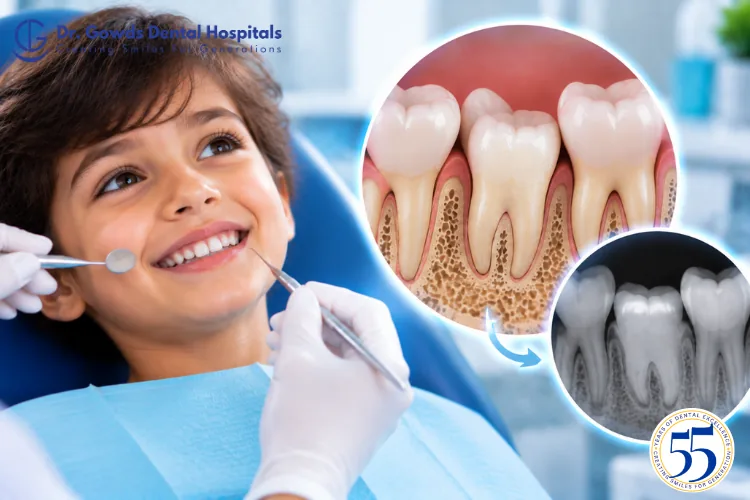
A child’s teeth usually follow a predictable pattern — baby teeth loosen, fall out, and permanent teeth gradually replace them. But sometimes, a tooth may appear to “stop moving” and remain fixed in the same position while nearby teeth continue growing. This condition is known as tooth ankylosis in children.
When a tooth becomes ankylosed, it can affect normal tooth eruption, jaw development, and the alignment of surrounding teeth. Many parents notice that one tooth looks shorter than the others or that a baby tooth does not fall out at the expected age.
Understanding the signs of an ankylosed tooth and getting timely dental guidance can help prevent future orthodontic complications. At Dr Gowds Dental Hospitals, Hyderabad, our dental specialists provide child-friendly evaluation and treatment planning for tooth eruption problems and other pediatric dental concerns.
Tooth ankylosis is a dental condition where the root of a tooth becomes directly attached to the surrounding jaw bone. Normally, a thin layer called the periodontal ligament separates the tooth root from the bone and allows small movements during growth and chewing.
In an ankylosed tooth, this connection is lost in certain areas, causing the tooth to become fixed in the bone. Because the affected tooth cannot move normally with jaw growth, it may appear lower than neighbouring teeth.
Tooth ankylosis can occur in both baby teeth and permanent teeth, but it is more commonly seen in primary (baby) molars.
A healthy tooth naturally adjusts its position as a child’s jaw develops. The periodontal ligament allows this movement and supports normal eruption.
When ankylosis occurs:
This is why parents may feel that their child has a tooth that has “stopped growing” or is not changing like the others.
The exact cause of tooth ankylosis is not always clear. Several factors may contribute to its development.
A childhood dental injury, especially around the developing tooth area, may damage the periodontal ligament and increase the risk of ankylosis.
Examples include:
Some children may have a higher tendency for abnormal tooth development or eruption patterns due to genetic influences.
Changes in the tissues surrounding the tooth may affect normal eruption and lead to ankylosis.
Abnormalities during tooth formation can sometimes interfere with the normal connection between the tooth root and surrounding structures.
Tooth ankylosis may not always cause pain, making it difficult for parents to identify early. However, some common signs include:
One of the most noticeable signs is that the affected tooth appears shorter or “sunken” compared to neighbouring teeth.
If a baby tooth remains in place beyond the expected age while surrounding teeth have changed, it may require dental evaluation.
An ankylosed baby tooth can sometimes block or affect the eruption path of the permanent tooth underneath.
Because the affected tooth does not move with jaw growth, it may contribute to bite problems or uneven tooth levels.
Parents may notice that the tooth does not move when nearby loose baby teeth do.
A pediatric dentist can diagnose an ankylosed tooth through a combination of clinical examination and dental imaging.
The dentist checks:
X-rays help evaluate:
Early diagnosis helps dentists decide whether monitoring, preventive treatment, or intervention is needed.
The impact of tooth ankylosis depends on the tooth involved, the child’s age, and how much growth remains.
A mildly affected tooth may only require regular monitoring. However, untreated ankylosed teeth can sometimes lead to:
This is why regular dental check-ups during childhood are important, especially when parents notice unusual tooth changes.
Treatment for an ankylosed tooth depends on several factors, including:
In some cases, the dentist may recommend observation with regular dental visits. The tooth’s position and the development of permanent teeth are monitored over time.
If an ankylosed baby tooth interferes with permanent tooth eruption or causes bite problems, extraction may be considered.
After removing an ankylosed tooth, a dentist may recommend a space maintainer to help preserve room for the permanent tooth.
Some children may require orthodontic guidance to correct tooth alignment problems caused by ankylosis
There is no guaranteed way to prevent tooth ankylosis because it can occur due to developmental factors that are outside a child’s control. However, parents can support healthy dental development by following good oral care habits.
Helpful steps include:
Regular dental visits allow dentists to identify eruption problems early and provide timely guidance.
Parents should consider a dental evaluation if they notice:
Early assessment can help protect the child’s developing smile and reduce the need for more complex treatments later.
At Dr Gowds Dental Hospitals, Hyderabad, our dental team evaluates children’s tooth development, eruption patterns, and alignment concerns with a child-friendly approach.
Visit our branches in Nanakramguda, Gachibowli, Madhapur, koti for a dental consultation.
Parents often confuse tooth ankylosis with normal variations in tooth eruption. While some children naturally develop teeth earlier or later than others, ankylosis involves a physical change where the tooth becomes attached to the surrounding bone.
| Normal Delayed Eruption | Tooth Ankylosis |
| Tooth may erupt later but continues normal movement | Tooth becomes fixed and does not erupt normally |
| Often related to natural growth variation | Related to abnormal attachment between tooth and bone |
| Usually monitored based on age and development | May require specific dental management |
| No significant difference in tooth height | Tooth may appear lower than surrounding teeth |
A dentist can determine the exact cause through examination and dental X-rays.
A baby tooth affected by ankylosis can sometimes influence the permanent tooth developing below it.
Possible effects include:
The earlier the condition is identified, the more options are available to guide healthy tooth development.
Tooth ankylosis in children is a condition where the tooth root becomes attached directly to the surrounding jaw bone, preventing normal movement and eruption. It commonly affects baby molars and may cause the tooth to appear lower than nearby teeth.
Common signs include a tooth that looks shorter than surrounding teeth, a baby tooth that does not fall out, delayed eruption of permanent teeth, and a tooth that feels fixed instead of slightly movable.
A baby tooth may not fall out due to several reasons, including delayed eruption of the permanent tooth, lack of space, or tooth ankylosis. A dental examination can identify the exact cause.
Most ankylosed teeth do not cause pain. However, they can affect tooth alignment, eruption, and bite development if not monitored.
In some cases, dentists may monitor the tooth if it is not affecting development. If the tooth interferes with permanent teeth or bite growth, treatment options may include extraction or orthodontic management.
Yes, an ankylosed baby tooth may sometimes delay or affect the eruption path of the permanent tooth underneath. Regular dental monitoring helps manage potential problems.
Children should have regular dental check-ups from an early age. Parents should consult a dentist whenever they notice delayed eruption, unusual tooth position, or differences between teeth.
A pediatric dentist or a dental specialist experienced in children’s dental development can evaluate and manage tooth ankylosis. Depending on the condition, orthodontic guidance may also be recommended.
 Gachibowli Branch