

Schedule Appointment

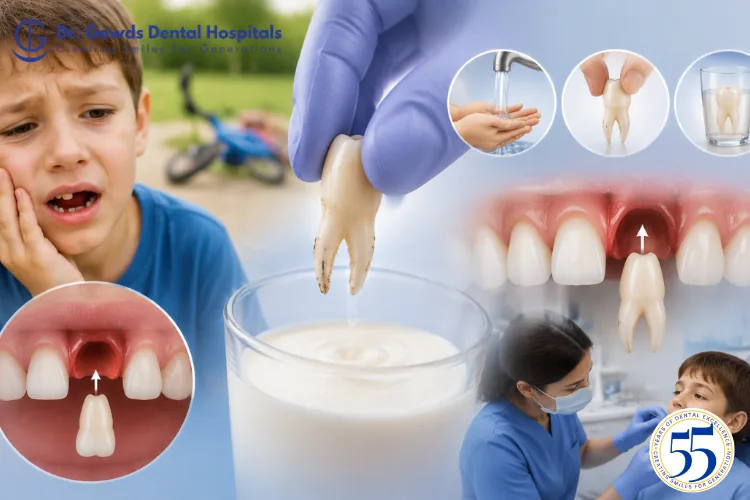
Tooth injuries can range from minor chips to serious trauma. One of the most urgent dental injuries is tooth avulsion, which occurs when a tooth is completely knocked out of its socket.
Sports injuries, falls, road accidents, and direct blows to the mouth can all cause tooth avulsion. Although seeing a tooth completely displaced can be frightening, knowing what to do immediately can help protect the tooth and improve the chances of successful treatment.
A knocked-out permanent tooth should be treated as a dental emergency. The tooth, root surface, periodontal ligament, gum tissue, socket, and surrounding bone may all be affected.
Understanding the correct first-aid steps and seeking prompt professional care can make an important difference.
Tooth avulsion means that a tooth has been completely displaced from its socket because of trauma.
Unlike a chipped or fractured tooth, an avulsed tooth is no longer inside its normal socket. The injury can affect several structures, including:
Permanent front teeth are commonly affected because they are more exposed to facial impacts.
A completely knocked-out permanent tooth requires urgent dental assessment. The sooner the injury is evaluated, the sooner the dental team can determine whether replantation is appropriate.
Tooth avulsion usually occurs because of significant physical trauma.
Contact sports and activities involving balls, bats, sticks, or other equipment can expose the teeth to sudden impacts.
Children and adults may experience dental trauma after falling while running, cycling, skating, playing, or participating in other activities.
A strong impact to the face during a road accident can displace one or more teeth.
A forceful blow to the lips, jaw, or front teeth can completely remove a tooth from its socket.
Any substantial impact involving the face can potentially cause dental injuries, including avulsion.
The severity of the injury depends on factors such as the direction and force of the impact and the condition of the tooth and surrounding structures.
A loose tooth and an avulsed tooth are different types of dental injuries.
A loose tooth remains partly or completely inside its socket but has abnormal movement.
An avulsed tooth has been completely displaced from the socket.
The distinction is important because the immediate management is different. If a tooth is still partially attached, do not pull it out. Seek urgent dental care and allow a dental professional to assess the injury.
If a permanent tooth has been completely knocked out, act quickly.
Locate the tooth if possible and pick it up by the crown, which is the visible part of the tooth.
Avoid touching the root. Cells on the root surface are important for the healing process after replantation.
If the tooth is dirty, gently rinse it with clean water if necessary.
Do not:
The aim is to remove obvious contamination without damaging the tissues on the root.
For a permanent tooth, immediate replacement into the socket may sometimes be appropriate.
If the person is conscious and able to cooperate, the tooth may be gently positioned back into the socket without forcing it.
However, this is not appropriate in every situation. If the person is unconscious, confused, very young, seriously injured, or there is concern about other major injuries, do not attempt to reinsert the tooth.
If repositioning is not possible, keep the tooth moist and seek emergency dental care immediately.
If the tooth cannot be placed back into the socket, it should not be allowed to dry out.
An appropriate tooth-preservation or storage solution is preferred when available. Milk can be used as a temporary option when a suitable tooth-preservation solution is not available.
Do not:
Do not wait until the next day to seek treatment for a completely knocked-out permanent tooth.
Contact a dentist or emergency dental service as quickly as possible. Prompt assessment allows the dental team to determine whether replantation and other treatments are appropriate.
The root of a tooth is surrounded by periodontal ligament tissue. When an avulsed tooth remains outside the mouth, these cells are exposed to conditions that can damage them.
Drying of the root surface can significantly reduce the survival of these cells. For this reason, the time between the injury and appropriate treatment is an important factor in managing tooth avulsion.
However, if several hours have already passed, do not assume the tooth cannot be treated. A dentist should still examine the tooth and surrounding injury and determine what options are available.
In selected cases, a permanent avulsed tooth can be replanted.
Replantation involves placing the tooth back into its original socket. The dentist considers several factors before deciding how to manage the injury, including:
Replantation does not guarantee that the tooth will remain healthy permanently. Follow-up is necessary because complications can develop after the injury.
When you reach the dental clinic, the dentist will first assess the tooth and surrounding injuries.
Treatment may involve several steps.
The dentist examines the crown and root for fractures, contamination, or other damage.
The gums, socket, and supporting bone are assessed for additional trauma.
Other teeth may have been injured during the same accident, even if they appear normal.
X-rays or other imaging may be recommended to assess the tooth, socket, surrounding bone, and neighboring teeth.
Based on the findings, the dentist determines whether replantation or another treatment approach is appropriate.
After a tooth is replanted, it may require temporary stabilization.
A dental splint connects the injured tooth to neighboring teeth, helping keep it stable while the supporting tissues heal.
The type and duration of splinting depend on the nature of the injury and the condition of the tooth and surrounding structures.
The dentist may also provide instructions about:
Replantation can help retain the tooth, but an avulsed tooth can develop complications even after it has been successfully replanted.
One possible complication is root resorption, where the body’s tissues gradually break down part of the tooth root.
Another concern is loss of vitality of the dental pulp, which may require additional treatment.
Follow-up appointments are therefore an important part of avulsed tooth treatment.
The dentist may monitor:
Children and adolescents may require longer-term monitoring because their teeth and jaws are still developing.
Not every avulsed tooth can be successfully retained.
If replantation is not possible or the tooth later develops complications that prevent long-term retention, the dentist can discuss tooth replacement options.
Depending on the patient’s age and dental development, these may include:
The appropriate option depends on factors such as age, jaw development, oral health, the condition of neighboring teeth, and long-term treatment goals.
For children and growing teenagers, implant treatment is generally delayed until appropriate jaw development has been reached.
Treatment depends on whether the knocked-out tooth is a primary tooth or permanent tooth.
A primary tooth is a baby tooth, while a permanent tooth is intended to remain throughout adulthood.
An avulsed primary tooth is generally not replanted because attempting to replace it may potentially damage the developing permanent tooth underneath.
A child should still receive a dental examination after an injury. The dentist can check the gums, socket, surrounding bone, neighboring teeth, and developing permanent teeth.
A tooth may appear intact even after significant trauma.
The absence of a visible fracture does not necessarily mean that the supporting tissues are undamaged.
Dental trauma can affect:
For this reason, professional assessment is important after significant dental trauma, even when the tooth appears normal.
Not every accident can be prevented, but several precautions can reduce the risk of severe dental trauma.
A properly fitted mouthguard can help protect the teeth during sports and activities where facial impacts are possible.
Helmets and other protective equipment can reduce the risk or severity of injuries during cycling and similar activities.
Keeping play areas and living spaces free of avoidable slipping and falling hazards can help reduce childhood injuries.
Maintaining good oral health is important, although even healthy teeth can be avulsed by significant trauma.
Seek urgent dental attention if:
If the accident involves loss of consciousness, breathing difficulties, uncontrolled bleeding, or another potentially serious head or facial injury, emergency medical care should take priority.
At Dr Gowds Dental Hospitals, dental trauma is evaluated by assessing both the affected tooth and the surrounding oral structures.
When a permanent tooth has been knocked out, prompt dental evaluation can help determine whether replantation is appropriate. The dentist may assess the tooth, socket, neighboring teeth, gums, and supporting structures before developing an individualized treatment plan.
If the original tooth cannot be retained, appropriate replacement options can also be discussed based on the patient’s age, jaw development, oral health, and long-term dental needs.
The most important step after tooth avulsion is to seek professional care promptly rather than relying on prolonged home treatment.
Tooth avulsion is a dental emergency, particularly when a permanent tooth has been completely knocked out.
How the tooth is handled immediately after the injury can influence the treatment options available. Hold the tooth by the crown, avoid touching or scrubbing the root, keep it moist if it cannot be immediately repositioned, and seek urgent dental care.
A knocked-out tooth can also be accompanied by injuries that are not immediately visible. The surrounding tissues and neighboring teeth should therefore be examined even when the tooth itself appears intact.
If an avulsed tooth cannot be retained, modern dentistry offers several options for restoring function and appearance. The most appropriate solution depends on factors such as age, jaw development, oral health, and the condition of the remaining teeth.
When dental trauma occurs, acting quickly and obtaining professional dental care can help protect the chances of the best possible outcome.
Visit us at-
Dr gowds dental hospital Nanakramguda
Dr gowds dental hospital Gachibowli
Dr gowds dental hospital madhapur
Tooth avulsion occurs when a tooth is completely knocked out of its socket, usually because of significant dental trauma.
Yes. A completely avulsed permanent tooth requires urgent dental assessment. Prompt management may improve the possibility of successful replantation.
No. Hold the tooth by the crown and avoid touching the root because the root surface contains cells that are important for healing.
In selected cases, a permanent tooth may be replanted. The dentist will consider factors such as the time outside the mouth, storage conditions, root condition, socket condition, and the patient’s age.
Keep the tooth moist in an appropriate storage medium and seek urgent dental care. Do not allow the tooth to dry out.
Generally, an avulsed primary tooth is not replanted because doing so may potentially damage the developing permanent tooth underneath. A dentist should still examine the child after the injury.
A permanent avulsed tooth should receive appropriate care as quickly as possible. Prolonged drying can damage cells on the root surface, so emergency dental assessment should not be delayed.
A dental splint temporarily stabilizes an injured tooth by connecting it to neighboring teeth while the supporting tissues heal.
Yes. Complications such as pulp-related problems, infection, or root resorption can occur after replantation. Regular follow-up is therefore important.
Yes. Depending on the patient’s age and dental development, replacement may involve a removable appliance, orthodontic treatment, bridge, or dental implant in an appropriate patient.
 Gachibowli Branch