

Schedule Appointment

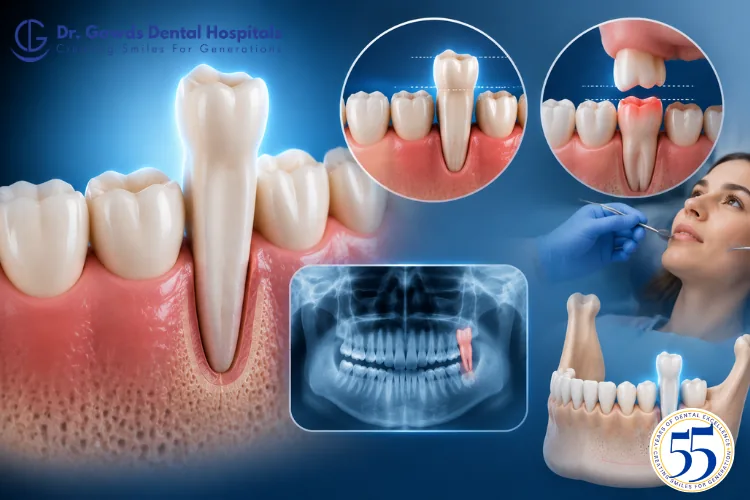
A tooth does more than simply sit in your mouth. Each tooth has a specific position that helps maintain a balanced bite and allows you to chew comfortably. When a tooth loses contact with its opposing tooth, it may gradually move beyond its normal position. This movement is known as supraeruption.
Supraeruption can develop after tooth loss, particularly when a missing tooth is not replaced. Over time, the opposing tooth may move into the available space, which can affect your bite and make future dental treatment more complicated.
Understanding why supraeruption occurs, how it is diagnosed, and what treatment options are available at Dr Gowds Dental Hospitals can help you protect your oral health and maintain a stable bite.
Supraeruption is the movement of a tooth beyond its usual functional position, often occurring when the tooth no longer has normal contact with its opposing tooth.
For example, if a lower molar is removed and the missing tooth is not replaced, the upper molar that previously contacted it may gradually move downward into the empty space.
This movement can change the relationship between the upper and lower teeth and may interfere with the way your teeth come together.
Supraeruption is commonly associated with changes in the opposing tooth or loss of normal biting contact.
When a tooth is removed and its opposing tooth no longer has a tooth to contact during normal biting, the opposing tooth may gradually move into the available space.
Leaving a missing tooth unreplaced for an extended period can allow surrounding and opposing teeth to shift. Tooth movement after tooth loss can contribute to changes in the bite and available space.
Replacing a missing tooth promptly can help maintain the available space and reduce unwanted tooth movement. The appropriate timing and replacement option depend on the individual dental situation.
Changes caused by tooth loss, dental restorations, orthodontic changes, or other conditions can alter normal tooth contact. These changes may contribute to unwanted tooth movement.
A supraerupted tooth may appear to sit lower or higher than the neighboring teeth, depending on which tooth has moved and the direction of movement.
Some people may notice that one tooth appears longer than the teeth around it. However, supraeruption is not always obvious by looking at the teeth alone.
A dentist may need to examine your bite and use dental X-rays to determine whether a tooth has moved beyond its normal position.
Supraeruption may not cause noticeable symptoms in its early stages. Some people discover it during a routine dental examination.
Possible signs include:
The symptoms can vary depending on how much the tooth has moved and whether other dental problems are present.
A supraerupted tooth can change the relationship between the upper and lower teeth.
The affected tooth may contact another tooth earlier than the rest of the teeth when you bite. This can interfere with a balanced bite.
Changes in tooth position can make chewing feel different or uncomfortable, particularly when the tooth interferes with normal contact.
If a tooth moves into the space needed for a dental implant, bridge, or other replacement, there may no longer be enough room for the planned restoration.
When one tooth moves because of tooth loss, the surrounding teeth may also experience changes in position. This can make the overall bite more difficult to manage.
Supraeruption can be particularly important when planning a dental implant.
If a missing lower tooth is not replaced, the opposing upper tooth may gradually move into the space. If an implant is considered later, the reduced vertical space may interfere with implant restoration planning.
In such situations, the dentist may first need to evaluate the position of the opposing tooth and determine whether additional treatment is required before replacing the missing tooth.
Early evaluation after tooth loss can make future treatment planning easier.
A dentist can evaluate suspected supraeruption through a combination of clinical examination, bite assessment, and dental imaging.
The dentist examines the affected tooth and compares its position with the surrounding teeth.
They may look for changes in tooth height, alignment, spacing, and contact with opposing teeth.
The dentist evaluates how the upper and lower teeth come together during normal biting and movement of the jaw.
This helps identify whether the affected tooth is creating an unwanted contact.
X-rays can help the dentist evaluate the position of the tooth and surrounding structures. Imaging may also be useful when planning treatment for a missing tooth or assessing available space.
In some cases, digital dental scans may be used to create a detailed record of the teeth and bite. These scans can assist with treatment planning and monitoring changes in tooth position.
Supraeruption cannot always be prevented, but maintaining a complete and stable dentition can help reduce the risk of unwanted tooth movement.
If a tooth needs to be removed, discuss replacement options with your dentist. Depending on your situation, options may include dental implants, bridges, or removable dental appliances.
Regular dental examinations allow your dentist to identify tooth movement, missing teeth, bite changes, and other concerns before they become more complicated.
Brushing twice a day, cleaning between your teeth, and maintaining regular professional dental care can help protect the remaining teeth.
If your dentist recommends replacing a missing tooth or monitoring a specific area, following the recommended treatment schedule can help maintain oral function and tooth alignment.
Treatment depends on how far the tooth has moved, whether it is causing symptoms, and what other dental treatment may be needed.
If the supraerupted tooth is stable and does not interfere with your oral health or planned treatment, your dentist may recommend monitoring it through regular examinations.
In selected cases, minor reshaping of a tooth may be considered to reduce an unwanted bite interference. This should only be performed after careful dental evaluation because removing too much tooth structure can cause problems.
Orthodontic treatment may sometimes be used to move a supraerupted tooth back toward a more suitable position.
The exact approach depends on the tooth, amount of movement, supporting structures, and overall treatment plan. Orthodontic intrusion is a specialized form of tooth movement and requires professional planning.
If the tooth has changed position and there is insufficient space for a planned restoration, restorative treatment may be considered as part of a broader treatment plan.
The dentist will determine whether reshaping, restoration, or another approach is appropriate.
In more complex cases, treatment may involve a combination of orthodontic, restorative, and surgical procedures.
The appropriate approach depends on the condition of the tooth, surrounding bone and gums, and the type of dental restoration being planned.
No. A supraerupted tooth does not automatically require treatment.
If the tooth is healthy, stable, and does not interfere with your bite or future dental treatment, your dentist may recommend monitoring it.
Treatment becomes more important when the tooth:
Your dentist can determine whether treatment is necessary after examining your teeth and bite.
Tooth movement can occur gradually, so the changes may not be noticeable at first.
If you have recently lost a tooth, delaying its replacement may allow neighboring or opposing teeth to move. In children and adolescents, eruption and spacing problems can also require early evaluation and management.
Seeking dental advice early can help identify changes in tooth position and make it easier to plan appropriate treatment.
Supraeruption and normal tooth eruption are not the same.
Normal tooth eruption is the natural process through which a developing tooth moves into its functional position in the mouth.
Supraeruption refers to a tooth moving beyond its normal functional position, often after the loss of opposing tooth contact.
Understanding the difference is important because the causes and treatment approaches are different.
Supraeruption occurs when a tooth moves beyond its normal functional position, commonly after losing contact with an opposing tooth.
Although it may not always cause immediate symptoms, supraeruption can change the bite, reduce available space, and complicate future dental treatment such as tooth replacement.
Replacing missing teeth, maintaining regular dental checkups, and addressing changes in your bite early can help support long-term oral health.
If you suspect that a tooth has moved or you have delayed replacing a missing tooth, consult a dentist for an appropriate evaluation.
Visit us at-
Dr gowds dental hospital Nanakramguda
Dr gowds dental hospital Gachibowli
Dr gowds dental hospital madhapur
Supraeruption is the movement of a tooth beyond its normal functional position, often occurring when it loses contact with its opposing tooth.
A common cause is the loss of an opposing tooth. When normal biting contact is lost, the remaining tooth may gradually move into the available space.
Yes. When a missing tooth is not replaced, the opposing tooth may move into the empty space over time.
Not necessarily. Some people have no symptoms, while others may notice changes in their bite, chewing discomfort, or sensitivity.
Yes. If a tooth moves into the space needed for a planned implant restoration, it may reduce the available space and require additional treatment planning.
No. Treatment depends on the tooth’s position, health, bite, symptoms, and whether it interferes with current or planned dental treatment.
 Gachibowli Branch