

Schedule Appointment


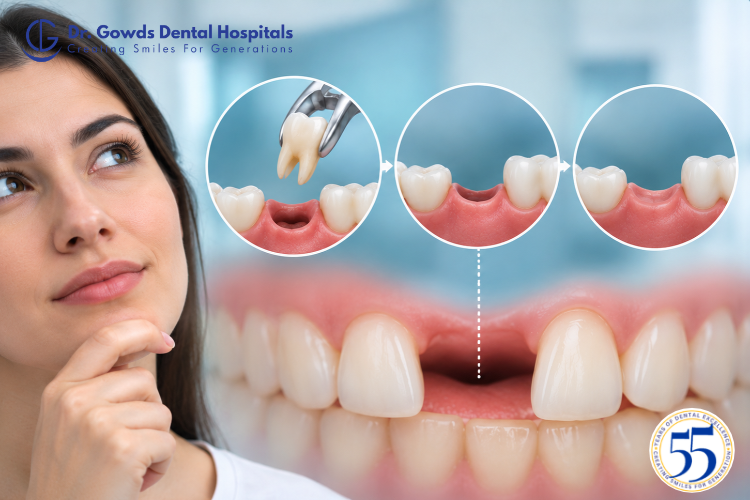
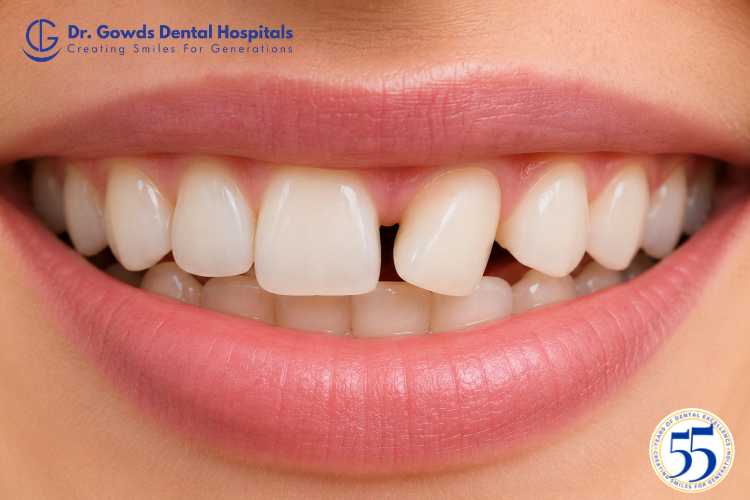
A missing tooth can change more than the appearance of your smile. It can also leave you wondering what your options are and whether a dental bridge is suitable for your situation. If you have been searching for the types of dental bridges, understanding how each option works is a useful first step.
Dental bridges come in different designs, and they are not all supported in the same way. The right choice depends on factors such as where the missing tooth is located, how many teeth need to be replaced, the condition of the neighbouring teeth, and your overall treatment requirements.
At Dr Gowds Dental Hospitals, patients in Hyderabad can discuss different tooth replacement options with a dental professional and understand which approach is appropriate for their individual situation.
Looking for a dental bridge in Hyderabad?
A dental bridge is a dental restoration designed to fill a space created by one or more missing teeth.
The replacement tooth, often called a pontic, occupies the space of the missing tooth. Depending on the type of bridge, it can be supported by neighbouring teeth, a dental framework, or dental implants.
The important point is that there is no single dental bridge design that suits every patient. Different types of bridges are designed for different situations.
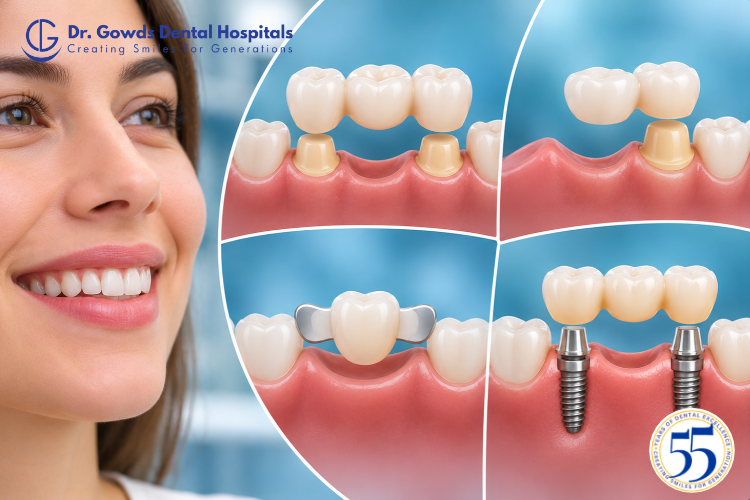
There are four commonly discussed types of dental bridges: traditional bridges, cantilever bridges, Maryland bridges and implant-supported bridges.
A traditional dental bridge is one of the most familiar types of dental bridges.
It generally consists of a replacement tooth held between dental crowns. The crowns are placed over the teeth on either side of the gap, providing support for the replacement tooth.
A traditional bridge may be considered when there are suitable teeth next to the missing-tooth space.
The design can be used for different areas of the mouth, but its suitability depends on the individual tooth position, supporting teeth and bite.
A cantilever dental bridge is supported from one side rather than having supporting teeth on both sides of the replacement tooth.
This makes its design different from a traditional bridge. Because the support is located on one side, the position of the missing tooth and the forces placed on the restoration are important considerations.
A dentist needs to assess the specific space and surrounding teeth before determining whether a cantilever design is appropriate.
A Maryland dental bridge, sometimes called a resin-bonded bridge, uses a replacement tooth attached to a framework or wings.
The framework is designed to attach to the back surface of nearby teeth rather than using crowns in the same way as a traditional bridge.
Maryland bridges are often discussed in relation to particular areas of the mouth, especially when preserving the visible structure of neighbouring teeth is an important consideration.
However, the suitability of this design depends on the location of the missing tooth, the supporting teeth and the way the teeth come together when you bite.
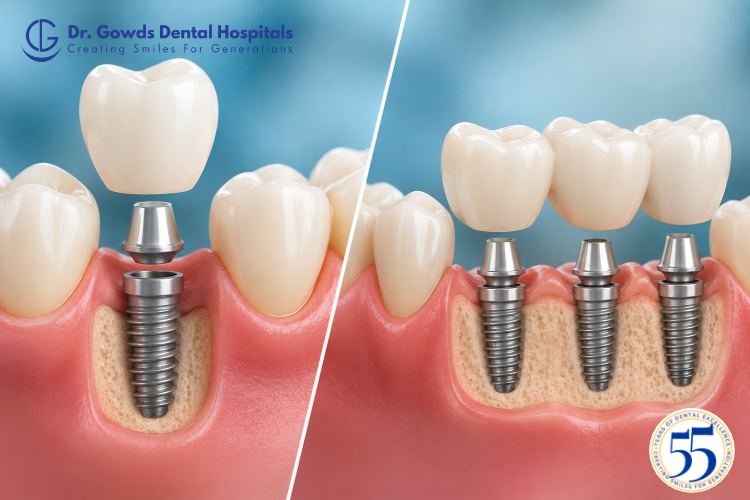
An implant-supported dental bridge uses dental implants as the support for the bridge instead of relying directly on neighbouring natural teeth.
This is a different approach from traditional, cantilever and Maryland bridges.
Implant-supported bridges may be considered when several adjacent teeth are missing and the treatment plan includes dental implants. An assessment is needed to determine whether implants are suitable and how they would fit into the overall treatment plan.
Understanding the basic differences can make the choices easier to discuss with your dentist.
| Type of Dental Bridge | Main Support | General Design |
| Traditional bridge | Neighbouring teeth | Replacement tooth supported by crowns |
| Cantilever bridge | Tooth or teeth on one side | Replacement tooth supported from one side |
| Maryland bridge | Nearby teeth through a framework | Replacement tooth attached using wings/framework |
| Implant-supported bridge | Dental implants | Bridge supported by implants |
This comparison provides a general overview. The most suitable option cannot be determined by the bridge type alone.
The answer depends on your individual dental situation rather than simply choosing the most popular option.
A dentist may consider several factors before recommending a particular bridge.
The position of the missing tooth can influence which bridge designs are suitable. Front teeth and back teeth can have different treatment considerations.
Replacing one missing tooth is different from replacing several teeth next to one another. The number and position of missing teeth can influence the design of the restoration.
For traditional or cantilever bridges, the teeth providing support are an important part of the assessment.
Your dentist may examine their structure, position and relationship with the missing-tooth space before discussing the available options.
The way your upper and lower teeth meet can influence the design and placement of a dental bridge.
Your dentist may evaluate your bite and tooth alignment as part of treatment planning.
Different bridge designs have different structures, so cleaning and maintenance should be discussed before treatment.
Ask your dentist how the bridge should be cleaned and what follow-up appointments may be required.
A dental bridge is not the only option for replacing a missing tooth. Depending on the situation, a dentist may also discuss alternatives such as dental implants or dentures.
The purpose of a consultation is to compare the available options rather than choosing a treatment based only on general information.
Not sure which dental bridge is suitable for you? Talk to Dr Gowds Dental Hospitals in Hyderabad about your available tooth replacement options.
Dental bridges and dental implants are different types of tooth replacement solutions.
A bridge uses a replacement tooth that is supported by neighbouring teeth, a framework or dental implants, depending on the design.
A dental implant is a separate dental restoration component that is placed as part of an implant-based tooth replacement approach.
The choice between a bridge and an implant depends on factors such as the missing-tooth area, surrounding teeth, treatment requirements and your dentist’s assessment.
Rather than asking which option is universally better, it is more useful to ask which option fits your particular dental situation.
Before deciding on a dental bridge, consider asking your dentist:
These questions can help you understand the treatment plan before making a decision.
If you are looking for a dental bridge in Hyderabad, choosing the right treatment starts with understanding your options.
Dr Gowds Dental Hospitals provides dental care across its Hyderabad branches in Nanakramguda, Gachibowli, Madhapur, koti.
Instead of selecting a bridge based only on its name or appearance, discuss the available designs with a dental professional and understand how each option relates to your teeth and treatment requirements.
There are several types of dental bridges, and each has a different design and method of support. Traditional, cantilever, Maryland and implant-supported bridges can all form part of a tooth replacement discussion, but they are not interchangeable.
The right choice depends on the location and number of missing teeth, the condition of the supporting teeth, your bite, and the overall treatment plan.
If you are considering replacing a missing tooth, a dental consultation can help you understand which bridge options are available for your situation.
Looking for dental bridges in Hyderabad? Book a consultation at Dr Gowds Dental Hospitals to discuss your options.
The main types include traditional dental bridges, cantilever bridges, Maryland bridges and implant-supported bridges. Each uses a different method of support.
There is no single dental bridge that is right for everyone. The appropriate option depends on the location of the missing tooth, the number of missing teeth, the supporting teeth, bite and overall treatment plan.
A traditional dental bridge generally uses a replacement tooth supported by dental crowns placed on suitable neighbouring teeth.
A Maryland dental bridge uses a replacement tooth attached to a framework or wings that connect to nearby teeth. Its suitability depends on the individual dental situation.
Yes. A traditional bridge generally relies on neighbouring teeth for support, while an implant-supported bridge uses dental implants as its support.
Some bridge designs can be used to replace multiple adjacent missing teeth. The appropriate design depends on the location of the missing teeth and the available support.
A dental examination and treatment discussion can help determine which bridge designs are suitable. Your dentist can explain the available options based on your teeth and treatment requirements.
 Gachibowli Branch