

Schedule Appointment


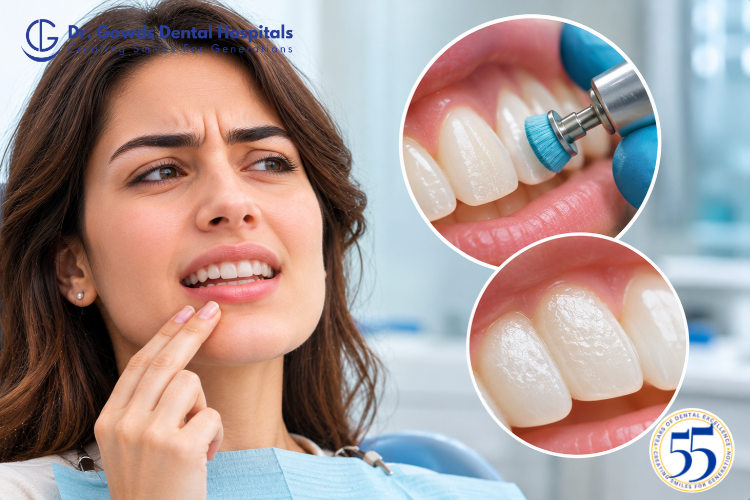
You leave a dental clinic after a professional cleaning and notice how smooth your teeth feel. A few days or weeks later, that smooth feeling seems to disappear. Your teeth may start feeling slightly rough, gritty or uneven when you run your tongue over them.
So, why do teeth feel rough again after cleaning?
In many cases, the change can be related to the everyday buildup that develops on teeth between cleanings. Your eating habits, brushing routine and the areas that are difficult to clean can all affect how your teeth feel over time. A rough sensation can also be noticeable around certain teeth or near the gumline.
Understanding why this happens can help you maintain that freshly cleaned feeling for longer and recognise when it may be worth having a dentist take a closer look.
Want to keep your smile feeling clean and smooth?
Professional cleaning can leave the tooth surfaces feeling noticeably smoother. However, this feeling is not necessarily permanent.
Your teeth are exposed to food, drinks and naturally occurring substances in the mouth every day. A thin layer can gradually collect on the tooth surface, particularly when certain areas are difficult to reach with a toothbrush.
Over time, this can make the teeth feel different from how they felt immediately after cleaning.
The roughness may be more noticeable when:
A rough feeling does not automatically mean something is wrong. However, if the sensation persists or is limited to one specific area, a dental examination can help identify the reason.
There is no single reason why teeth may stop feeling smooth. Several everyday factors can contribute to the change.
Plaque can begin accumulating on teeth after eating and drinking. Regular brushing and cleaning between the teeth can help manage this buildup.
Certain areas are particularly easy to miss, including:
If these areas are not cleaned effectively, they may start to feel rough when you touch them with your tongue.
When deposits remain on the teeth, they can become harder and more difficult to remove with routine brushing alone.
This is one reason why teeth can feel smooth immediately after a professional cleaning but gradually develop a different texture later.
If you notice a hard, rough area that does not seem to improve with normal brushing, it is better to have it checked rather than trying to scrape it away yourself.
Sometimes the rough sensation may simply be temporary.
Small food particles can remain between teeth or around areas that are difficult to clean. This can create a gritty or uneven feeling, particularly after meals.
Cleaning between your teeth and rinsing your mouth can help remove loose debris.
Not every part of the mouth is equally easy to reach.
The shape and position of individual teeth can make certain areas more challenging to clean thoroughly. The back teeth, spaces between teeth and areas close to the gumline often require extra attention.
This is why a good daily routine is about more than simply brushing the front surfaces of your teeth.
If you notice roughness specifically near the gums, pay attention to whether the feeling remains after brushing and cleaning between the teeth.
The gumline can be an area where deposits accumulate because it can be difficult to clean properly. Roughness in this area may also be related to the surface of a tooth or an existing dental restoration.
Rather than trying to determine the cause yourself, a dental professional can examine the area and explain what may be contributing to the sensation.
Brushing every day is an important part of oral care, but brushing alone may not reach every surface equally well.
For example, you may consistently brush twice a day but still miss:
Your brushing technique, toothbrush and cleaning routine can also affect how effectively different areas are cleaned.
If your teeth repeatedly feel rough despite maintaining a regular routine, consider discussing your technique and oral hygiene habits with your dentist.
The goal is not simply to have smooth teeth immediately after a professional cleaning. It is to maintain a consistent daily routine between dental visits.
Brush your teeth regularly and pay attention to all tooth surfaces rather than focusing only on the front teeth.
Use gentle, controlled movements and avoid rushing through the areas that are harder to reach.
A toothbrush cannot effectively clean every space between teeth.
Depending on your individual needs, your dental professional may recommend an appropriate method for cleaning between the teeth.
The area where the teeth meet the gums deserves attention during daily cleaning. Take your time and make sure you are not consistently missing the same areas.
Professional cleaning and daily home care serve different purposes.
Your home routine helps you manage everyday buildup, while professional dental visits allow your dental team to assess areas that may need additional attention.
The appropriate frequency of dental visits can vary from person to person, so it is useful to follow the schedule recommended for your needs.
Not necessarily.
A rough sensation alone does not always mean you need another professional cleaning immediately. The reason for the roughness matters.
For example, a temporary gritty feeling after eating is different from a hard deposit that remains in one location. Similarly, roughness across several teeth may have a different explanation from a sharp or uneven spot on a single tooth.
A dental examination can help determine whether professional cleaning, improved home care or another form of dental attention is appropriate.
If your teeth continue to feel rough after cleaning, Dr Gowds Dental Hospitals can help you understand what may be contributing to the change and what your next step should be.
You do not need to panic every time your teeth feel slightly different. However, persistent or unusual changes deserve attention.
Consider scheduling a dental appointment if:
A dentist can examine the tooth surfaces and surrounding areas rather than relying only on how the tooth feels.
One common misconception is that professional cleaning should keep teeth perfectly smooth until the next appointment.
In reality, professional cleaning and daily oral care work together.
A cleaning can address deposits that routine brushing cannot easily remove. Your daily habits then help maintain the cleanliness of your teeth between visits.
Think of professional cleaning as part of an ongoing routine rather than a one-time solution.
A consistent approach can include:
There is no fixed period during which everyone’s teeth will feel equally smooth.
Some people may notice a change in texture relatively soon, while others may continue to feel the smoothness for longer. Daily eating and drinking habits, oral hygiene routines and individual tooth surfaces can all influence the experience.
Instead of focusing only on how long the smooth feeling lasts, pay attention to changes that are persistent, localised or noticeably different from your usual experience.
If the roughness is caused by loose food debris, normal brushing and cleaning between the teeth may help.
However, hard deposits should not be scraped off using sharp objects or household tools. Attempting to remove deposits yourself can be uncomfortable and may damage the tooth or surrounding areas.
If brushing does not change the rough sensation, a professional dental assessment is the safer approach.
If your teeth feel rough again after professional cleaning, it does not necessarily mean that the cleaning was ineffective.
The mouth is constantly exposed to food and drinks, and deposits can gradually return between dental visits. Areas that are difficult to clean may also develop a rougher feeling sooner than other surfaces.
The best approach is to maintain consistent daily cleaning, pay attention to areas that are easy to miss and have persistent or unusual roughness assessed by a dental professional.
Looking for professional dental care in Hyderabad? Visit Dr Gowds Dental Hospitals at Nanakramguda, Gachibowli, Madhapur, koti to discuss your oral health concerns with our dental team.
A change in how your teeth feel after cleaning can happen as everyday deposits and food debris accumulate again. If the roughness persists or is limited to one area, a dental examination can help identify the reason.
Teeth may feel rough again as plaque, food debris or harder deposits accumulate between professional cleanings. Areas that are difficult to reach during daily brushing may be more noticeable.
Maintain consistent brushing, clean between your teeth and pay attention to the gumline. Regular dental visits can also help you maintain your oral care routine.
The gumline can be difficult to clean thoroughly, which may allow deposits to collect in the area. Persistent roughness near the gums can be checked by a dentist.
A gritty sensation can sometimes be related to food debris or changes in the amount of buildup on the tooth surfaces. If the sensation continues, a dental professional can examine the area.
Not necessarily. The appropriate next step depends on what is causing the roughness. If the sensation persists, a dental examination can help determine whether another cleaning or another form of dental care is appropriate.
It is better not to use sharp objects or household tools to scrape deposits from your teeth. If brushing and normal cleaning do not remove the roughness, have the area examined professionally.
The ideal schedule can vary depending on your individual oral care needs. Your dentist can recommend an appropriate interval based on your dental examination and routine.
 Gachibowli Branch