

Schedule Appointment


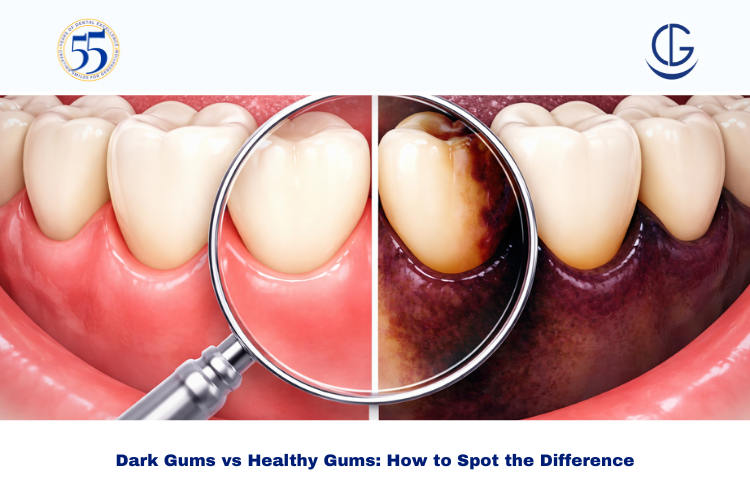
Dark gums vs healthy gums can look confusing—especially when pigmentation is natural for some people. Many Hyderabad patients worry after noticing darker patches on the gums, thinking it’s always a disease. The truth is: gum color can vary widely, and not every dark shade is harmful. What matters is whether the pigmentation is stable, painless, and consistent—or whether it is new, spreading, uneven, or associated with bleeding, swelling, or bad breath.
At Dr Gowds Dental Hospitals, we commonly see patients from across Hyderabad who want clarity on gum pigmentation—what’s normal, what’s not, and what should be checked.
If you’re unsure whether your gum shade is normal or needs attention, book a consultation at Dr Gowds Dental Hospitals in Hyderabad.
When people imagine “healthy gums,” they often picture a uniform light pink. But normal gum color can range from:
This depends on:
So the first step in understanding dark gums vs healthy gums is knowing that pigmentation itself can be normal.
Healthy pigmentation is typically:
Darker gums may need dental attention if you notice:
If you have any of these signs, it’s smart to get checked—especially when changes happen over weeks, not years.
Some people have melanin pigmentation in the gums just like they do in the skin. This can create:
When this pigmentation is stable, not painful, and gums remain firm, it is often harmless.
We frequently see this in younger adults and even teenagers, and it can be completely normal—especially if there are no other gum symptoms.
This is the most common and usually harmless.
Tobacco can trigger pigmentation called “smoker’s melanosis,” often seen as darkening near the front gums.
When gums are inflamed, they can appear darker red-brown, swollen, and tender. This is not “healthy pigmentation.”
Advanced gum disease can cause:
Plaque at the gum line can worsen inflammation and cause gums to look darker or unhealthy.
Some medicines or medical conditions can change pigmentation, but a dental exam is usually the first step to rule out gum disease.
You can do a simple self-check in good lighting.
If you’re seeing these signs, it’s time for a professional evaluation.
Many patients come in worried because:
The good news: most concerns become clearer after a proper gum examination and cleaning.
At Dr Gowds Dental Hospitals, your gum evaluation generally includes:
If needed, your dentist may recommend:
Treatment is optional and cosmetic. Some people choose gum depigmentation for aesthetic reasons.
Reducing or stopping tobacco can prevent progression. Cosmetic procedures may be considered if desired.
The priority is gum health. Treatment may include:
Healthy gums matter more than “pink gums.” The goal is comfort, stability, and long-term gum support.
Don’t wait if you have:
Early checks are simpler, faster, and usually more comfortable.
If you’re still unsure about dark gums vs healthy gums, don’t self-diagnose. Gum pigmentation can be normal—or it can be a sign that your gums need professional attention.
Visit your nearest branch located in Gachibowli, Madhapur, Koti, Nanakramguda.,and speak with our dental specialists to evaluate gum color, gum health, and oral hygiene—especially if you’ve noticed sudden changes.
If alignment or smile aesthetics are also part of your concern, you can talk to an orthodontist and explore aligner treatment options during your visit.
Yes. Normal gum color can be darker due to natural melanin pigmentation, especially if it’s stable, painless, and not associated with bleeding or swelling.
No. Gum disease usually comes with bleeding, swelling, bad breath, or tenderness. Pigmentation alone can be harmless.
Teeth may look brighter after cleaning, which can make gum pigmentation appear more noticeable. If you have no pain or bleeding, it may still be normal.
Most gum treatments (like scaling or deep cleaning) are done with comfort measures. Your dentist will guide you based on your gum condition.
Often, one consultation is enough to determine whether it’s normal pigmentation or a gum health issue. Follow-ups depend on your diagnosis and treatment plan.
 Gachibowli Branch