

Schedule Appointment

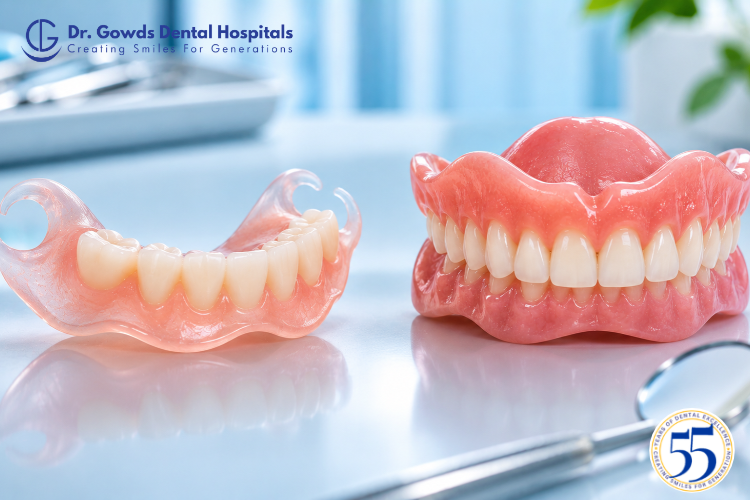
When you are considering dentures, the material can be just as important as the design. Two options you may come across are flexible dentures and hard dentures. While both are removable options for replacing missing teeth, they differ in material, flexibility, appearance, maintenance and how they are designed.
Understanding the difference between flexible dentures vs hard dentures can make it easier to have a focused conversation with your dentist about which option may suit your needs.
At Dr Gowds Dental Hospitals, patients can discuss their tooth replacement requirements with the dental team and understand the available options before making a decision.
Looking for dentures in Hyderabad?
Flexible dentures are removable dental appliances made using a flexible thermoplastic material. Unlike traditional rigid denture bases, the material can bend or flex to a certain degree.
The flexibility is one of the main characteristics that distinguishes this type of denture from conventional hard dentures.
Flexible dentures may be considered when someone is looking for a removable option with a less rigid feel. Their design can also allow the denture material to follow the contours of the mouth more closely.
However, flexibility alone does not determine whether this type of denture is the right choice. The condition of the mouth, the number and position of missing teeth, bite, supporting structures and other factors all need to be considered.
Hard dentures generally refer to dentures made with a rigid denture base, commonly using acrylic or similar denture materials.
Unlike flexible dentures, the base does not bend in the same way. This rigid structure gives the denture its shape and provides a firm foundation for the artificial teeth.
Hard dentures are widely recognised as a conventional removable denture option and can be designed in different forms depending on the individual’s tooth replacement requirements.
The term “hard dentures” is often used when comparing rigid acrylic-style dentures with flexible alternatives.
The most useful way to understand flexible dentures vs hard dentures is to compare their characteristics.
Flexible dentures are generally made from flexible thermoplastic materials, while hard dentures typically use a rigid acrylic-based or similar material.
This difference in material affects how each denture behaves when placed and removed.
As the name suggests, flexible dentures have some degree of flexibility.
Hard dentures have a rigid base and maintain their shape rather than bending during normal use.
If flexibility is an important consideration for you, this is one of the first differences to discuss with your dentist.
The material can influence how a denture feels when worn.
Some people may prefer the less rigid feel associated with flexible dentures, while others may prefer the firm structure of a hard denture.
Comfort is personal, and the design and fit of the denture also play an important role.
Both flexible and hard dentures can be designed with attention to the appearance of the artificial teeth and surrounding areas.
Flexible dentures may use tooth-coloured or gum-coloured materials depending on their design. Hard dentures can also be customised in terms of tooth arrangement, shade and overall appearance.
The final look depends on factors such as the denture design, artificial teeth selected and how the appliance is made.
A denture needs to be designed around the individual’s mouth rather than selected purely based on material.
Flexible dentures and hard dentures have different material properties, which can influence how they are designed and retained.
For some patients, a rigid base may be preferred for the type of denture being planned. For others, flexibility may be an important consideration.
A dental assessment is therefore useful before choosing between the two.
Both types of removable dentures need regular cleaning and proper handling.
Because the materials are different, the recommended cleaning and maintenance approach may also differ.
Dentures should be handled carefully during cleaning and stored according to the instructions provided by the dental team.
One important consideration when comparing flexible dentures vs hard dentures is how easily the appliance can be adjusted or modified.
Rigid dentures may offer more flexibility in certain adjustment and repair situations. Flexible denture materials can have different repair and modification requirements.
If you are considering dentures, ask your dentist about future adjustments, repairs and replacement before choosing a material.
| Feature | Flexible Dentures | Hard Dentures |
| Base material | Flexible thermoplastic material | Rigid acrylic or similar material |
| Flexibility | Flexible to a certain degree | Rigid |
| Feel | Less rigid | More structured |
| Appearance | Can be designed with tooth and gum-coloured areas | Can be customised for tooth arrangement and appearance |
| Cleaning | Requires regular cleaning and careful handling | Requires regular cleaning and careful handling |
| Adjustments | May have specific modification requirements | Can be adjusted depending on the denture design |
| Repairs | Repair options depend on the material | Repair options depend on the material and design |
| Suitability | Depends on individual requirements | Depends on individual requirements |
There is no single answer to which option is better for everyone.
The right choice depends on what you need from your denture, your oral condition, the location and number of missing teeth, your preferences and the type of denture being planned.
These are only general considerations. A dental professional can explain which option is appropriate after assessing your individual needs.
Choosing between flexible and hard dentures involves more than comparing materials.
Consider these questions during your dental consultation:
The number and position of missing teeth can influence the type and design of denture being considered.
Replacing front teeth may involve different aesthetic considerations from replacing back teeth.
Think about whether your priorities are appearance, flexibility, ease of cleaning, stability, maintenance or future adjustments.
“Flexible” and “hard” describe material characteristics, but denture design can vary considerably. Ask your dentist to explain exactly what type of appliance is being proposed.
Before choosing a denture, ask how it should be cleaned, stored and maintained and what to do if it becomes damaged or uncomfortable.
Flexible dentures and acrylic dentures are not the same type of denture material.
Flexible dentures are generally made using flexible thermoplastic materials, while conventional hard dentures commonly use acrylic or another rigid material.
This material difference is why flexible dentures vs acrylic dentures is another common comparison when researching tooth replacement options.
The best choice should be based on the individual’s requirements rather than choosing a material simply because it is described as flexible or traditional.
It may be possible to consider a different denture design later, depending on your oral condition and denture requirements.
If you are unhappy with an existing denture or your needs have changed, discuss the situation with your dentist rather than choosing another denture type based only on online comparisons.
A new denture may require a fresh assessment and new measurements to determine the appropriate design.
Not sure whether flexible or hard dentures are suitable for you? Talk to the dental team at Dr Gowds Dental Hospitals in Hyderabad about your options and what each type involves.
Regardless of the material, removable dentures need appropriate care.
Some basic practices include:
Proper care can help you keep your denture clean and in good condition.
The choice between flexible dentures and hard dentures should not be based on one feature alone.
Flexible dentures offer a different material experience from rigid dentures, while hard dentures provide a more traditional structured design. Each option has characteristics that may make it worth discussing depending on your requirements.
The most useful next step is to have your mouth assessed and ask your dentist about the available denture designs. This allows you to compare the options based on fit, appearance, maintenance, comfort and long-term practicality.
For personalised guidance on dentures in Hyderabad, visit Dr Gowds Dental Hospitals at Nanakramguda, Gachibowli, Madhapur, koti.
Flexible dentures use a flexible thermoplastic material, while hard dentures generally have a rigid acrylic or similar base. The difference affects flexibility, feel, design and maintenance considerations.
Neither option is automatically better for everyone. The appropriate choice depends on factors such as the number and location of missing teeth, denture design, personal preferences and professional assessment.
Comfort can vary from person to person. Flexible dentures have a different feel from rigid dentures, but overall comfort also depends on the fit, design and individual mouth structure.
Many conventional hard dentures use acrylic or similar rigid materials. The exact material can vary depending on the denture design.
Discuss factors such as appearance, flexibility, fit, maintenance, adjustments and the number and location of missing teeth with your dentist. These details can help determine which option is suitable for your requirements.
Repair options depend on the specific flexible material and denture design. Ask your dental team about repair and replacement options before choosing a flexible denture.
They may have different cleaning and maintenance requirements because the materials are different. Follow the care instructions provided specifically for your denture.
 Gachibowli Branch