

Schedule Appointment


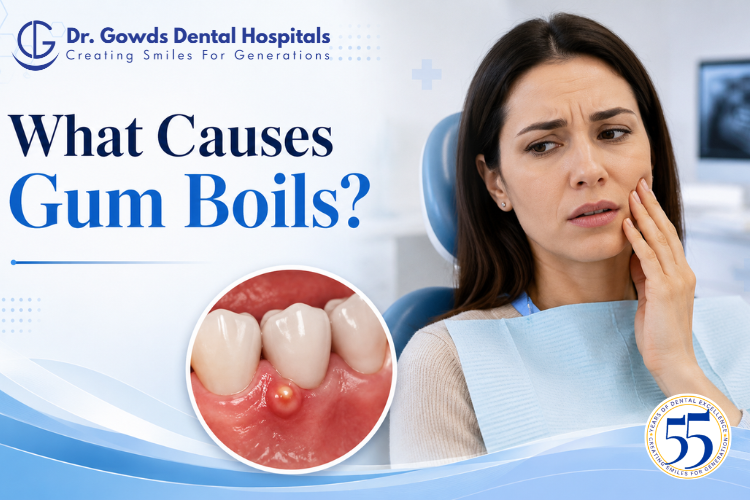
Gum boils are small, swollen bumps on the gums that usually contain pus caused by a bacterial infection. Also known as a gum abscess or abscess on the gums, they often develop due to advanced gum disease, tooth infections, trapped food particles, or injuries to the gums. While a gum boil may temporarily drain on its own, it does not mean the infection has healed. Without professional treatment, the infection can spread to surrounding teeth, gums, jawbone, and, in rare cases, other parts of the body.
At Dr. Gowds Dental Hospitals, our experienced dentists diagnose and treat gum boils using advanced diagnostic techniques and personalized treatment plans to eliminate the infection, relieve pain, and protect your oral health.
Gum boils are pus-filled swellings that develop on the gums due to a bacterial infection. They often appear as small white, yellow, or red bumps and may be painful to touch.
The pus inside a gum boil is made up of bacteria, dead tissue, and white blood cells fighting the infection.
Although the boil may occasionally burst and release pus, the infection usually remains beneath the gums and requires professional dental treatment.
Several dental problems can lead to gum boils.
One of the most common causes of gum boils is advanced gum disease.
As plaque and tartar build up beneath the gum line, bacteria infect the supporting tissues, leading to the formation of a periodontal abscess.
Patients with untreated periodontitis are at a higher risk of developing gum boils.
A deep cavity or untreated tooth infection can spread beyond the tooth root into the surrounding gums.
When the infection drains toward the gum surface, it may form a gum boil.
This type of abscess often requires root canal treatment or tooth extraction.
Food particles lodged deep between the teeth and gums create an ideal environment for bacterial growth.
If not removed, they may cause localized infection and the formation of gum boils.
Inadequate brushing and flossing allow plaque bacteria to accumulate, increasing the risk of gum infections and abscess formation.
Injuries to the gums caused by hard foods, sharp objects, or accidental bites may allow bacteria to enter the tissue.
People with diabetes, certain medical conditions, or weakened immune systems may be more susceptible to gum infections.
The symptoms of gum boils vary depending on the severity of the infection.
Common symptoms include:
If the gum boil bursts, you may notice a salty or unpleasant-tasting fluid draining into your mouth.
Not all gum boils develop for the same reason.
A periodontal abscess develops within the gum tissues due to advanced gum disease.
It usually affects the supporting structures around the tooth.
A periapical abscess begins inside the tooth because of decay or trauma and spreads toward the gums.
Patients often notice a gum boil near the affected tooth.
A gingival abscess occurs only within the gum tissue and is commonly caused by trapped food or foreign objects.
A gum boil should never be ignored.
While it may not always require an emergency room visit, it is considered a dental emergency because the infection can continue spreading.
Seek immediate dental care if you experience:
Prompt treatment helps prevent serious complications.
Many people believe that if the boil bursts, the infection has healed.
Unfortunately, this is not true.
Even if the pus drains and the pain temporarily improves, bacteria usually remain inside the infected tissues.
Without treatment, the infection often returns and may become more severe.
Ignoring gum boils can lead to serious complications.
Potential risks include:
Early treatment greatly reduces these risks.
Gum boils are a warning sign that an infection is present and should never be ignored. While the swelling may temporarily improve if it drains, the underlying infection usually remains and can continue to damage your gums, teeth, and supporting bone if left untreated.
The good news is that most gum boils can be treated successfully with early diagnosis and appropriate dental care. Whether the infection is caused by gum disease, a tooth abscess, or trapped food particles, prompt treatment can relieve pain, preserve your oral health, and prevent serious complications.
If you notice a painful swelling, pus, or persistent gum discomfort, schedule an evaluation at Dr. Gowds Dental Hospitals. Our experienced dental specialists can identify the cause, provide effective treatment, and help restore your healthy smile.
Visit us at-
Dr gowds dental hospital Nanakramguda
Dr gowds dental hospital Gachibowli
Dr gowds dental hospital madhapur
Gum boils are pus-filled swellings on the gums caused by a bacterial infection. They are commonly associated with gum disease, tooth infections, or trapped food particles.
A gum boil may drain on its own, but the underlying infection usually remains. Professional dental treatment is necessary to eliminate the source of the infection.
Yes. Many people experience pain, swelling, tenderness, bad breath, and discomfort while chewing. However, some gum boils may cause little pain, especially if they have started draining.
Treatment may include draining the abscess, deep cleaning, root canal therapy, tooth extraction if necessary, and antibiotics when the infection has spread or is severe.
You should see a dentist as soon as you notice a gum boil, swelling, pus, persistent tooth pain, fever, or facial swelling. Early treatment helps prevent the infection from spreading and protects your teeth and gums.


 Gachibowli Branch