

Schedule Appointment


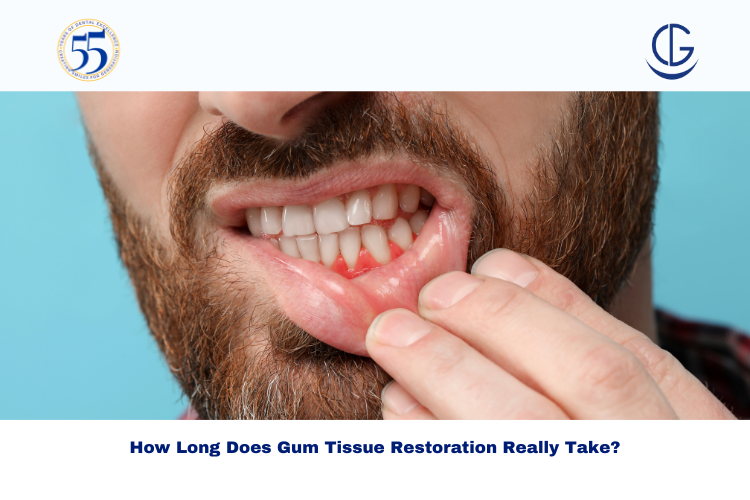
Gum graft healing time is one of the first things patients in Hyderabad ask when they notice gum recession, sensitivity, or “long-looking” teeth. The honest answer is: it depends on the type of gum tissue restoration, your oral health, and how closely you follow aftercare—but most patients feel significantly better within 1–2 weeks, while full tissue maturation can take 6–12 weeks, and final stability may continue improving for 3–6 months.
At Dr Gowds Dental Hospitals, we see many patients from across Hyderabad who want a clear timeline, minimal discomfort, and reliable outcomes—especially those searching for the Best Dental Hospital in Hyderabad for advanced gum care and cosmetic gum restoration. In this blog, you’ll get a realistic healing timeline, what to expect week-by-week, and how to speed recovery safely.
If you’re experiencing gum recession or sensitivity and want a clear recovery plan, book a consultation at Dr Gowds Dental Hospitals today.
Gum tissue restoration is a treatment approach used to rebuild or reposition the gumline when gums recede, become thin, or expose tooth roots. The goal is to:
Gum restoration duration varies depending on whether you need a gum graft, tissue regeneration, or other periodontal procedures.
While every case is different, here’s a practical timeline most patients can relate to:
If your treatment includes multiple teeth or complex recession patterns, gum restoration duration can extend slightly.
In real life, healing isn’t the same for everyone. These factors matter:
Different procedures heal at different rates:
Deeper recession, thin gums, or multiple teeth involvement can increase gum graft healing time.
Healing improves when patients follow cleaning instructions carefully without disturbing the surgical area.
Smoking slows healing significantly and increases infection risk. If you smoke, expect longer gum restoration duration.
Underlying inflammation or uncontrolled medical conditions can prolong healing.
If you clench or grind, your gums may face additional stress during recovery.
Here’s a simple breakdown so you know what’s normal and what’s not.
What you may notice:
What helps:
What you may notice:
Key point: Don’t panic about appearance in week 1—this is still early gum graft healing time.
What you may notice:
What you may notice:
This is where many patients see a more confident final look. The graft integrates and blends further.
The gum tissues continue to mature slowly. If you’re doing smile-related restorations later, your dentist may advise waiting until this phase.
Most patients describe it as manageable rather than severe—especially with modern techniques and proper pain control.
Common experiences include:
Pain often improves significantly after the first week. If pain worsens after day 3–4 or comes with fever, it needs evaluation.
If you want a smoother recovery, follow these proven basics:
This is the easiest way to keep gum restoration duration predictable and complication-free.
Many Hyderabad patients ask this specifically.
General timeline:
Chewing on the opposite side is commonly recommended early on.
You usually can brush other areas normally, but the graft site needs special care.
Typical guidance:
Your exact routine depends on the technique used and your gum condition before treatment.
Getting early help can prevent small issues from becoming major delays in gum graft healing time.
To summarize:
Want a clear, personalized recovery timeline and the safest plan for your gums and smile? Book a consultation at Dr Gowds Dental Hospitals today. Visit your nearest branch in Gachibowli, Madhapur, Koti, Nanakramguda, speak to a specialist, and also explore orthodontist guidance or aligner treatment if alignment is part of your smile goals.
Most patients experience mild to moderate discomfort for a few days. With proper medications and care, pain is usually manageable and improves within the first week.
Swelling typically reduces within 3–7 days, though minor tenderness may last slightly longer depending on the procedure and your healing response.
It’s uncommon when planned properly, but risks exist—especially with smoking, poor oral hygiene, or disturbing the graft early. Follow-ups and aftercare reduce risk significantly.
Many patients return to routine work in 1–2 days, depending on discomfort and the nature of their job. If your work is physically demanding, you may need a little more rest.
Normal healing includes mild swelling and color changes early on. Infection signs include increasing pain, pus, bad smell, or fever—contact your dentist immediately if these occur.
 Gachibowli Branch