

Schedule Appointment

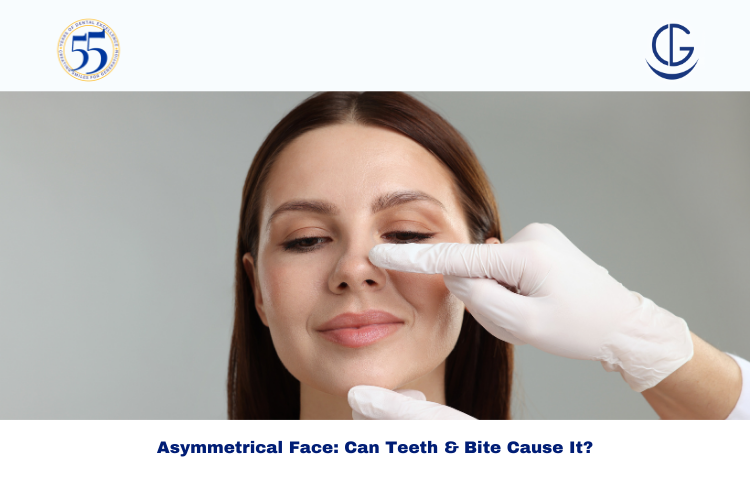
Teeth and bite relationships can contribute to facial asymmetry in some people, particularly when there are differences in tooth position, bite function, jaw movement, or dental support.
However, an asymmetrical face can also result from natural facial structure, muscle differences, jaw growth, previous injury, soft-tissue variation, TMJ-related factors, or other causes. This means dental issues should be considered as one possible contributor rather than assumed to be the main cause.
At Dr. Gowds Dental Hospital in Hyderabad, evaluation may include assessment of tooth alignment, bite relationships, jaw movement, dental midlines, and other relevant findings to determine whether dental factors are involved.
The teeth, bite, jaw, and chewing muscles work together, so differences in one area can sometimes influence how the lower face functions or appears.
For example, an uneven bite may affect how the jaw closes or how chewing pressure is distributed. A strong chewing preference may also lead to differences in muscle use between the two sides.
However, these factors do not automatically cause visible facial asymmetry. The amount of facial change depends on whether the underlying issue is mainly dental, muscular, skeletal, or related to another factor.
A clinical examination can help determine whether the teeth and bite are actually contributing to the asymmetry.
Malocclusion means the upper and lower teeth do not meet in an ideal relationship. Examples can include crossbite, overbite, underbite, deep bite, or dental midline differences.
In some people, these bite differences may be associated with jaw shifting, uneven chewing patterns, or differences in how the lower face appears.
However, a malocclusion does not automatically mean it is causing facial asymmetry. The visible effect depends on the type and severity of the bite problem, the jaw relationship, muscle activity, and individual facial structure.
A dental or orthodontic assessment can help determine whether the bite is actually contributing to the asymmetry.
Missing back teeth can change how chewing forces are distributed and may lead to changes in bite function over time.
Depending on which teeth are missing, how long they have been absent, and the condition of the surrounding teeth and bone, possible effects may include:
Some people naturally prefer chewing on one side more than the other.
Over time, this may influence how the chewing muscles are used and can sometimes contribute to differences in muscle size or facial appearance.
However, one-sided chewing is not always the cause of facial asymmetry. A chewing preference may itself develop because of:
TMJ-related problems can affect jaw movement and may sometimes occur alongside facial asymmetry.
Possible signs can include:
Crooked or crowded teeth can affect smile appearance and may sometimes be associated with bite differences or dental midline discrepancies.
In some cases, these dental relationships may influence how the jaw closes or how the lower face appears.
However, crooked teeth do not automatically cause facial asymmetry, and the visible effect varies from person to person.
A dental or orthodontic assessment can help determine whether tooth position is contributing to the asymmetry or whether another factor is more important.
Dental restorations such as crowns, bridges, dentures, or fillings can sometimes affect the way the teeth meet if the bite is not well balanced.
Possible signs may include:
Facial asymmetry may be related to dental or bite factors when it occurs alongside signs such as:
These signs do not prove that the asymmetry is dental in origin, but they can suggest that a dental or orthodontic evaluation may be useful.
For a structured self-check, see our asymmetrical face test.
Treatment depends on whether dental or bite factors are actually contributing to the asymmetry.
The goal is usually to improve dental alignment, bite function, chewing balance, or jaw function where appropriate. Any visible facial change depends on the underlying cause and cannot be predicted from the dental diagnosis alone.
Braces or clear aligners may be considered when facial asymmetry is associated with tooth-position differences, dental midline discrepancies, or certain bite problems.
Orthodontic treatment can improve tooth alignment and bite relationships, but it does not correct every type of facial asymmetry, especially when the main cause is skeletal, muscular, or unrelated to the teeth.
Replacing a missing tooth may help restore chewing function and dental support where appropriate.
Whether this changes visible facial asymmetry depends on the individual case, so facial improvement should not be presented as a guaranteed outcome.
Occlusal adjustment may be appropriate in selected cases when specific tooth contacts are contributing to bite interference.
It should only be performed after a proper clinical assessment and should not be presented as a general treatment for facial asymmetry.
In complex cases involving multiple dental problems, a broader restorative treatment plan may be considered.
This can include a combination of restorative and orthodontic care depending on the diagnosis, but it should be based on function and oral health rather than facial symmetry alone.
At Dr. Gowds Dental Hospital, evaluation may include assessment of:
Depending on the case, photographs, digital scans, X-rays, or other imaging may also be used.
The goal is to determine whether dental or bite-related factors are contributing to the facial asymmetry and whether dental, orthodontic, restorative, or other treatment may be appropriate.
For non-surgical options, see our guide to how to fix an asymmetrical face without surgery.
Teeth and bite relationships can contribute to facial asymmetry in some people, but they are only one possible part of the picture.
Dental factors may be more relevant when facial asymmetry occurs together with:
However, facial asymmetry can also be influenced by skeletal structure, muscle activity, soft tissues, previous injury, or other causes.
A professional evaluation can help determine whether the teeth and bite are actually contributing before treatment is recommended.
If dental factors are involved, treatment may include orthodontic, restorative, bite-related, or TMJ-focused care depending on the diagnosis.
For a broader overview, read our guide to facial asymmetry treatment in Hyderabad.
You can visit any of our Hyderabad branches:
Gachibowli, Madhapur, Koti, Nanakramguda
Dental and bite problems can contribute to facial asymmetry in some people, especially when there are differences in tooth position, bite function, jaw movement, or missing teeth. However, they are not the only possible cause.
A clinical examination can help assess whether the asymmetry appears mainly dental, muscular, skeletal, or related to another factor. Depending on the case, photographs, digital scans, X-rays, or other imaging may be used.
Clear aligners may help when the asymmetry is related to tooth position or certain bite problems. They cannot correct every cause of facial asymmetry, especially when the main cause is skeletal, muscular, or unrelated to the teeth.
Replacing a missing tooth may improve chewing function and dental support. Whether it changes visible facial asymmetry depends on the individual case.
Yes. Our specialists assess TMJ function as part of every asymmetric face evaluation and provide targeted bite therapy, splints, or orthodontic correction depending on the underlying cause.
 Gachibowli Branch