

Schedule Appointment


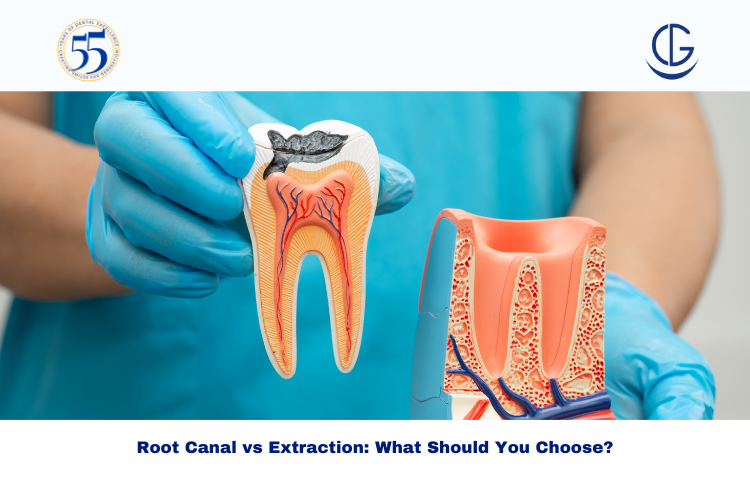
Root Canal vs Extraction is one of the most common questions patients in Hyderabad ask when a tooth starts hurting, swelling, or becomes difficult to chew on. The right answer depends on your tooth condition, infection level, bone support, and long-term goals—not just pain today.
At Dr Gowds Dental Hospitals, we see this decision daily, and the goal is always the same: help you choose the safest, most predictable option with clear expectations. As one of Hyderabad’s leading multi-branch dental hospitals, we guide patients with modern diagnostics, specialist-led care, and a comfort-first approach.
If you’re confused between root Canal vs extraction, don’t guess. Book a consultation at Dr Gowds Dental Hospitals for a clear diagnosis and a treatment plan you can trust.
A root canal is a tooth-saving procedure where the infected or inflamed nerve tissue inside the tooth is removed, the canals are cleaned and disinfected, and then sealed. In most cases, the tooth is later protected with a crown.
Root canal treatment benefits include:
Tooth extraction is removal of the tooth from the socket. It may be simple (visible tooth, easy access) or surgical (broken tooth, impacted roots, infection around the roots).
When is tooth extraction necessary?
There’s no one-size-fits-all. Here’s the most practical way to decide:
Root canal is usually the preferred option when:
In simple terms: save tooth or extract tooth becomes “save it” when the tooth can be restored and will remain functional for years.
Extraction may be the better choice when:
This is where root canal or remove tooth becomes a long-term health decision, not just a pain decision.
A lot of patients delay treatment because of fear. Here’s the truth:
Most people feel relief after a root canal because the infected nerve is removed. The procedure is done under local anesthesia, and you should not feel sharp pain during treatment.
You may have:
Extraction is also done under anesthesia, so the procedure is usually not painful. But healing involves the socket closing, and that can cause:
Root canal vs extraction pain often depends on severity of infection and complexity. In general:
At Dr Gowds Dental Hospitals in Hyderabad, we focus heavily on comfort protocols—numbing accuracy, gentle technique, and post-treatment guidance to keep discomfort minimal.
Many patients think extraction ends the problem. But a missing tooth can cause:
This is why “remove now, decide later” often becomes more expensive later.
A successful root canal plus crown can preserve:
If your goal is stability, tooth extraction vs root canal treatment often favors root canal—when the tooth can be saved properly.
Cost is important, but it should be compared fairly. You’re not comparing “one procedure vs one procedure.” You’re comparing “save tooth” vs “remove and replace.”
Root canal cost depends on:
Extraction cost depends on:
Root canal treatment vs extraction cost becomes clearer when you add the replacement cost after extraction:
If the tooth has a deep cavity and nerve pain, but the crown structure is restorable:
Root canal + crown is usually better.
If the fracture extends into the root: Extraction is often the safer choice.
If the tooth is loose due to bone loss: Extraction may be necessary if stability is poor.
Both treatments can work depending on restorability. The priority is controlling infection first.
This is why an in-person evaluation matters. X-rays, bite assessment, and gum health evaluation decide your real prognosis.
If the tooth has a strong chance of lasting years with proper restoration, root canal is often the better long-term choice. If the tooth is structurally compromised or unstable, extraction may be safer—especially if you plan a replacement solution.
Still unsure about root canal vs extraction? Book a consultation at Dr Gowds Dental Hospitals and visit your nearest Hyderabad branch (Gachibowli, Madhapur, Koti, Nanakramguda). Speak to a specialist, understand your options clearly, and choose a plan that protects your smile.
Root canal treatment is widely used and generally safe when done properly. The key is complete cleaning, sealing, and restoring the tooth with the right coverage (often a crown).
A dentist checks tooth structure, infection spread, root condition, and bone support using clinical exams and X-rays. This is the only reliable way to decide to save a tooth or extract a tooth.
Both are done under anesthesia. Most patients find root canal pain reduces after treatment. Extraction may have more healing soreness for a few days. Your comfort depends on infection severity and complexity.
Many cases can be completed in 1–2 visits depending on infection, tooth type, and restoration plan. Complex infections may take additional follow-ups.
Replacement is strongly recommended in most cases to prevent shifting and bite issues. Your dentist will advise timing based on healing, bone condition, and your overall treatment plan.

 Gachibowli Branch