

Schedule Appointment


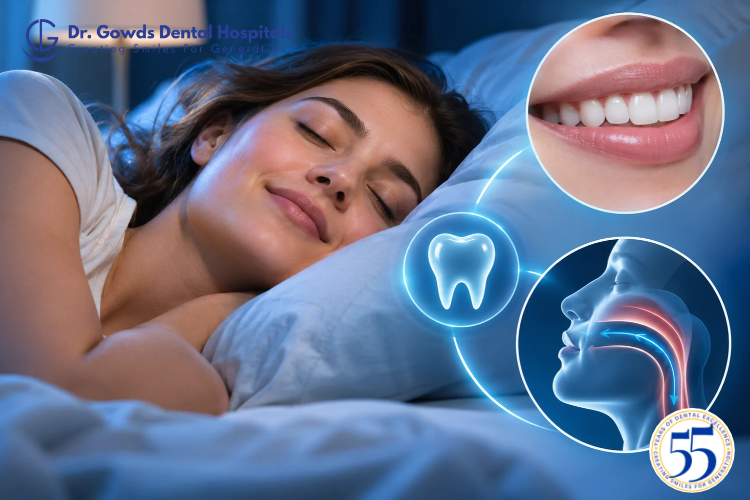
Sleep is usually associated with feeling rested and refreshed the next morning. But your nighttime routine can also influence how you care for your teeth and how your mouth feels when you wake up.
Poor sleep may go along with habits such as skipping nighttime brushing, sleeping with your mouth open, waking up with a dry mouth, or noticing jaw tension in the morning. These experiences can make oral care more challenging and may be worth discussing with a dental professional if they continue.
Understanding the connection between sleep and oral health can help you recognize changes early and build better daily habits. At Dr Gowds Dental Hospitals, patients can discuss concerns related to their teeth, gums, jaw, and everyday oral-care routine with a dental team.
Looking for personalized dental guidance in Hyderabad?
Sleep and oral health are connected in several everyday ways. Your nighttime habits, sleep position, mouth breathing, hydration, and dental routine can all influence how your mouth feels during the night and the following morning.
For example, someone who regularly gets poor-quality sleep may find it harder to maintain consistent bedtime habits. If brushing and flossing are frequently skipped, the usual oral-care routine can become inconsistent.
Some people may also notice:
These experiences do not automatically indicate a dental problem. However, if they become frequent or persistent, a dental consultation can help identify what may be contributing to them.
The relationship between poor sleep and your teeth is not simply about the number of hours you sleep. Sleep habits can influence behaviors that are relevant to everyday dental care.
When you are tired, brushing your teeth before bed may become one of the tasks you postpone.
Doing this occasionally is different from regularly neglecting your nighttime routine. A consistent oral-care routine is an important part of keeping your teeth clean.
Try keeping your toothbrush and other oral-care products easily accessible so that brushing does not feel like an additional task at the end of a tiring day.
Irregular sleep schedules can sometimes go along with late-night eating or frequent snacking.
If you eat close to bedtime, remember to maintain your usual oral-care routine rather than treating nighttime as a break from dental hygiene.
Some people wake up with a noticeably dry mouth, particularly after sleeping with their mouth open.
A dry mouth can feel uncomfortable and may make the mouth feel different when you wake up. If this happens regularly, it is worth mentioning during a dental consultation.
Staying appropriately hydrated during the day and maintaining a consistent oral-care routine can be simple steps to support everyday mouth comfort.
Teeth grinding, sometimes called nighttime teeth grinding, is another reason people may connect sleep with dental health.
Because it happens while you are asleep, you may not realize that you are grinding or clenching your teeth. Some people notice signs such as:
These signs can have different explanations, so they should not be used to self-diagnose a dental condition.
If you regularly wake up with jaw discomfort or have concerns about nighttime grinding, a dentist can examine your teeth and jaw and discuss appropriate next steps.
One of the most practical ways to think about sleep and oral health is to look at your routine.
When sleep schedules become irregular, several small habits can change.
You may brush later than usual, rush through your routine, or occasionally skip it altogether.
Late-night meals and snacks can become more common when bedtime changes.
Dryness, jaw tightness, or an unpleasant feeling in the mouth can make mornings less comfortable.
When you are tired or focused on getting through the day, changes in your mouth may be easy to overlook.
The solution is not to become overly concerned about every change. Instead, focus on consistency and seek professional advice when something continues or interferes with your daily life.
You do not need a complicated routine to take better care of your oral health before bed.
Brush your teeth as part of your regular bedtime routine rather than waiting until you feel ready for bed.
Include an appropriate method of cleaning between your teeth as part of your regular oral-care routine.
If you frequently eat before sleeping, pay attention to your oral-care routine afterward.
Notice whether you regularly wake up with dry mouth, jaw tightness, tooth discomfort, or other changes.
A temporary change may not be concerning, but repeated or worsening symptoms deserve professional attention.
Not every sleep-related change requires a dental appointment. However, consider discussing your concerns with a dentist if you repeatedly notice:
A dental examination can help you understand whether the concern is related to your teeth, gums, jaw, oral habits, or something else.
If you have noticed changes in your teeth or mouth after changes in your sleep routine, Dr Gowds Dental Hospitals can help you understand what may need attention.
Your morning routine can also give you useful clues about how your mouth feels overnight.
Before starting your day, notice whether your mouth feels unusually dry, whether your jaw feels tight, or whether your teeth feel different from normal.
These observations are not a way to diagnose a condition. They are simply useful information that you can share with your dentist if a concern continues.
A good oral-health routine is built around consistency rather than perfection. Regular brushing, cleaning between the teeth, paying attention to changes, and attending dental checkups when appropriate can all help you stay more aware of your oral health.
Sleep and oral health are connected through more than just bedtime. Your sleep schedule can influence your nighttime habits, eating patterns, mouth comfort, and awareness of changes such as jaw tension or dry mouth.
Poor sleep does not automatically mean that you will develop a dental problem. However, if changes in your sleep routine are accompanied by persistent changes in your mouth, teeth, gums, or jaw, it is sensible to discuss them with a dental professional.
For patients in Hyderabad, Dr Gowds Dental Hospitals provides dental care across Nanakramguda, Gachibowli, Madhapur, koti.
Want to understand what your teeth or gums may be telling you? Book a dental consultation at Dr Gowds Dental Hospitals in Hyderabad and discuss your concerns with a dental professional.
Poor sleep does not automatically mean you will develop a dental problem. However, changes in sleep can affect bedtime routines, eating habits, mouth comfort, and behaviors such as teeth grinding.
Lack of sleep alone should not be assumed to cause a specific tooth problem. If you notice persistent tooth discomfort, sensitivity, or changes in your bite, a dental examination can help determine what may be contributing to the issue.
Waking up with a dry mouth can happen for different reasons, including sleeping with your mouth open. If morning dryness happens frequently, mention it to your dentist during your next consultation.
Some people experience teeth grinding or clenching while sleeping without being aware of it. Morning jaw tightness or other changes may be worth discussing with a dentist.
Maintain a consistent nighttime oral-care routine. Brush regularly, clean between your teeth, avoid making late-night snacking a habit, and speak with a dentist if you repeatedly notice jaw or tooth discomfort.
Changes in how your teeth feel in the morning can have several possible explanations. Jaw tension, nighttime habits, dryness, or other factors may be involved. Persistent changes should be discussed with a dental professional.
If morning jaw pain happens repeatedly, it is reasonable to discuss it with a dentist. They can examine your teeth and jaw and determine whether further evaluation or care is appropriate.
 Gachibowli Branch